

The world held its breath as a mysterious figure unleashed a wave of terror through a series of meticulously crafted bombings, leaving destruction, fear, and unanswered questions in their wake. This was the work of Ted Kaczynski, a man whose life story is as mysterious as the crimes he committed.
Ted Kaczynski’s journey begins long before the bombings that would earn him the infamous moniker of the Unabomber. Born into an ordinary middle-class family, his exceptional intellect and promising future seemed destined for greatness. However, the seeds of isolation and radicalization were quietly taking root within him.
Part one of our exploration takes us back to Kaczynski’s early years, from his precocious academic achievements to the signs of growing disillusionment during his time at Harvard. It was here that the sharp mind that could have contributed so much to society began to fester with resentment and disdain.
The allure of the wilderness and a desire to escape the trappings of modern society beckoned Kaczynski, leading him to retreat to a remote cabin in the Montana wilderness. It was within these secluded confines that his ideals took a dark turn, leading to the reign of terror that would shake the nation to its core.

Seeds of Isolation and Radicalization
Ted Kaczynski’s path towards becoming the Unabomber was a journey marked by both brilliance and isolation. Born on May 22, 1942, in Chicago, Illinois, Kaczynski showed early signs of exceptional intelligence. His academic achievements stood out, earning him admission to Harvard University at the age of just 16.
However, it was during his time at Harvard that the seeds of isolation and disillusionment began to take hold. Despite his academic prowess, Kaczynski struggled with social connections, finding it difficult to relate to his peers and the world around him. The dissonance between his intellect and his ability to connect on a personal level fostered a deep sense of alienation within him.
As Kaczynski delved into his studies, particularly in mathematics, his discontent grew. He became increasingly critical of the pervasive influence of technology and its impact on society. This skepticism would eventually transform into a deep-seated hatred for the modern world and a fervent belief in the need for a societal revolution.
After graduating from Harvard, Kaczynski pursued a career in academia, becoming an assistant professor of mathematics at the University of California, Berkeley. However, his tenure at Berkeley would be short-lived. The mounting frustration and disillusionment with what he perceived as the dehumanizing effects of modern industrial society pushed him to make a radical decision.
In 1969, Kaczynski abruptly quit his position at Berkeley and retreated to a primitive lifestyle in the Montana wilderness. He built a small, secluded cabin where he would live for the next two decades, cut off from the outside world. It was within this self-imposed isolation that his ideas and grievances would intensify, leading to his transformation from a brilliant mathematician to a domestic terrorist.
Rejecting the advancements of civilization, Kaczynski became fixated on the idea of a societal collapse. He believed that technological progress and industrialization were eroding individual freedom and autonomy. This ideology, rooted in a combination of environmentalism, anarchism, and anti-technology sentiments, would lay the groundwork for his violent campaign.
In the shadows of his wilderness hideaway, Kaczynski meticulously crafted a series of homemade bombs designed to target those he saw as complicit in the destruction of the natural world. Universities, airlines, and technology-related entities became his chosen targets, selected with calculated precision.
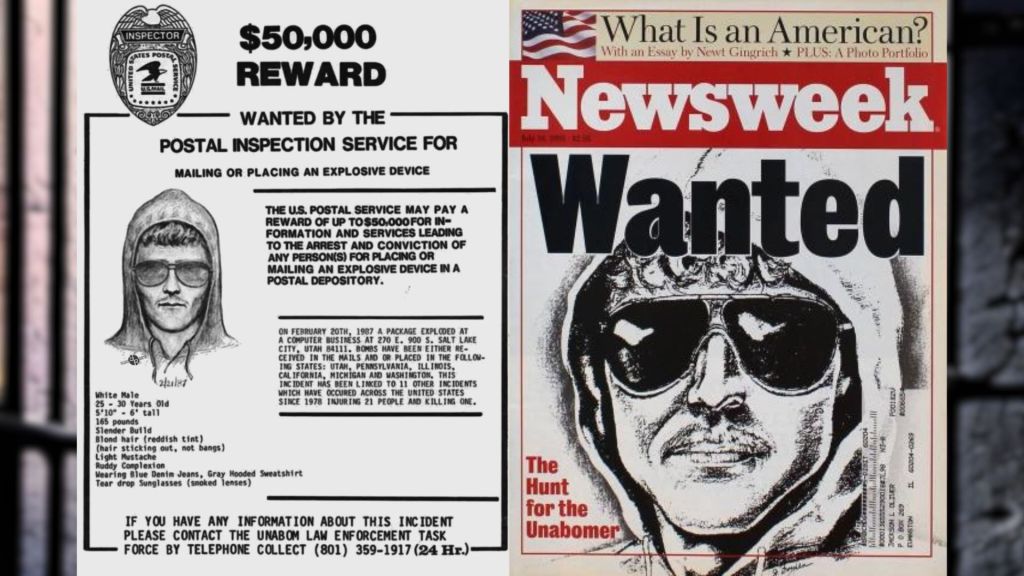
As the bombings unfolded, fear gripped the nation. The Unabomber, a name derived from the FBI’s original designation of the case as the “UNiversity and Airline BOMber,” haunted the collective consciousness. The public, left to wonder who was behind these acts of violence, lived in a state of perpetual unease.

Reign of Terror: The Unabomber’s Bombings
As the Unabomber’s reign of terror unfolded, the nation found itself gripped by fear and uncertainty. Ted Kaczynski’s meticulously crafted bombs, delivered via mail, left a trail of destruction and shattered lives in their wake. But it was not just the bombings themselves that sent shockwaves through society—it was the enigmatic messages and manifestos that accompanied them.
Kaczynski’s bombs were no ordinary explosives. Carefully constructed with an intricate blend of homemade components, they were designed to maim and kill. His targets were carefully chosen, focusing on universities, airlines, and technology-related entities. Each bombing seemed to carry a haunting message, emphasizing the destructive consequences of technological advancement.
But it wasn’t just the physical impact of the bombings that struck fear into the hearts of the American people—it was the psychological toll. The Unabomber’s cryptic messages and manifestos, filled with verbose language and radical ideas, captivated the media and the public alike. In an attempt to garner attention and spread his anti-technology ideology, Kaczynski sent his writings to various media outlets and demanded their publication.
His manifesto, titled “Industrial Society and Its Future” but more commonly known as the “Unabomber Manifesto,” became a chilling window into the mind of a domestic terrorist. In it, Kaczynski railed against the encroachment of technology, predicting a dystopian future where individuals would be stripped of their freedom and autonomy.
The manifesto and the bombings created a sense of urgency and desperation within law enforcement agencies. Task forces were formed, and investigators worked tirelessly to decipher the clues left behind by the Unabomber. They scrutinized the language, style, and content of the writings in hopes of identifying the perpetrator.
Years turned into decades as the bombings persisted, leaving law enforcement and the public alike frustrated and fearful. However, a breakthrough finally came in 1995 when Kaczynski’s brother, David Kaczynski, grew suspicious of the Unabomber’s writings. Recognizing similarities in the language and ideas, he ultimately tipped off the authorities, leading to Ted Kaczynski’s capture.
On April 3, 1996, after more than 17 years of eluding law enforcement, Ted Kaczynski was apprehended at his remote cabin in Montana. The reign of terror that had paralyzed the nation was finally brought to an end. In the aftermath, investigators discovered a vast arsenal of bomb-making materials, diaries filled with Kaczynski’s thoughts and plans, and the chilling realization of the extent of his extremism.
The arrest of the Unabomber marked a turning point in the investigation, but it also raised questions about the motivations and mindset of Ted Kaczynski. Was he a madman or a radical ideologue? The trial that followed sought to shed light on these questions, revealing the complex web of Kaczynski’s beliefs, grievances, and actions.
The Long Hunt and Captive’s Justice
The capture of Ted Kaczynski marked the beginning of a high-stakes legal battle that would shed light on the motivations and inner workings of the Unabomber. The trial that followed sought to unravel the enigma of a man who had terrorized the nation for nearly two decades.
The first challenge faced by the prosecution was piecing together the intricate web of evidence against Kaczynski. The extensive collection of bomb-making materials found in his cabin, along with meticulously kept diaries detailing his thoughts and plans, provided a glimpse into the mind of a domestic terrorist. The task was to connect the physical evidence to the series of bombings attributed to the Unabomber.
As the trial unfolded, the defense team, led by renowned attorney Judy Clarke, faced the daunting task of defending a man who had become a symbol of fear and destruction. They sought to humanize Kaczynski, emphasizing his troubled background and the mental health issues he purportedly experienced. Their goal was to present him as a deeply disturbed individual driven by an irrational ideology.
Meanwhile, the prosecution built their case by meticulously presenting the evidence, meticulously linking the bombs, the materials, and the writings to Ted Kaczynski. They painted a picture of a calculated and intelligent individual who meticulously planned and executed his acts of terror. The manifestos and letters he had sent to media outlets were presented as damning evidence of his intent and motivation.
Throughout the trial, the courtroom became a theater of competing narratives. The prosecution argued that Kaczynski was a dangerous terrorist who needed to be held accountable for his actions. The defense, on the other hand, contended that he was a troubled man driven to the brink by his own psychological demons.
Ultimately, in 1998, Ted Kaczynski pleaded guilty to multiple charges related to the bombings. In a surprising turn of events, he avoided the death penalty by accepting a life sentence without the possibility of parole. His decision to forgo a full trial and plead guilty brought closure to the victims and their families, sparing them from the painful ordeal of reliving the horrors they had endured.
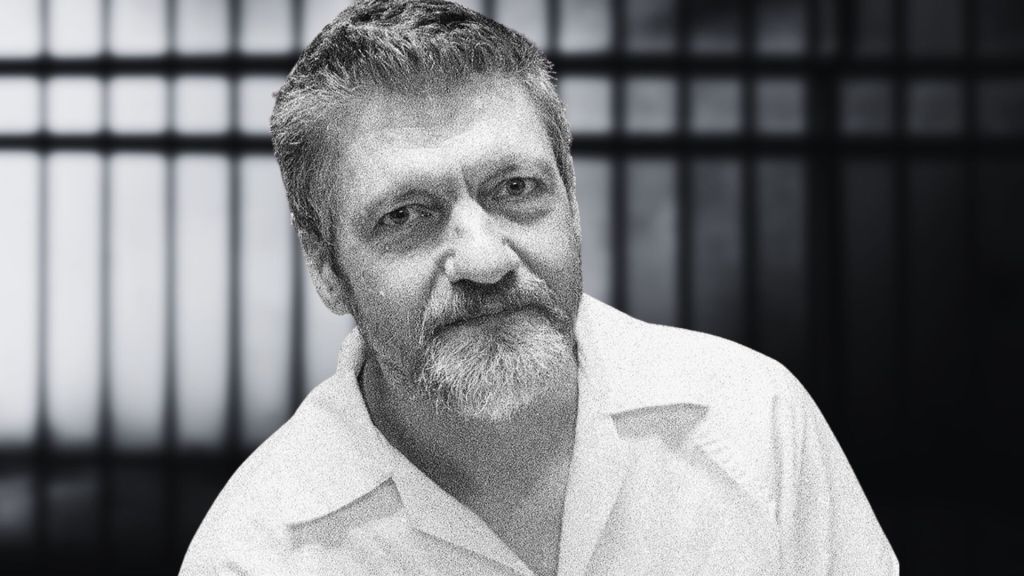
With his conviction, Kaczynski entered the world of incarceration, confined to the walls of the United States Penitentiary Administrative Maximum Facility in Florence, Colorado, commonly known as ADX Florence or the “Alcatraz of the Rockies.” In this highly secure prison, he was cut off from the outside world, left to grapple with the consequences of his actions.
Even in prison, the enigma of Ted Kaczynski persisted. His writings and correspondence continued to captivate and influence individuals from all walks of life, sparking intense debates about his ideas and the role of technology in society. Some saw him as a deranged criminal, while others regarded him as a troubled intellectual whose ideas, albeit flawed, held a certain provocative allure.
The Unabomber’s story remains one of the most captivating chapters in true crime history. It forces us to confront the complex interplay of ideology, psychology, and societal discontent. Ted Kaczynski’s actions continue to be a sobering reminder of the destructive potential of extremist beliefs.
Life Behind Bars and the Bitter End
After his conviction, Ted Kaczynski began his life of seclusion within the confines of ADX Florence, one of the most secure prisons in the United States. Cut off from the outside world, he embarked on a new chapter—one defined by the stark reality of incarceration and the lingering impact of his actions.
Within the prison walls, Kaczynski’s notoriety preceded him. Fellow inmates and correctional officers alike recognized him as the Unabomber—the man responsible for a string of bombings that had left a lasting mark on American history. However, life in prison brought a different set of challenges and dynamics for the infamous domestic terrorist.
Kaczynski’s interactions with fellow inmates were limited, and he spent the majority of his time in solitary confinement. However, occasional glimpses of his life behind bars revealed snippets of his existence within the prison system. Some accounts suggested that he maintained a relatively low profile, engaging in intellectual pursuits and reading voraciously. Others noted that he struggled with the isolation and the weight of his actions, grappling with the consequences of a life defined by violence and extremism.
Throughout his time in prison, Kaczynski’s writings continued to capture attention. His correspondence with the outside world, including letters to pen pals and the occasional interview, provided a window into his thoughts and reflections. Some individuals found themselves intrigued by the depth of his ideas, while others dismissed them as the ramblings of a disturbed mind.
In the final years of his life, Kaczynski’s health began to decline. His physical and mental well-being deteriorated, perhaps exacerbated by the harsh conditions of his imprisonment or the weight of his conscience. On June 10, 2023, Ted Kaczynski passed away in his prison cell, bringing an end to a turbulent chapter in true crime history.


 Deep Lore