

In the mysterious realm of true crime some cases stand out for their chilling nature and the mysterious persona of the perpetrators. One such case that sent shockwaves through Spain was the reign of terror orchestrated by Alfredo Galán Sotillo, better known as the Playing Card Killer.
Born on April 5, 1978, in Puertollano, Spain, Alfredo Galán Sotillo spent his formative years in relative obscurity. Teachers remember him as an introverted student who rarely caused any trouble. He followed a typical educational path, attending the local school for Educación Básica General (Basic General Education) and later pursuing the Bachillerato Unificado Polivalente (High School Diploma) in an institute where he served as a class representative. Galán’s unremarkable demeanor masked the darkness that lay dormant within him.
In September 1998, Galán’s life took a significant turn when he joined the Spanish Army. Displaying ambition and commitment, he rose to the rank of First Corporal in the Paratrooper Brigade based in Alcalá de Henares. During his military service, Galán participated in two humanitarian missions in war-torn Bosnia, where he witnessed the horrors of the Balkan conflict firsthand. His involvement in these missions showcased his willingness to serve and help those in need.
However, fate would intervene in Galán’s life, shaping his path toward darkness. In January 2003, his unit was reassigned from Bosnia to assist in cleaning up the Galician coast, which had been devastated by the sinking of the oil tanker Prestige. It was during this period that Galán committed his first known crime – stealing a car. This act of disobedience drew the attention of his superiors and marked the beginning of a downward spiral in his military career.
Subsequently, Galán found himself in a Madrid hospital, the Gómez Ulla Military Hospital, where he underwent evaluation for his mental state. Doctors diagnosed him with neurosis and anxiety, prescribing medication to address his condition. However, Galán’s struggles with alcoholism and his disregard for the prescribed treatment proved to be detrimental to his well-being. In March 2003, he was officially discharged from the army, marking the end of his military career and leaving him adrift in civilian life.
Seeking a fresh start, Galán sought employment as a security guard at Madrid’s Barajas airport. Little did anyone know that behind his façade of normalcy lurked a sinister intent that would soon shake the nation to its core. The stage was set for the Playing Card Killer to emerge from the shadows and unleash his reign of terror.

Murders and the Sinister Signature
As the city of Madrid unsuspectingly went about its daily routines, a malevolent force began to haunt its streets. Alfredo Galán Sotillo, known as the Playing Card Killer, embarked on a ruthless killing spree that would send shockwaves through the community and leave investigators puzzled. This chapter unravels the chilling details of the murders and the distinct signature left by Galán.
The first recorded murder occurred on a fateful day in January 2003 when Galán ruthlessly executed 50-year-old Juan Francisco Ledesma. In a brazen act of violence, Galán shot Ledesma in the head, in front of his innocent two-year-old son. The audacity and callousness of the act set the tone for the horrors that would unfold.
In February of the same year, another life fell victim to Galán’s insidious plot. Juan Carlos Martín Estacio, an airport cleaner, met a grim fate when he was found shot in the head. Next to his lifeless body lay a chilling calling card—a single playing card, an ace of cups, strategically placed as a haunting reminder of the killer’s presence.
Galán’s murderous spree continued, escalating in brutality and leaving a trail of devastation in his wake. Venturing into the town of Alcalá de Henares, he unleashed a wave of terror by targeting unsuspecting victims. Mikel Jiménez Sánchez, an 18-year-old, and Juana Dolores Uclés López, aged 57, fell victim to Galán’s deadly game. Both met their untimely demise, with Uclés suffering a gunshot wound directly through her eye.
The modus operandi of the Playing Card Killer became mysteriously clear—a precision shooter who showed no mercy, always aiming for the head or nape of the victims. The killings were carried out with a Tokarev pistol, a weapon Galán had acquired during his time in Bosnia. It was a weapon of war that had found a new purpose in the hands of a remorseless killer.
Adding to the macabre nature of the crimes, Galán adopted a chilling signature, deliberately leaving a playing card at the crime scenes. Initially an ace of cups, the significance of the card would soon captivate the public’s imagination and give the killer his infamous moniker. Galán later admitted that the inclusion of the playing card as his calling card was not his initial intention, but rather a response to the media sensationalism surrounding the discovery of a card at one of the crime scenes.
As investigators struggled to piece together the puzzle and understand the mind behind the murders, the Playing Card Killer continued to strike fear into the hearts of Madrid’s residents. His heinous acts were characterized by a lack of remorse, an executioner’s precision, and a chilling signature that sent a message to law enforcement and the public alike.

The Capture and Confession
As the Playing Card Killer’s reign of terror continued, the pressure mounted on law enforcement agencies to bring an end to the gruesome spree of murders that had gripped Madrid with fear. In this chapter, we delve into the dramatic events that led to the eventual capture of Alfredo Galán Sotillo and the shocking revelations that emerged during his confession.
On July 3, 2003, Galán took a pivotal step that would forever alter the course of his dark journey. He turned himself in at the local police station in his hometown of Puertollano, Ciudad Real, claiming responsibility for the string of murders that had plagued the capital city. Galán’s surrender caught the attention of the authorities, who initially regarded him as a deranged individual.
During his initial encounter with the police, Galán sought to convince them of his guilt by revealing intricate details about the crimes that had not yet been made public. His knowledge of the crime scenes, the positions of the victims, and other undisclosed information left the investigators astounded. It was clear that they were face-to-face with the infamous Playing Card Killer.
However, Galán’s confession was not without its twists and contradictions. In subsequent statements, he shifted blame, attempting to implicate others in the crimes. He claimed to have sold the murder weapon, a Tokarev pistol, to individuals he alleged were involved in the killings. Galán weaved a complex web of intrigue, suggesting threats against his family and asserting that he had surrendered to protect his loved ones.
The investigation into Galán’s confessions and contradictory statements presented a challenge to authorities. It required painstaking efforts to separate truth from deception and determine the extent of Galán’s involvement. Forensic evidence, witness testimonies, and the distinctive modus operandi tied Galán directly to the murders. Survivors of his attacks identified him as the perpetrator, providing further validation for his culpability.
Psychiatric evaluations played a crucial role in understanding the mind of the Playing Card Killer. While Galán exhibited traits of a personality disorder, experts concluded that he was fully aware of the consequences of his actions and possessed the ability to distinguish between right and wrong. This determination of his mental state led to his classification as legally responsible for his heinous crimes.
The trial of Alfredo Galán Sotillo was a riveting affair, with the evidence against him overwhelmingly pointing to his guilt. His confession, the identification by survivors, and the presence of the murder weapon established a compelling case against him. In 2005, the Provincial Court of Madrid handed down its verdict, sentencing Galán to an astonishing 142 years and three months in prison for six counts of murder and three counts of attempted murder.
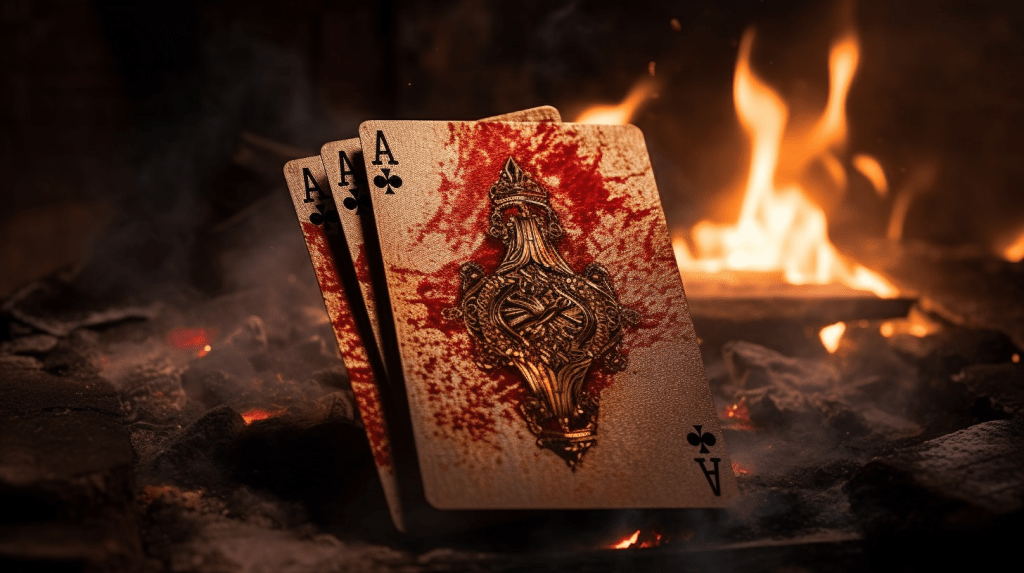
The Haunting Tale of the Playing Card Killer
Galán’s reign of terror left an indelible mark on the city of Madrid and its residents. The chilling nature of his crimes, coupled with his mysterious signature of leaving playing cards at the crime scenes, captured the attention of true crime enthusiasts and the media alike. The legacy of the Playing Card Killer remains etched into the annals of Spain’s true crime history.
With his conviction and subsequent sentencing to 142 years and three months in prison, Galán was effectively removed from society, ensuring that he would never walk the streets again. The lengthy prison term served as a form of justice for the victims and their families, providing some semblance of closure and reassurance that the Playing Card Killer would never claim another innocent life.
However, even with Galán behind bars, unanswered questions persist. The true motives behind his crimes remain shrouded in darkness. While Galán offered conflicting explanations during his confession, ranging from personal gratification to external threats, the true catalyst for his murderous spree remains elusive. What drove a once introverted and unremarkable individual to become a sadistic and calculating serial killer?
The psychological profile of the Playing Card Killer paints a picture of a narcissistic and megalomaniac individual who derived pleasure from taking the lives of others. Galán’s need for admiration and power seemed to fuel his violent acts, leaving a trail of devastation and fear in his wake. The true depths of his depravity may never be fully understood, leaving a void in the understanding of his motives.
Furthermore, the fate of the murder weapon and other crucial pieces of evidence adds to the intrigue surrounding Galán’s case. Despite extensive efforts to locate the Tokarev pistol and other items associated with the crimes, they remain elusive. The mystery of their whereabouts raises questions about potential accomplices, hidden caches of evidence, and the possibility of unsolved crimes connected to the Playing Card Killer.
Alfredo Galán may be released from prison on parole in 2028.


 Deep Lore