
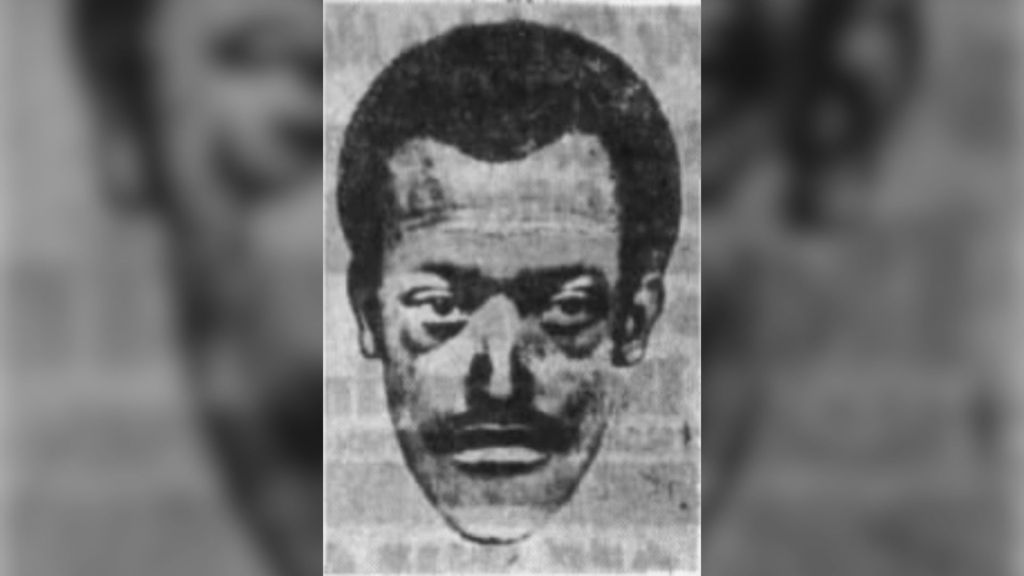
As the chill of February’s winter gripped Detroit in 1975, another kind of frost descended upon the city’s Cass Corridor—a fear that cut through the bone and penetrated the soul. This fear bore a name as enigmatic as the figure who inspired it: the Bigfoot Killer, an elusive phantom whose identity, nearly half a century later, continues to elude capture.
In the realm of unsolved mysteries, the Bigfoot Killer case stands as a chilling testament to the enduring darkness of human nature. The perpetrator was not a monster in the traditional sense; there were no glowing eyes or fangs dripping with blood. Instead, he was a human, lurking among the everyday hustle and bustle, whose moniker was derived from his distinguishing physical attributes—large hands and feet—and his terrifying predatory behavior.
Yet, the case of the Bigfoot Killer isn’t solely a tale of terror. It’s a story that intertwines with the socio-economic backdrop of 1970s Detroit, with victims who were often overlooked by society. They were the city’s most vulnerable, its impoverished women engaging in the dangerous profession of street prostitution for survival.
Detroit’s Cass Corridor, during the mid-1970s, served as the ominous stage for this horrific drama. Once a popular place for artists to rent studio space in the 1960s, by the 1970s, the neighborhood was plagued with increased crime and dimly lit streets, earning itself an unscrupulous reputation. Within this stark landscape, traditional jobs were scarce, and many residents resorted to desperate means to eke out a living. This economic reality made the area a hotbed for prostitution, setting the stage for the Bigfoot Killer to find his victims.
The Bigfoot Killer’s Reign of Terror
In the grip of an unforgiving winter in 1975, the figure known as the Bigfoot Killer began his reign of terror, leaving a trail of horror and desolation in his wake. His victims were young girls aged between 16 and 22, forced by circumstances to sell their bodies on the cold, uninviting streets of Cass Corridor. Engaged in prostitution due to abject poverty, these women became the targets of a predator lurking in the shadows.
During the early months of 1975, at least four women were subjected to his brutality, surviving his attacks and helping the police compile a composite sketch of the assailant. By October, seven women had been murdered, their lives snuffed out by the same hand. Witnesses provided consistent descriptions: a tall, muscular African-American man with an afro, facial hair, and large hands and feet. His size and physical appearance inspired his nickname: “Bigfoot”.
His modus operandi was consistent and ruthlessly efficient. Offering $15 in exchange for sexual services, Bigfoot lured his victims into his beige Oldsmobile. Once they were inside his car, he would threaten them with a knife, subject them to savage beatings and sexual assault, before ultimately strangling them to death.
Among his victims were Valinda Brown, Julie Brown, Regina Foshee, Naomi Hall, Eoria Dick, Andrea Coxton, and Dorothy Holmes, their names a haunting reminder of lives taken too soon. However, as Bigfoot continued his murderous spree, the response from the police was perceived by many as woefully inadequate.
With growing public outcry, residents of the Cass Corridor and NGO activists rallied in front of the police station by the end of 1975, accusing the authorities of negligence and apathy due to the victims’ social status. They claimed that the police were withholding vital information about the ongoing murders and not taking adequate precautions to protect the city’s most vulnerable. The protestors argued that even the police leaflet featuring Bigfoot’s description was a half-measure, as the accompanying telephone number for reporting tips was unavailable at night when most of the crimes occurred. Police representatives, in turn, denied these allegations, stating that they were doing everything within their power to catch the killer.
In January 1976, the investigation took a dramatic turn when Carl Mayweather Jr., a black Detroit native, was arrested during an attempted rape. Mayweather’s physical description matched that of the killer, and his criminal past painted a picture of a potential serial offender.
The Investigation and Unresolved Mystery

The arrest of Carl Mayweather Jr., a man whose physical attributes and criminal background aligned with the traits of the Bigfoot Killer, brought renewed hope to the beleaguered city. A wealthy 29-year-old from a well-to-do family, Mayweather had previously been prosecuted for assaulting a woman, landing him a suspended sentence. He stood tall and athletic, sporting a size 12.5 shoe, fitting the descriptions provided by survivors and witnesses. The striking physical resemblance led the police to consider Mayweather as the prime suspect in the horrifying series of murders.
As the wheels of justice began to turn, Mayweather was charged with rape and robbery in February 1976. This development was a potential turning point in the Bigfoot Killer case, leading authorities to investigate whether Mayweather was indeed the elusive and terrifying murderer who had held Detroit in a grip of fear for nearly a year.
However, as the investigation unfolded, holes started to appear in the case against Mayweather. Solid alibis proved he was elsewhere during at least four of the murders attributed to Bigfoot. The building case against Mayweather began to crumble. Eventually, he was excluded as a suspect in the Bigfoot murders, casting the investigators back into a sea of uncertainty.
This would prove to be the last major development in the Bigfoot case. The elusive serial killer vanished as suddenly as he appeared, leaving a chilling legacy of terror behind. Despite the best efforts of law enforcement, the identity of the Bigfoot Killer remains shrouded in mystery to this day. The case eventually went cold, and the hunt for the Bigfoot Killer faded into the annals of true crime history.
While Carl Mayweather Jr. was eventually convicted for three rapes and armed robbery and committed to a mental health facility, the real Bigfoot Killer has never been brought to justice. This gruesome tale remains one of the most haunting unsolved mysteries of Detroit, a chilling reminder of the predatory dangers lurking in society’s darkest corners. To this day, the memory of the Bigfoot Killer serves as a grim testament to the lives lost and a city once held hostage by fear.


 Deep Lore