

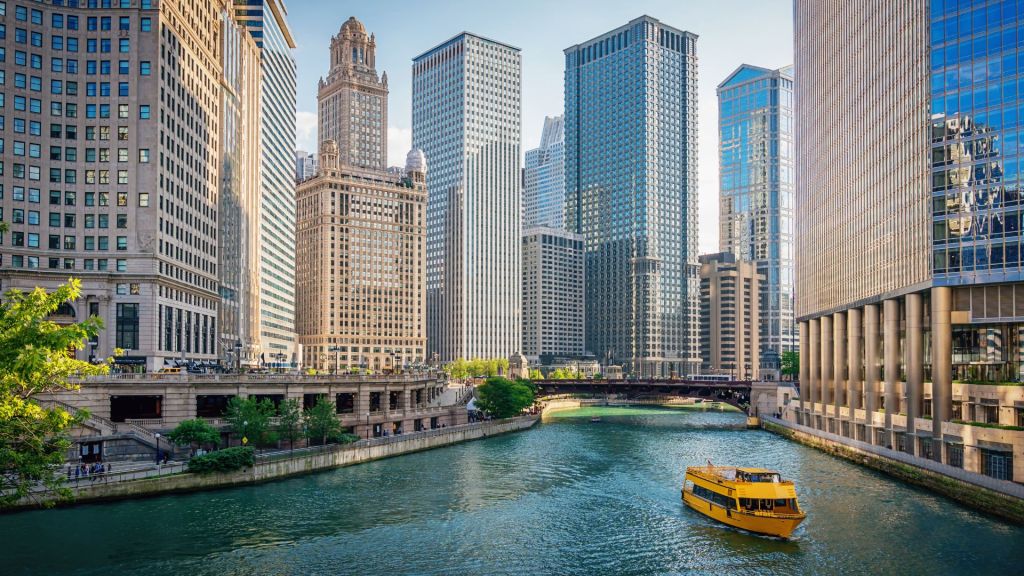
In the heart of America’s third-largest city, beneath the towering skyline and flowing waterways of the Windy City, lurks a mystery as chilling as the harshest Chicago winter. Since the beginning of 2022, an alarming number of bodies—ten men and six women—have been retrieved from the city’s rivers, their lives mysteriously extinguished.
Among these victims was 26-year-old Noah Enos. Noah was last seen alive on the night of June 12th at The Salt Shed, a popular music venue nestled just a block away from the winding Chicago River. Five days later, his lifeless body was recovered from that very river, but the authorities have yet to determine his cause of death. The haunting memory of his untimely demise echoes through the city, as his family passionately calls for justice.
“Noah wasn’t the first one to go missing and be found in the river, and I sure as hell hope that he’s the last,” his girlfriend, Nicole Wijs, mournfully declared at a vigil held in his honor.
Noah’s case is not an isolated one. The other victims, too, followed a strikingly similar pattern: vanished from their usual hangouts, only to be found days later in the water. Three of the cases have been labeled as accidental drownings, another ruled a suicide. But the remaining twelve? Their fates remain shrouded in ambiguity.
All this plays out against the backdrop of a city already grappling with a notorious reputation for crime. For the eleventh year in a row, Chicago has topped the nation’s charts in homicides, with a staggering total of 697 in 2022. This disquieting record surpasses even the likes of Philadelphia, New York City, Houston, and Los Angeles. And as the crime rate soars, so does the fear and speculation among the city’s residents.
What’s particularly disconcerting is that these waterway mysteries aren’t confined to one segment of society. The victims span a range of ages, backgrounds, and walks of life, forming a patchwork quilt of tragedy that offers no discernible pattern or motive.
The dread and anticipation are palpable as the city waits for answers. As families mourn, as rumors swirl, and as the rivers flow, one question continues to echo through the streets of Chicago: What is happening to its citizens, and who, or what, is responsible? The answers remain as elusive as the city’s swirling winter winds.
Law Enforcement and Expert Opinions
Chicago’s law enforcement agencies find themselves under immense pressure as they try to unravel the mystery surrounding these drownings. The victims’ families, the media, and an anxious public look to them for answers, but thus far, these answers remain elusive.
The Chicago Police Department, along with the FBI, has been investigating these cases since they began in early 2022. Despite the grim toll of sixteen victims, the authorities have yet to comment on whether they suspect a connection between the cases.
However, this silence has not deterred speculation from other quarters. Former FBI agent Tracy Wilder has publicly voiced her belief that a serial killer might be involved. “There are too many coincidences,” she stated. Wilder, who has also previously worked for the CIA, pointed out that the similarities in the victims’ cases are too consistent to be dismissed as mere coincidence. This includes the significant distance between where the bodies were discovered and their last known locations, along with the seemingly accidental nature of their drownings.
According to Wilder, a river provides an almost perfect place to dispose of a body, as it renders most forensic evidence virtually non-existent. This chilling observation further escalates the sense of unease surrounding the case.
Contrarily, Professor Joseph Giacalone, a former NYPD officer and currently a criminal justice professor at the John Jay College of Criminal Justice, advises caution against jumping to conclusions. He warns of the potential for social media to fuel conspiracy theories and stresses the need for investigators to remain objective.
“I come from the school where you treat every death as if it’s a homicide until proven otherwise,” he said, underlining the serious approach necessary for such investigations.
At the end of 2022, it was reported that the Chicago Police Department and the FBI are working in tandem to crack this enigma. The question remains, however, if their combined efforts will yield the answers that the city of Chicago so desperately seeks. With a recent crime rate surge of 40%, and numerous unsolved mysteries hanging heavy in the air, the Windy City remains mired in suspense and anticipation.
The Shadow of the Smiley Face Killer
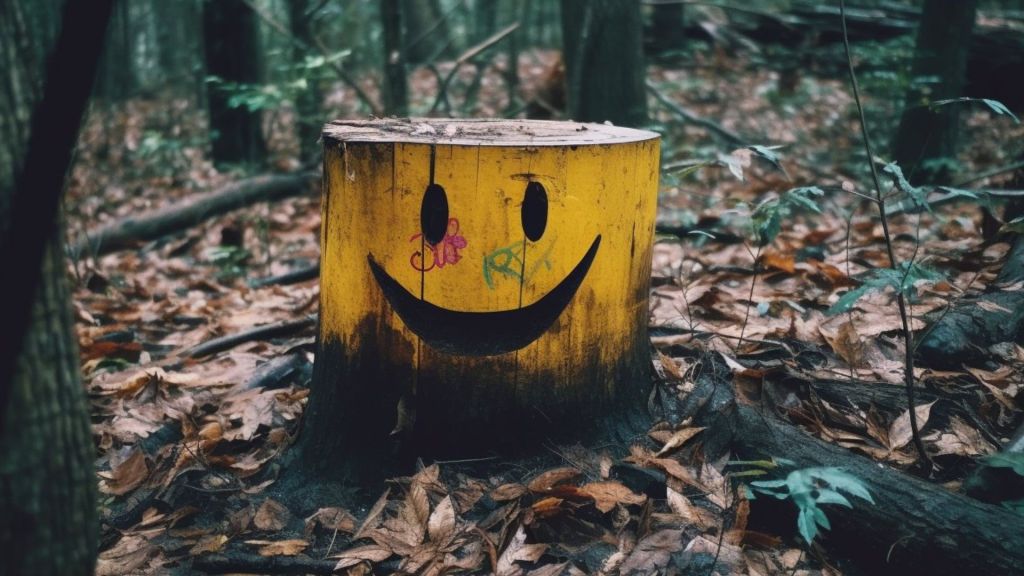
As speculation mounts, a chilling theory has resurfaced from the annals of true crime: the Smiley Face Killer. The name was coined in the 1970s after a series of drownings of young men, all found in the city’s waterways, triggered alarm bells among a group of New York City detectives and a criminal justice professor. Kevin Gannon, Anthony Duarte, and Lee Gilbertson endorsed the Smiley Face Murder theory based on a disturbing pattern they identified.
The signature of these deaths was the disturbing presence of graffiti near the locations where the bodies were discovered. A smiley face, along with other symbols, eerily marked the crime scenes, leading to the infamous moniker of the “Smiley Face Killer.” Despite the grim tableau, official reports ruled the causes of death as accidental drownings.
The theory experienced a resurgence in the late 1990s to the 2010s when another string of drownings, this time across several Midwestern states, exhibited the same chilling pattern. The detectives postulated that these were not the actions of a single individual but rather a group operating under a shared modus operandi. Gannon told Newsweek: “The group is actually leaving symbols behind letting you know, ‘Yes, this was us, come and catch us.'”
Such theories cast a dark shadow over the recent spate of drownings in Chicago. While the notion of a group of killers following a pattern and leaving behind a macabre signature may seem more the stuff of crime fiction than reality, the uncomfortable similarities have been hard to ignore.
The law enforcement agencies have yet to comment on any possible connection to the Smiley Face Killer theory. However, in a city grappling with a surge in crime and an unresolved series of tragedies, the haunting question remains: Could Chicago be facing a resurgence of the dreaded Smiley Face Killer? The truth remains as elusive as the murky depths of the city’s waterways. In the meantime, the public’s vigilance, as well as their demand for answers and justice, continue unabated.


 Deep Lore