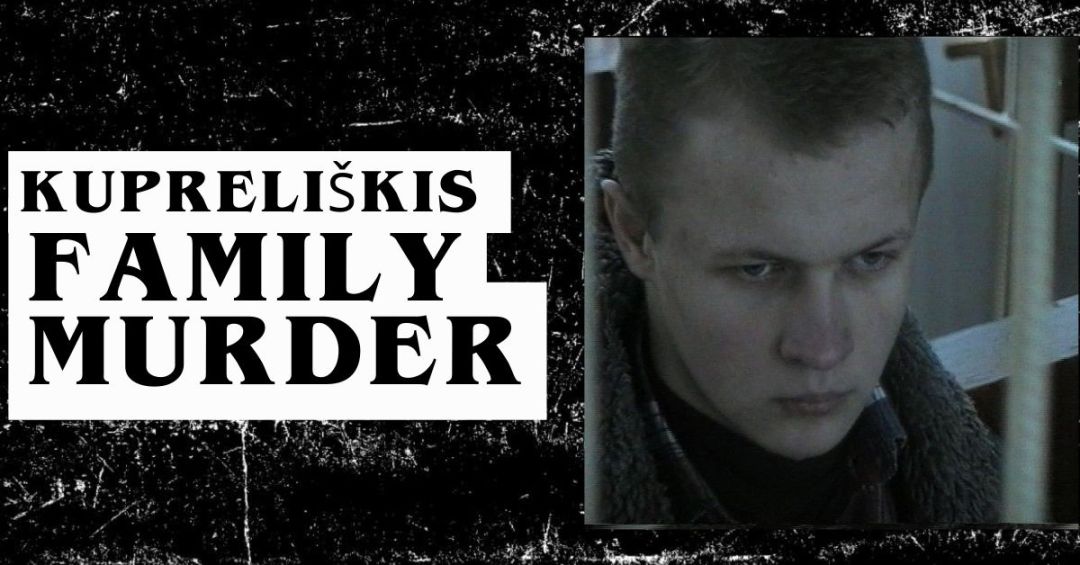
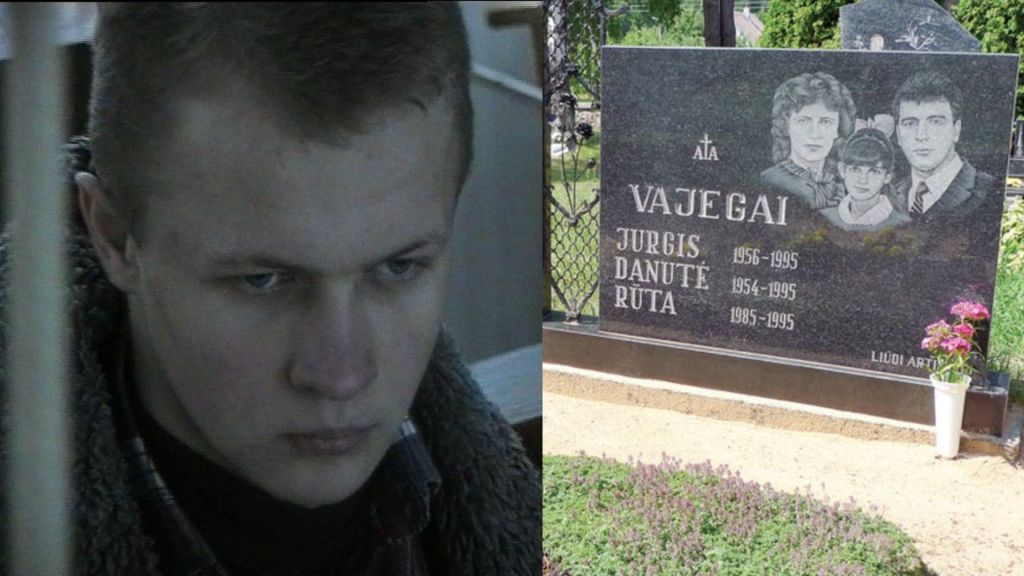
In the quiet village of Kupreliškis, Lithuania, a family vanished without a trace, leaving behind a perplexing mystery that captivated the entire nation. Step into the chilling tale of Mindaugas Daunoras, a diligent graduate student from a hard-working farming family, whose life took a sinister turn, forever shattering the peace of this once serene community.
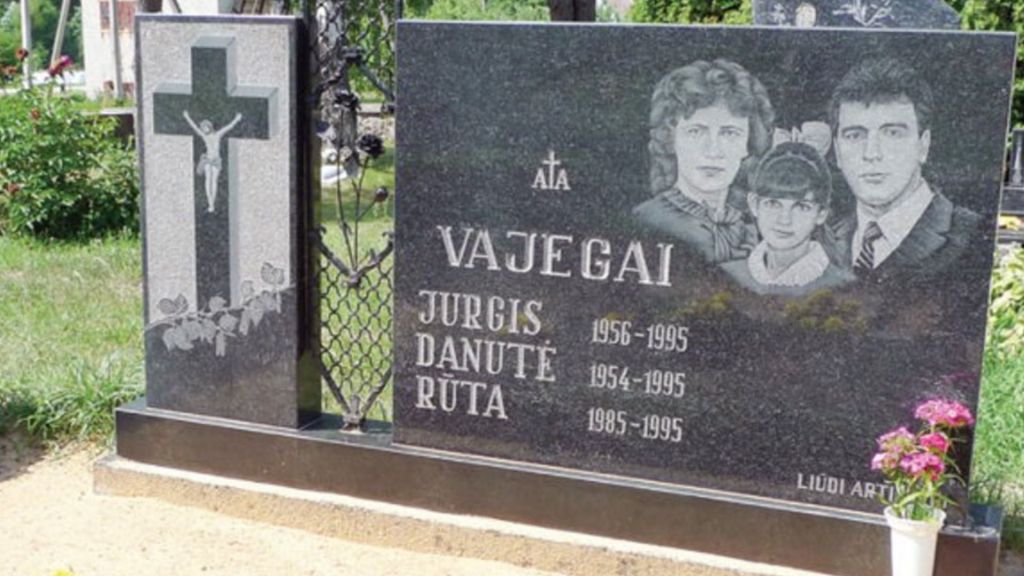
In the spring of 1995, the front page of “Respublika” newspaper bore a headline that sent shivers down the spines of every reader – “The family has disappeared.” Jurgis Vajega, his wife Danutė, and their young daughter Rūta, living in the peaceful village of Kupreliškis, had vanished into thin air, leaving no clue of their whereabouts. As the days turned into weeks, the nation watched with bated breath, hoping for a happy resolution.
Amidst the uncertainty, one figure emerged as a beacon of hope – Mindaugas Daunoras, an 18-year-old relative of the missing family. The newspapers dubbed him a hero, admired for his exceptional work ethic and intellectual prowess. Raised in the midst of hard work on the family farm, Mindaugas was no stranger to responsibilities, managing cows, a bull, and pigs, while also excelling academically.
As the news spread like wildfire, parents across the country held Mindaugas up as a shining example for their own children, inspiring them to embody his virtues of dedication and intelligence. But beneath the surface of this admiration lurked suspicions and unanswered questions that would soon unravel the dark truth.
While the rest of the nation showered praise on the young man, a psychic named Pranciškus Sabaliauskas planted the first seeds of doubt. He boldly claimed that Mindaugas was somehow involved in the disappearance. Though initially dismissed, the skepticism grew as more details of the case surfaced. Mindaugas’ detailed accounts of the family’s last moments seemed strangely precise, and the circumstances surrounding the well-concreted rainwater collection site raised eyebrows.
As the investigation deepened, the once-heroic figure of Mindaugas Daunoras started to cast a shadow over the entire village. The forensic evidence began to paint a grim picture, pointing to a sinister truth that no one wanted to believe.

Unmasking the Dark Truth
Forensic experts and investigators meticulously combed through the scene, uncovering peculiar clues that pointed towards Mindaugas’ involvement. His detailed accounts of the family’s last moments seemed too precise, and his calm demeanor raised suspicion among those who closely observed him.
The first seeds of doubt had been sown by psychic Pranciškus Sabaliauskas, who had boldly pointed to Mindaugas as the perpetrator. While the initial skepticism was high, the evidence seemed to align with the psychic’s intuition. Mindaugas’ actions were inconsistent with a grieving relative, and his involvement in the discovery of the concrete-covered well raised further suspicions.
The breakthrough came when forensic scientists focused on the well, recently concreted near the family’s house. Mindaugas claimed that he and his father had concreted it together to prevent water from flowing into the garage. However, the investigation revealed that the concrete was mixed in a basement room used for smoking meat. Such details cast doubt on Mindaugas’ version of events and raised questions about his seemingly meticulous planning.
As investigators carefully broke through the concrete layer, a ghastly sight greeted them – a pillow and, eventually, the remains of the Vajega family. The parents had been brutally stabbed to death, and Rūta, the young daughter, had been thrown into the well while still alive, eventually meeting her demise by drowning. The level of violence shocked even the most seasoned investigators, leaving them perplexed at how such horrors could have unfolded within the peaceful village.
With the truth finally unmasked, a chilling picture emerged of a family riddled with financial struggles and underlying tensions. Mindaugas’ strained relationship with his mother, Danutė, and his constant need for money created a toxic atmosphere within the household. As the financial situation deteriorated, it lead to the heinous crime committed in the dead of night.
Following the gruesome act, Mindaugas meticulously cleaned the house, disposing of the evidence and attempting to cover his tracks. He even concocted a story about a pig escaping from the barn to account for the noises heard that night. However, the carefully laid facade began to crumble as forensic experts and investigators pieced together the disturbing puzzle.
A Legacy of Tragedy and Redemption
The trial that followed Mindaugas Daunoras’ arrest was a pivotal moment in Lithuania’s history, capturing the nation’s attention and sparking profound discussions about justice and the nature of evil. In February 1996, Panevėžys District Court sentenced him to death, making him the youngest murderer ever convicted in the country. However, the sentence was later commuted to life imprisonment.
Despite the grim fate that awaited him, Mindaugas seemed determined to better himself while behind bars. He continued his studies, teaching himself English, and even corresponded with his sister and grandmother. In his letters, he displayed no overt signs of remorse, but instead, he sought to maintain some semblance of connection with the outside world.
In 1997, tragedy struck again when Mindaugas’ sister, Inga, succumbed to blood cancer at the young age of 24. Three years after the devastating loss of Inga, Mindaugas Daunoras met his own end. On August 15, he committed suicide in his solitary cell in Lukiškės Prison. He was just 24 years old, and the demons that haunted him seemed to have claimed their final toll. In his cell, farewell letters were found – one addressed to his grandmother, and one to the prison’s director.
The farewell letters provided a glimpse into the mind of a troubled young man who had experienced immense trauma and turmoil. His final words offered well wishes and pleas for fresh vegetables, revealing a peculiar mix of the mundane and the profound. While the letters offered little clarity on the motivations behind his actions, they portrayed a complex individual struggling to navigate the depths of his own emotions.
After Mindaugas’ death, his grandmother, Stanislava Lekavičienė, spoke about her struggles to reconcile the caring grandson she knew with the heinous acts he committed. She received his letters regularly and found no evidence of the cold-blooded killer described by the media. Instead, she saw a young man yearning for connection and unable to envision a future outside prison walls.
The aftermath of the tragedy extended far beyond the confines of the courtroom and the prison walls. The once serene village of Kupreliškis was left to grapple with the haunting memory of the crimes committed by one of its own. The community mourned not only the loss of the Vajega family but also the life that Mindaugas Daunoras might have had if not for the path he chose.
Today, the house where the Vajega family once lived no longer stands. It was dismantled and sold in parts, leaving behind only a mowed meadow and a hedge as a somber reminder of what transpired within those walls.


 Deep Lore