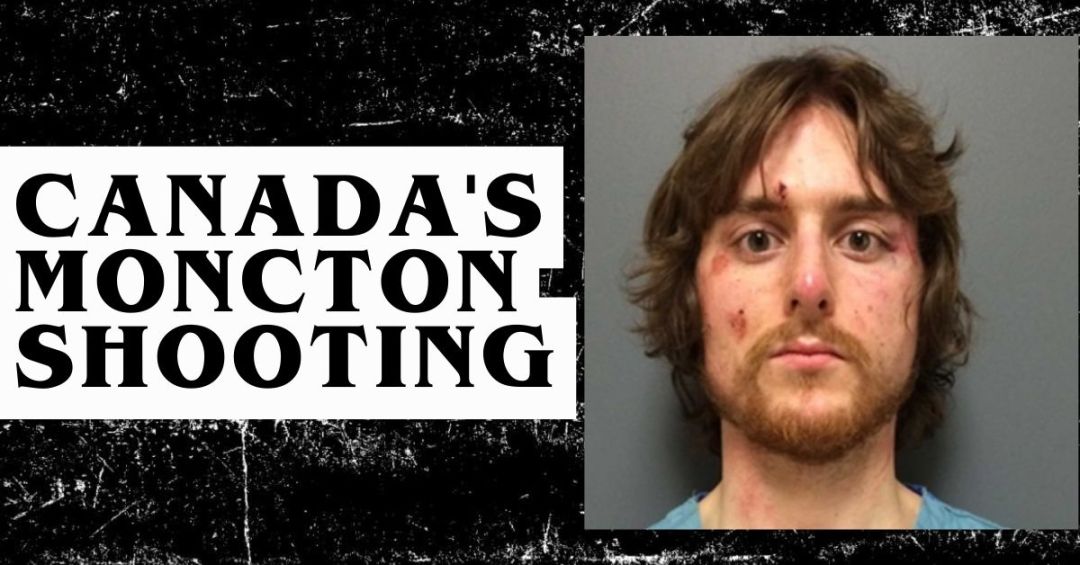

On June 4, 2014, Justin Bourque’s escalating anger and paranoia culminated in a horrifying act of violence. Donning camouflage clothing, he stepped out of his trailer, equipped with a semi-automatic rifle and a shotgun – weapons he was proficient with due to his interest in hunting.
The shooting began at approximately 7:18 PM, during the waning hours of daylight. Witnesses first reported seeing Bourque wandering through the north end of the city near the area of Pioneer Avenue and Hildegard Drive. He appeared eerily calm, as if out for a leisurely stroll, but the deadly firearms he was openly carrying indicated a much more sinister intent.
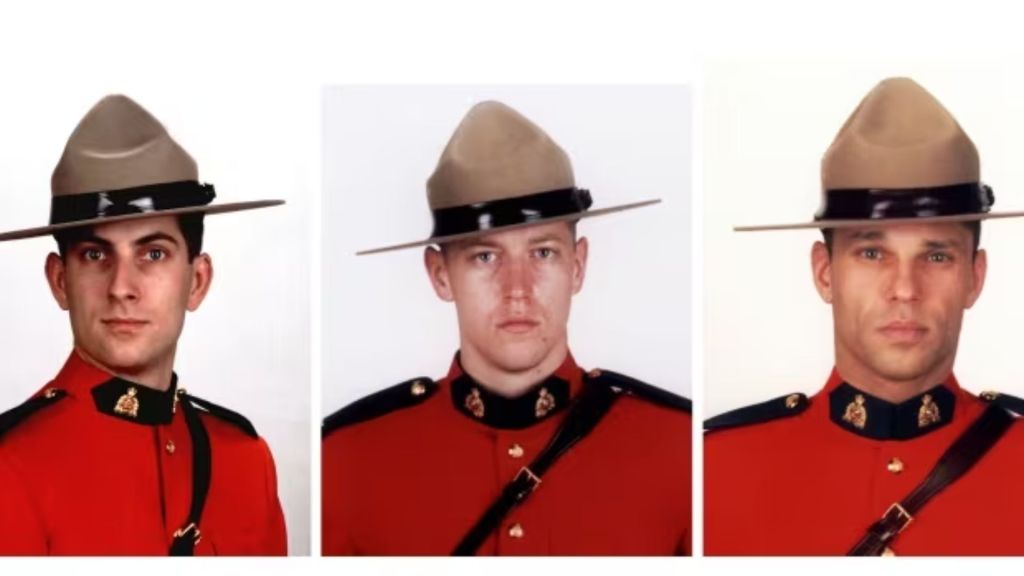
His first encounter was with Constable David Ross, who had just finished his shift and was on his way home when he heard the initial reports of an armed man in the vicinity. Despite being off duty, Ross responded immediately. Tragically, he was shot and killed by Bourque while still inside his vehicle. Ross’s police dog, Danny, was left unharmed in the backseat of the car, scratching and whining at the window in a poignant display of loyalty to his fallen handler.
Around this time, calls started flooding into the local RCMP detachment and 911. Witnesses reported an armed man walking calmly down residential streets, shooting at police officers. They noted the chilling calmness of Bourque, a stark contrast to the mounting fear and chaos around him.
Next, Bourque encountered Constables Fabrice Georges Givaudan and Douglas James Larche. Despite facing intense gunfire, both officers showed exemplary courage, attempting to engage and neutralize the threat posed by Bourque. However, the encounter ended tragically, with both officers losing their lives to Bourque’s ruthless assault.
In a horrifying span of just 30 minutes, Bourque had fatally shot three RCMP officers and wounded two others. Constables Eric Dubois and Darlene Goguen were the officers injured, who, despite their serious wounds, survived this traumatic event.
The locations of these shootings were not clustered but spread out, indicating Bourque’s seemingly aimless wandering through the city’s north end. The randomness of his movement made it more challenging for law enforcement to predict his next steps. The calmness with which Bourque committed these heinous acts and his casual discarding of used ammunition casings further contributed to the horrifying nature of the event.
In the aftermath of the shootings, the city of Moncton was plunged into fear and uncertainty. Residents were advised to lock their doors, stay inside, and keep their lights off. Law enforcement from across New Brunswick and neighboring provinces was called in to assist with the imminent manhunt. The tranquil city had suddenly become the backdrop for a real-life nightmare, one that was far from over.

The Desperate Manhunt
An urgent city-wide lockdown was implemented as darkness began to settle, casting an eerie gloom over the area. Teams of officers from the Royal Canadian Mounted Police (RCMP), equipped with body armor and assault rifles, spread out into the city. Armored vehicles patrolled the streets, while helicopters equipped with infrared cameras whirred overhead. The manhunt was vast and well-coordinated, involving every available resource.
Despite the heavy police presence, Bourque remained elusive. In the darkness, his camouflage outfit offered him the advantage of blending into the surrounding vegetation and the cover of residential backyards. His intimate knowledge of the local area further complicated the efforts to locate him.
Bourque was spotted several times during the night, each sighting adding another thread to the growing tapestry of fear in Moncton. He was seen crossing a road, walking along a railroad track, and cutting through yards, all the while remaining a step ahead of the authorities.
By dawn, the manhunt had grown into one of the largest in Canada’s recent history, yet Bourque had not been located. The city remained on high alert, with schools and businesses closed, and public transit suspended. The residents of Moncton woke up to an unprecedented reality: a city under lockdown, gripped by fear and uncertainty.
The pivotal moment in the manhunt came in the early evening of June 5, roughly 28 hours after the shootings had begun. Bourque was spotted in a wooded area near the intersection of Wheeler Boulevard and Mountain Road, a significant distance from the original crime scenes. He was barefoot, his clothing soaked with rain, appearing weary but not defeated. An RCMP tactical unit closed in on him, and after a brief standoff, Bourque was arrested without any further violence. He surrendered willingly, and his capture marked the end of a tense and grim chapter in Moncton’s history.
The Aftermath
As the city of Moncton sighed with relief after Bourque’s capture, a new chapter began – one of legal proceedings, the search for justice, and answering the question of “why”? It was now time for the courts to dissect the horrific events and the motivations behind them. The trial, set for the month of August, promised a thorough examination of the case, with all its complexity and grim details.
The charges against Bourque were severe and numerous. He was indicted on three counts of first-degree murder and two counts of attempted murder. This marked one of the highest-profile criminal cases in recent Canadian history, one that was to be heavily scrutinized by the media and the public alike.
Bourque’s defense did not contest the factual basis of the charges. On August 6, 2014, he pleaded guilty to all counts. This plea avoided a lengthy trial, yet it opened up a plethora of questions about Bourque’s motivations and mental state. Throughout the proceedings, he showed little emotion, offering no apology or expression of regret for his actions.
In a psychological assessment presented to the court, it was revealed that Bourque had developed a deep-seated hatred for authority figures, especially the police. He harbored a variety of conspiracy theories and had fallen into a state of paranoia, fear, and isolation. His understanding of reality had become severely distorted.
During the sentencing phase, the prosecution argued for consecutive life sentences, a provision allowed under Canadian law for multiple murders. The defense, on the other hand, sought to highlight Bourque’s mental health issues as a significant mitigating factor.
On October 31, 2014, Judge David Smith handed down the sentence. Bourque was given three life sentences for the murder charges and two additional sentences of 10 years each for the attempted murder charges. Notably, the sentences were to be served consecutively, not concurrently, amounting to 75 years before eligibility for parole. This was a historic decision, marking the longest sentence in the modern history of Canada. The decision aimed to reflect the gravity of Bourque’s actions and the devastating impact they had on the community of Moncton and the nation as a whole.


 Deep Lore