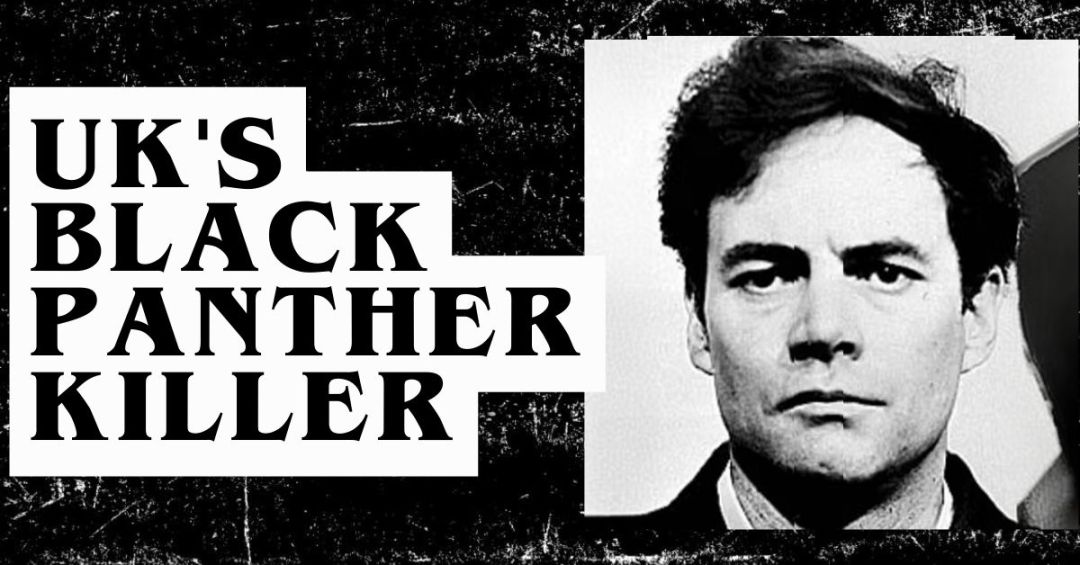

In the darkened streets of 1960s England, a figure moved stealthily from shadow to shadow. No ordinary thief, his crimes would soon escalate into violence, terror, and cold-blooded murder. To the media and the public, he would become known as the “Black Panther.” Yet behind this fearsome nickname lay a man whose descent into crime was as meticulous as it was chilling. This is the story of Donald Neilson, a man whose life took an alarming turn from that of an ordinary citizen to one of Britain’s most notorious criminals.
Donald Nappey was born in August 1936 in Bradford, England. From his earliest days, he felt the sting of ridicule and bullying over his unusual surname. School was a battleground, not a sanctuary. The taunts followed him into his compulsory national service in the military, where, from ages 18 to 20, he served in Kenya, Aden, and Cyprus. Perhaps the military instilled in him a certain discipline or detachment. Or perhaps it was the ridicule that hardened him. Whatever the case, he decided to put an end to the jeers by changing his name to Neilson.
After his service, in 1955, at the age of 19, Donald married Irene Tate. Their union seemed like a fresh start, a new chapter in a life that had been marred by bullying and scorn. They had a daughter named Kathryn in 1960, a symbol of their commitment and love. Donald even pursued a career as a professional soldier but was persuaded by his wife to leave the military behind. It was a decision that would set him on a new path.
Neilson tried to build a stable life for his family. He turned his hands to carpentry, a trade that promised steady work. But the prosperity he sought eluded him. His business, like the wood on which he worked, seemed to splinter and crack, and no matter how hard he tried, he could not make the pieces fit.
He struggled with financial success, with his business ventures frequently running into hardship. A taxi service, a security guard company—all attempts at a new beginning ended in failure. Money troubles weren’t the only demons that haunted him; Donald became increasingly controlling and abusive toward his wife and daughter at home.
By 1965, desperation had led him down a dark path. Neilson turned to burglary to supplement his meager income. No smash-and-grab thief, Neilson’s approach was methodical and precise. Over the next two years, he committed an estimated 400 burglaries without ever getting caught.
His method was systematic, using skills he likely picked up during his military service. He would drill holes in window frames, open latches, and gain entry into homes. “Brace and Bit Burglar,” they called him, a nickname that seemed almost respectful given the cunning nature of his crimes.
Yet despite his success, Neilson found the monetary rewards from burglary limited. He was playing small games, and he knew it. So, in 1967, he graduated to robbing post offices, setting in motion a chain of events that would turn him from a common thief into something far more dangerous.
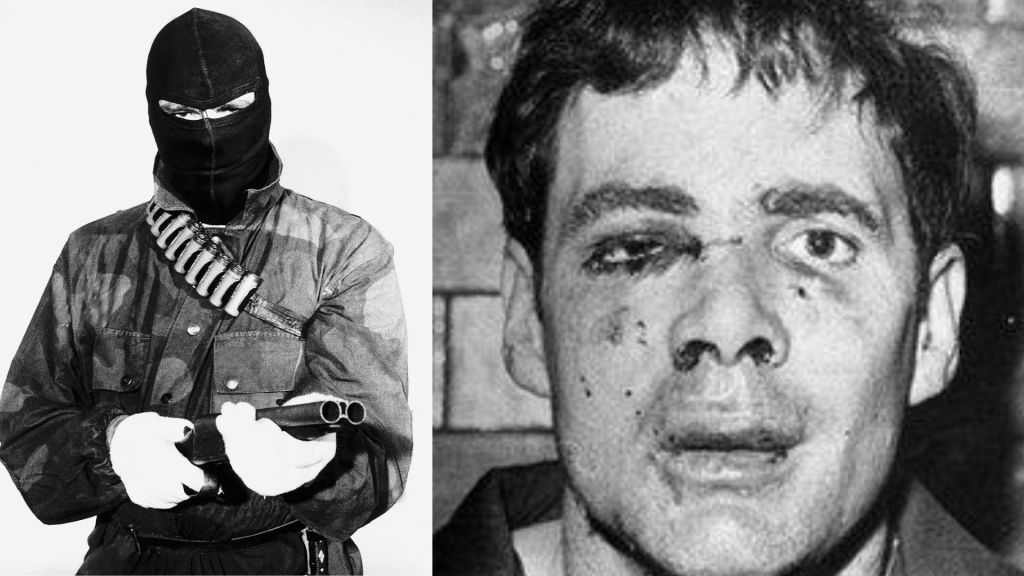
The Black Panther’s Reign of Terror
The cloak of night had always been Donald Neilson’s ally, concealing his movements as he stalked the shadowed streets of Yorkshire and Lancashire. But as the 1970s dawned, something changed within him. The methodical burglar and post office robber morphed into something far more menacing. Neilson’s once carefully controlled criminal activities escalated, and violence crept into his modus operandi. He was about to earn a name that would send chills down the spine of England: the “Black Panther.”
In February 1974, a gunshot rang out in the silent night of Harrogate, North Yorkshire. Donald Skepper, a sub-postmaster, lay dead, a victim of Neilson’s newfound willingness to kill. Neilson had broken into Skepper’s post office, and when confronted, he shot him dead before fleeing empty-handed. This was a turning point. Neilson had crossed a line, and there was no going back.
Neilson’s criminal activities began to escalate in violence and audacity. In September of the same year, he broke into the post office in Higher Baxenden, near Accrington, Lancashire. A struggle ensued with the sub-postmaster, Derek Astin. Neilson’s response was swift and brutal. He shot Astin dead in front of his terrified wife and children.
In November 1974, the pattern repeated itself in Langley, West Midlands. Neilson targeted the post office owned by Sidney and Margaret Grayland. Sidney discovered Neilson during a late-night stocktake, and a gunshot ended his life. Neilson then turned his rage on Margaret, badly beating her and fracturing her skull.
Each crime was marked by increasing brutality, but Neilson’s criminal mastery continued to keep him one step ahead of the law. His spree was far from over, and his most shocking crime was yet to come.
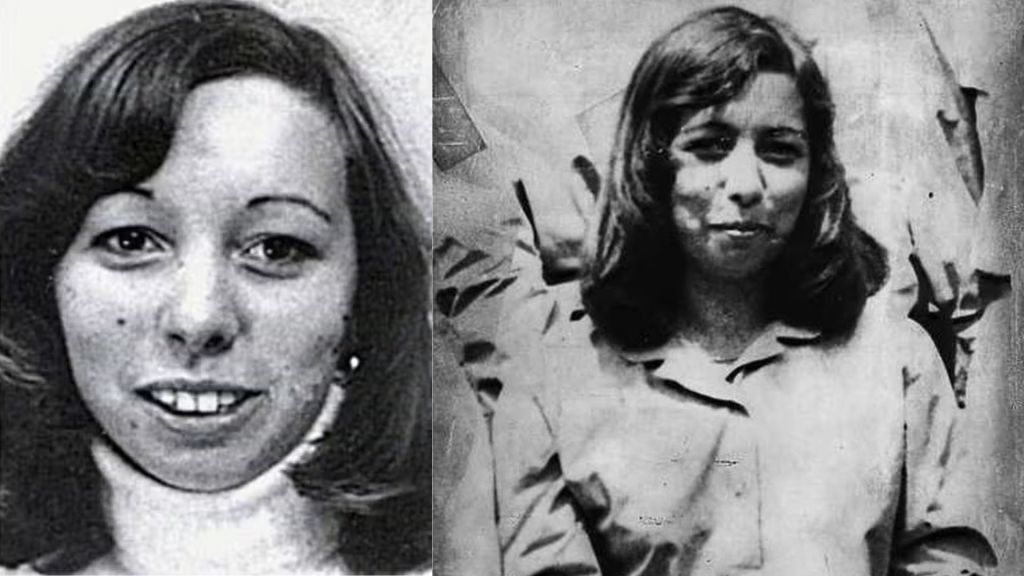
Kidnapping and Murder of Lesley Whittle
In January 1975, Donald Neilson set his sights on 17-year-old Lesley Whittle. Living in Highley, Shropshire, Lesley had recently inherited a substantial amount of £82,500 after her father’s death. This inheritance attracted Neilson’s attention, and he began planning his most audacious crime to date: a kidnapping for ransom.
Late at night on January 14, 1975, Neilson, armed and wearing dark clothing, broke into Lesley’s family home. Creeping into her bedroom, he woke her with his hand over her mouth to prevent her from screaming. Neilson allowed her to dress in a dressing gown and slippers before taking her at gunpoint.
He left a ransom note downstairs, demanding £50,000 and threatening to kill Lesley if the family contacted the police. Despite the chilling threat, Lesley’s family discreetly brought in the authorities.
Neilson’s chosen place of confinement for Lesley was an abandoned drainage shaft at Bathpool Park near Kidsgrove Staffordshire. In this dark and dank space, Neilson tethered Lesley by a wire noose around her neck, leaving her on a ledge with minimal provisions. The conditions were terrifying and inhumane. Lesley was left alone, trapped in a space where escape was impossible, waiting for her captor to return.
Over the following week, Neilson attempted to arrange the exchange of Lesley for the ransom money. Communicating through coded messages and using Lesley’s brother Ronald as an intermediary, he orchestrated multiple ransom drops. However, these attempts were marred by police errors and leaks to the media. The exchanges failed, time and time again, with the tension escalating as Neilson’s anger grew.
After a particularly botched ransom drop, Neilson returned to the drainage shaft, furious and possibly panicked. What exactly transpired is unknown, but Neilson likely killed Lesley by strangling her or pushing her from the ledge, causing her to die.
Her body was discovered two months later, naked and hanging in the shaft where she had been held captive. The image of her tragic and brutal end is one that haunts both the public and those involved in the case.

Capture, Conviction, and Legacy of the Black Panther
The dark winter of 1975 found England in the grip of fear as the crimes of the “Black Panther” continued to make headlines. Donald Neilson’s criminal escalation had reached its zenith, but as the year drew to a close, his reign of terror was about to come to a shocking and unexpected end.
On a cold night in December 1975, Neilson’s criminal career abruptly unraveled. An attempt to kidnap two police officers in Nottinghamshire went awry, leading to a struggle and Neilson’s eventual arrest. The man who had eluded capture for so long was finally in custody, and his terrifying crime spree was brought to a halt.
The arrest was only the beginning. Neilson initially refused to cooperate but eventually confessed to the murders of the four postmasters and the kidnapping and killing of Lesley Whittle. His claim that the deaths were accidental fell on deaf ears.
In July 1976, Neilson’s trial began, marked by the chilling testimony and irrefutable evidence that laid bare his calculated and brutal crimes. The courtroom heard the details of each robbery, each murder, and the horrific kidnapping of Lesley Whittle. The image that emerged was one of a ruthless, methodical killer.
Neilson was convicted on all counts and given five life sentences, with the judge recommending he never be released. His fate was sealed, and he was sent to Norwich Prison to serve his time. The nation breathed a sigh of relief; the “Black Panther” was behind bars.
Behind the prison walls, Neilson adjusted to his new life. He worked as a cleaner and was considered a model prisoner, not causing trouble. His only attempt to appeal against his sentence in 1977 was quickly rejected, and Neilson seemed to accept his fate.
In 2008, his health began to decline as he was diagnosed with motor neuron disease. A series of strokes further weakened him, and in 2011, Donald Neilson died of complications from his illness, still imprisoned at Norwich Prison. His death was as quiet as his life in prison had been, but the legacy of his crimes lingered.
Donald Neilson, the “Black Panther,” remains one of Britain’s most infamous criminals. His transformation from a struggling carpenter to a master burglar, and finally to a cold-blooded murderer, is a tale that continues to captivate and horrify. The details of his crimes, his methods, his capture, and his conviction are etched into the annals of British criminal history.


 Deep Lore