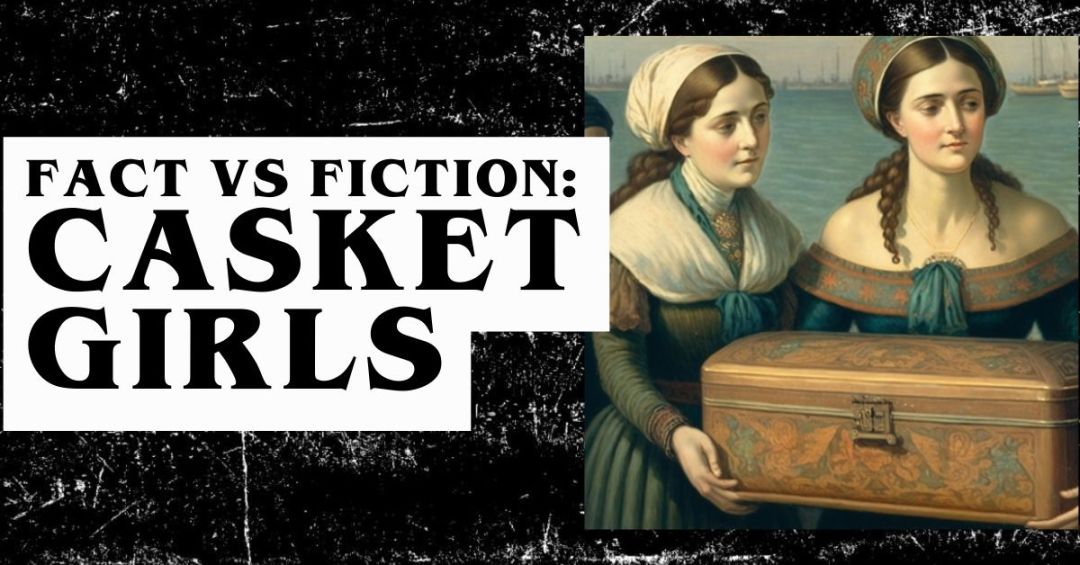

In the early 18th century, as the port of New Orleans bustled with activity, a mysterious group of young women stepped ashore, clutching peculiar coffin-shaped caskets. Their arrival sparked rumors that would echo through the centuries, forever entwining their story with legends of the supernatural. Delve into the captivating tale of the casket girls of New Orleans, young women whose journey from France to the budding Louisiana colony would leave an indelible mark on the city’s history and lore.
In the vast expanse of the French colonies in North America, a pressing problem loomed – a severe shortage of marriageable women. To address this issue, King Louis XIV of France devised a plan in the 1660s, aptly named the “King’s Daughters” program. Handpicked from convents and orphanages, young women were recruited to journey across the Atlantic to Canada, where they were to be potential brides for the French colonists. The program proved somewhat successful, albeit with some women finding a different path upon arrival, and the program came to an end by the 1670s.
However, as time passed, other attempts were made to send women to the French colonies, particularly to Louisiana, which was then known as La Nouvelle Orléans. In subsequent endeavors, the groups sent included convicts and prostitutes, a far cry from the virtuous brides sought for the new settlement. These unsuitable matches only compounded the issue, leaving the French colonists in Louisiana still yearning for appropriate companionship.
Then, in 1728, the pivotal moment arrived when the enigmatic “casquette” or casket girls set foot in New Orleans. Unlike the earlier attempts, these girls were meticulously chosen from reputable convents and orphanages in France, with only one purpose in mind – to become virtuous brides for the French colonists inhabiting the growing Louisiana colony.
On that fateful day, the young women disembarked from the ship, their eyes filled with curiosity and anticipation of the unknown. Each of them clutched a cassette, a small chest containing all of their belongings. After nearly six months of traversing the rough waters of the Atlantic Ocean, their eagerness to make a new home in the foreign land was palpable. However, little did they know that their arrival would set off a chain of rumors and myths that would entwine their legacy with the supernatural, giving rise to the infamous “casket girls” of New Orleans.
Myth vs. Reality

Pale and ghostly, the casket girls stepped onto the soil of New Orleans, and with their arrival, whispers of the supernatural began to circulate throughout the town. The Frenchmen muttered to themselves, observing how the young women’s skin reddened and blistered under the scorching sun of the subtropical climate. In the minds of some, they had set foot upon the land of the living dead – vampires.
Legend has it that upon their arrival, the casket girls were housed in the Ursuline Convent, and on the third floor, a chilling secret lay concealed. According to the tales that swirled through the city, the girls brought with them caskets that were not ordinary suitcases but rather, coffin-like boxes containing the undead – vampires. The doors and windows of the third floor were sealed shut, and the cassettes were locked away, never to be opened, forever imprisoning the vampires within.
However, the reality is far less sinister than the stories suggest. The caskets brought by the casket girls were indeed small chests, but they were meant for storage, carrying their belongings for their new lives in the colony. The term “casket” used to describe these containers was not synonymous with a burial object at the time. The word “cassette” in the context of the 18th century referred to a small box for jewels or a chest for storage.
The idea that the caskets held vampires is entirely unfounded, as there is no historical evidence to support such claims. The rumors and myths likely grew out of the fascination with the supernatural, fueled by fiction and popular culture.
The casket girls’ pale appearance upon their arrival can be attributed to their long journey across the Atlantic Ocean. After spending nearly six months aboard a ship, often below deck to maintain their virtue and protect them from the perils of sea travel, their skin would naturally appear paler compared to the sun-kissed French Creoles living in the subtropical climate of New Orleans.
The notion of the casket girls being vampires is nothing more than imaginative folklore. The myths that surround their arrival and the sealed third floor of the Ursuline Convent have no historical basis. There is no record of the early New Orleanians associating the young women with vampires or any supernatural entities. Instead, their arrival marked an attempt to foster a new population in the colony through arranged marriages.
As with many legends, over time, stories surrounding the casket girls were embellished and exaggerated, weaving the supernatural into the fabric of their history. Authors like Anne Rice, famous for her vampire-themed novels set in New Orleans, may have further perpetuated these tales, captivating readers with fantastical narratives.
In truth, the casket girls were ordinary young women, seeking new lives in the New World. They were cared for and educated by the Ursuline nuns until their marriages to French colonists. Their journey marked a significant chapter in the growth of the colony and laid the foundation for a cultural legacy that continues to influence the city’s folklore, fiction, and music.

The Haunting Legacy
The Ursuline nuns embraced the casket girls, providing them with care, education, and guidance as they embarked on their new lives in the budding Louisiana colony. From strangers in a foreign land, these young women became the mothers and wives who contributed to the growth and development of New Orleans.
Under the compassionate care of the Ursuline nuns, the casket girls found solace and support. The nuns not only ensured their well-being but also imparted essential skills and knowledge to prepare them for their roles as wives and mothers. The convent became a sanctuary for the young women, fostering a sense of community and camaraderie among them.
The Ursuline nuns left a lasting legacy in New Orleans by establishing a school that continued to educate generations of young women. The Ursuline Academy, founded in 1727, remains one of the oldest continuously operating schools for girls in the United States.
The legends and myths that surround the casket girls have endured over the centuries, passed down through generations as part of New Orleans’ oral tradition. These stories have become woven into the fabric of the city’s lore, captivating residents and visitors alike with their blend of history and mystery.
But, the casket girls of New Orleans were not the bloodthirsty vampires of legend but rather courageous young women who ventured far from home in search of a better future. The casket girls remain a testament to the power of the human spirit and the enduring allure of folklore and myth.


 Deep Lore