
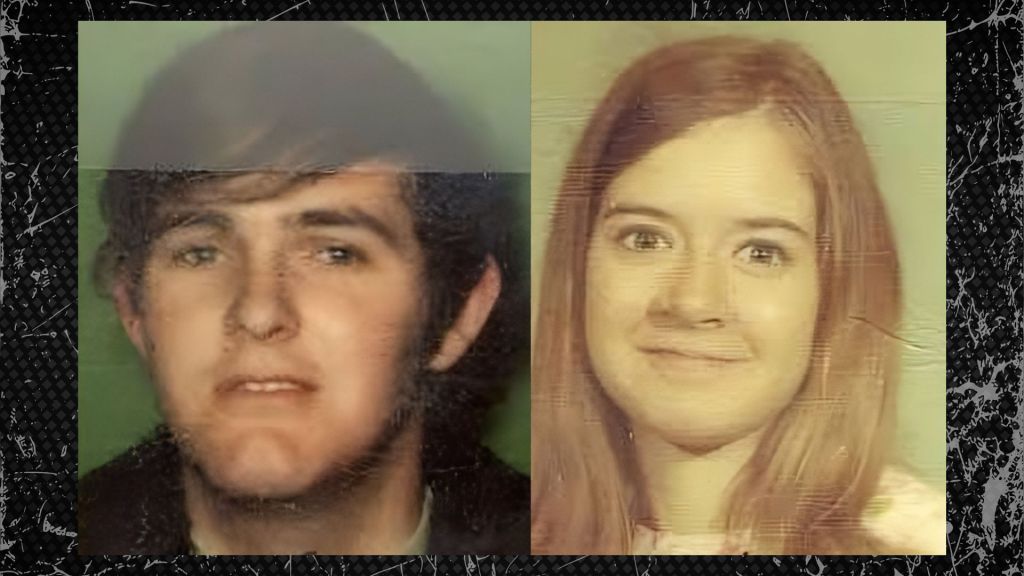
In the heart of Ohio State University, two bright souls intertwined in a bond of budding love met a fate that no one could have foreseen. Their names would soon make headlines, but for reasons far removed from the hopes and dreams they harbored.
William “Bill” Sproat, with his charismatic demeanor, was known for his infectious laughter and an undying passion for his studies. A native of Ravertown, Pennsylvania, Bill was more than just an OSU student; he was a dreamer, a friend who would give the shirt off his back, and someone who believed in making a difference.
Mary Petry, on the other hand, was the embodiment of vivacity. Hailing from Portsmouth, she had a zest for life that was palpable. An art lover, every stroke of her brush told a story, and every canvas she touched turned into a testament to her talent. Her compassionate nature made her a beacon of hope for many, a confidante who listened more than she spoke.
It was on the OSU campus that their paths crossed. Perhaps it was a shared class or a mutual friend that brought them together, but once they met, their connection was undeniable. Their friends often spoke of the electric chemistry between them, of stolen glances and shared secrets. The campus, which had been a witness to countless romances, saw yet another love story unfolding, a story filled with promise and dreams of a shared future.
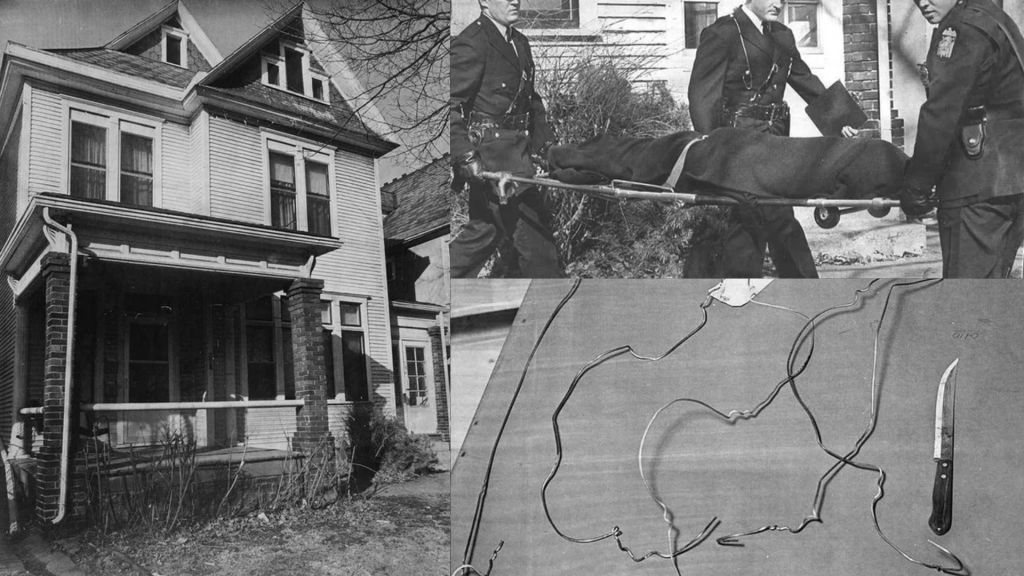
Yet, beneath the surface of their blooming relationship, a dark cloud loomed. In their very own apartment, late one fateful Friday or early Saturday in early March of 1970, the unimaginable happened. It wasn’t a simple case of a robbery gone wrong or a random act of violence. The very place they called home became the stage for a brutal act that defied understanding. Rumors spread about the nature of the crime: a butcher knife, a bowling ball—tools that bore witness to the sheer brutality of the act. The speculation of a sexual assault motive added another layer of horror to an already chilling narrative.
The news spread like wildfire. Friends, family, and the entire community were left in shock. How could two such vibrant individuals, in the prime of their lives, meet such a cruel fate? The very walls of their apartment, which once echoed with their laughter, now stood silent, bearing the grim testimony of a tale cut short.
As the days passed, the weight of their absence was felt more profoundly. Their love story, which should have been celebrated for years to come, was now a poignant reminder of life’s unpredictable nature. They were no longer just names in a news article; they were a symbol of lost potential, dreams unfulfilled, and a love story that deserved a better ending.
The Investigation and Theories
The Ohio State University community was in turmoil. The brutal murders of two promising students had left an indelible mark on everyone’s psyche. The pressure was mounting on the police to bring the perpetrators to justice and restore a sense of security.
The initial stages of the investigation were fraught with challenges. Forensic evidence was scarce, and the nature of the crime scene suggested a level of brutality that was difficult to comprehend. Detective Lt. Robert Ruddock and his team were faced with a puzzle that seemed to have more missing pieces than available clues. The challenge was compounded by the looming possibility of a sexual assault, a motive that added an even darker shade to an already grim tale.
As days turned into weeks, a potential lead emerged. Reports of a serial rapist, with a modus operandi strikingly similar to the circumstances surrounding the murders, began to surface. The Columbus Police Department, grasping at the potential link, released a composite sketch of the rapist based on descriptions from assault victims. The question that haunted everyone’s mind was whether this string of sexual assaults was in any way connected to the tragic fate of Bill and Mary.
This line of inquiry brought its own set of complexities. While some victims’ accounts seemed to align with the brutality meted out to the young couple, definitive evidence linking the two sets of crimes remained elusive. The police were in a race against time, with a potential serial offender on the loose and a community living in fear.
Parallel to the official investigations, the community wasn’t passive. Residents shared stories, exchanged notes on suspicious activities, and tried to piece together the events of that fateful night. Anecdotal accounts emerged: a female student’s tale of thwarting a home invasion, a local paperboy’s odd sighting near the murder scene, and the eerie discovery of a bloody throw rug in an abandoned bakery truck. Each piece of information, no matter how trivial, was meticulously examined in the hope of finding the missing link.
Yet, as weeks turned into months, the case grew colder. The initial public outcry slowly subsided, replaced by a resigned acceptance of the mysteries that seemed destined to remain unsolved. The police continued their relentless pursuit, sifting through mountains of evidence, interviewing countless witnesses, and chasing down every lead, no matter how faint.
The enduring hope was that justice would eventually prevail, that the memories of William Sproat and Mary Petry would be honored by the revelation of the truth, however painful it might be. The community, while trying to move forward, clung to the belief that the pieces of this tragic puzzle would someday come together, shedding light on a tale that had cast a long shadow over the heart of Ohio State University.
The Aftermath and Legacy
The initial shock and outrage that had engulfed the Ohio State University community began to ebb, but the scars left by the murders of William Sproat and Mary Petry remained raw. The campus, once a haven for academic pursuits and youthful dreams, had become a constant reminder of the fragility of life and the shadows that sometimes lurk in unexpected corners.
In the wake of the tragedy, a palpable change swept over the university area. The once-lively streets saw fewer late-night wanderers, with students opting to travel in groups. Conversations often veered towards personal safety, and many, especially women, took proactive measures to protect themselves. Chemical mace, alarms, and other self-defense tools became more common. Residents, no longer taking their safety for granted, fortified their homes with additional locks, metal rods, and security systems.
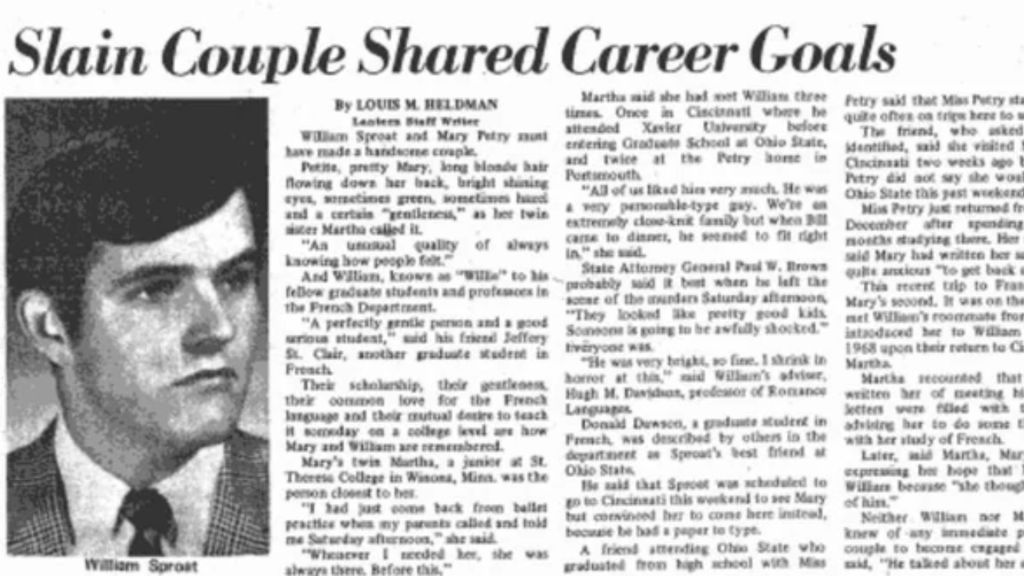
The media played a pivotal role in shaping the narrative around the murders. While initial coverage was extensive, focusing on the brutality of the crime and the personal stories of Bill and Mary, the news cycle, as it often does, moved on. The infamous Kent State shootings and the subsequent anti-war protests across the nation soon dominated headlines, pushing the Sproat-Petry case into the background. Yet, for those directly affected, the pain remained ever-present, and the quest for answers never waned.
The broader crime trends in the OSU area during that period painted a concerning picture. Reports from local publications like The Lantern highlighted a worrying surge in serious offenses, from sexual assaults to aggravated attacks. The murders of Bill and Mary weren’t isolated incidents but rather tragic markers in a series of violent episodes that had plagued the community.
Years passed, but the legacy of the Sproat-Petry case endured. For many, it served as a somber reminder of the unpredictability of life and the importance of cherishing every moment. For others, especially those who had known the couple personally, it was a testament to the memories of two bright souls whose lives were unjustly cut short.
The case, with its unresolved mysteries, became a part of Ohio State University’s lore—a haunting tale of love, loss, and the relentless quest for justice. While the immediate pain of the tragedy faded with time, the lessons it imparted and the conversations it sparked continue to resonate, ensuring that the memories of William Sproat and Mary Petry live on, not just as victims, but as symbols of hope, resilience, and the indomitable human spirit.
In the years that followed, the university and the community took steps to honor the memory of Bill and Mary. Memorials were established on campus, and scholarships were created in their names to support students pursuing studies in fields that Bill and Mary had been passionate about. These gestures served as a way to keep their spirits alive and inspire future generations to strive for greatness.
The tragedy also prompted changes in campus safety measures and community awareness. The university and local authorities worked together to enhance security, promote self-defense education, and encourage students to look out for one another. It was a collective effort to ensure that no one else would suffer a similar fate.
While the case of William Sproat and Mary Petry remained unsolved, the impact they had on the Ohio State University community was undeniable. Their love story, cut short by a senseless act of violence, served as a stark reminder of the fragility of life. Their enduring legacy was one of resilience and the determination to make the world a safer place.
As time passed, the pain of their loss evolved into a shared commitment to ensure that their memory would not be forgotten. The story of Bill and Mary became more than a tragedy; it became a source of strength, inspiring a community to come together, protect one another, and strive for justice. And in that way, the love and light that William Sproat and Mary Petry brought into the world continued to shine brightly, even in the face of darkness.


 Deep Lore