
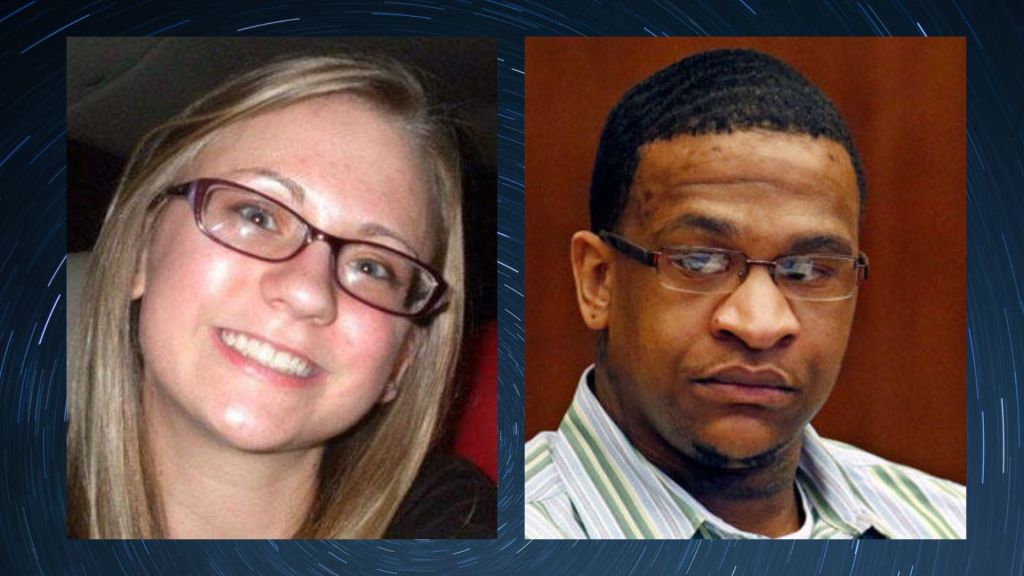
On December 6, 2014, a small Mississippi town was rocked by a heinous crime that would puzzle investigators for years to come. Nineteen-year-old Jessica Chambers was found burning alive next to her car, which was also engulfed in flames. Her body was burned beyond recognition, and the cause of death was determined to be a combination of smoke inhalation and burns.
The Mystery Unfolds
The mystery began to unfold when authorities discovered that someone had poured gasoline on Jessica’s body, up her nose, and down her throat. The fact that someone had gone to such lengths to ensure that she died a painful and horrific death raised more questions than answers.
The investigation into Jessica’s death began in earnest, with authorities questioning anyone who may have had contact with her on the day of her murder. They quickly discovered that Jessica had spent the morning with two friends before heading to her mother’s house to take a nap. Later in the afternoon, she received a text from someone and left to grab a bite to eat and clean out her car.
Jessica was last seen at a gas station around 5:30 p.m., and her cell phone data showed that she traveled to nearby Batesville around 6 p.m. before returning to Courtland around 6:30 p.m. Authorities were unsure what Jessica was doing in Batesville or who she may have been meeting with.
Around 7:30 p.m., Jessica drove to the area where her body was found, and a short time later, she was discovered by firefighters who responded to a call of a burning vehicle. Her last words, “Help me,” were spoken to the fire chief as she walked toward him in just her underwear, burned beyond recognition.
The Investigation and Suspects
In the days following Jessica’s death, authorities questioned numerous suspects, including her boyfriend who was in jail at the time. They also investigated anyone with the name Eric or Derrick, as those were the names Jessica allegedly muttered to first responders.
Finally, in 2016, a breakthrough came. Quinton Tellis, a local gang member, was indicted on capital murder charges in connection to Jessica’s death. Tellis was no stranger to law enforcement; he had a lengthy criminal history, including prior convictions for burglary, drug possession, and fleeing from police. He had also been arrested the year before for the murder of a Taiwanese national, Meing-Chen Hsiao, whose credit cards he was caught using after her death.
Investigators connected Tellis to Jessica through cell phone and text records. He had known her for a few weeks, and they were allegedly romantically involved. He was also the last person who texted her before her death. Tellis initially claimed that he had only been with Jessica during the morning of December 6th, 2014. However, location data from their cell phones showed that they were together until around 7:30 pm. When confronted with the discrepancies, Tellis changed his story multiple times.
Prosecutors believed that while in Tellis’ driveway, he had tried to have sex with Jessica, but she resisted. They believed that he became enraged and suffocated her until she was unconscious. In order to distance himself from the crime, he then drove her car to the area where it was later found, ran on foot to his sister’s home nearby, took her car, picked up gasoline from his home, returned to Jessica’s car, and set it on fire, with her inside.
The evidence against Tellis was damning. A sample of his DNA was taken, which was found to match DNA taken from Jessica’s car keys. It was discovered that they were found along a path between the crime scene and his sister’s home. Surveillance video showed a vehicle, believed to his sister’s, stopping briefly at his home at 7:50 pm before driving towards the crime scene. Surveillance video also helped show that he had changed his clothes three times that day.
Tellis’ defense tried to pin the crime on someone named “Eric” or “Derrick,” whom Jessica allegedly identified as her killer. However, investigators ruled out everyone in the area with those names. Furthermore, doctors and other experts noted that it would have been difficult for Jessica to say anything properly due to the injuries to her mouth and throat. Furthermore, she did not use her cell phone to talk to anyone named Eric or Derrick in the thirty days prior to her murder.
The Trial and Outcome
At Tellis’ trial, prosecutors presented strong evidence linking him to the crime. They had seemingly incriminating texts and voicemails from Tellis to Jessica, and District Attorney John Champion and then-ADA Jay Hale brought forward surveillance video evidence of Tellis in the gas station the night Jessica died. When Tellis was told of Jessica’s death, he didn’t have any reaction. That’s strange, they argued, considering he just spent parts of the day with her.
With then-Department of Justice analyst Paul Rowlett on the stand, Hale confirmed that Tellis had deleted Jessica’s texts and contacts from his phone. Tellis, they said, had told investigators he didn’t see any reason to keep her in his phone if she was dead.
Despite this evidence, the jury was unable to reach a verdict, resulting in a hung jury. The prosecution brought the case to trial again in 2018, adding an expert witness to talk about Jessica’s airway burns, and they brought a witness who said she picked Tellis up that night and gave him a ride. He seemed nervous and sweaty, she said. However, the jury hung again.
The Unsolved Case
The case of Jessica Chambers has remained unsolved for almost a decade now, and as the years go by, it seems less and less likely that her killer will ever be brought to justice. Despite a lengthy investigation and two trials, no one has been convicted of her murder, and the case remains one of the most baffling in recent history.
One of the biggest mysteries surrounding the case is the identity of the person Jessica referred to as “Eric” or “Derrick” in the moments before her death. Although investigators interviewed numerous people with those names, none of them were able to shed any light on the matter. Some have speculated that the name might have been a nickname or a code word for someone else entirely, but without more information, it’s impossible to know for sure.
Another puzzle is the motive behind the killing. Although Jessica was known to have been involved in drug dealing, there is no evidence to suggest that this had anything to do with her death.
The future of the case is uncertain as prosecutors are undecided on whether they will bring it to trial again. Many experts speculate that the outcome of Tellis’ trial in Louisiana may play a role in the decision. The tragedy of Jessica’s death has been compounded by the passing of her mother, Lisa Daugherty, who never saw justice for her daughter. Adding to the heartbreak, Travis Sanford, Jessica’s former boyfriend, was killed in a senseless gambling dispute in 2019.
The investigation team has also seen major changes with the retirement of lead investigator Tim Douglas and the transfer of ATF agent Scott Meadows. Former Assistant District Attorney Jay Hale now works for the United States Attorney’s Office, while then-Sheriff Dennis Darby lost his re-election bid, and most of his detectives have moved on to other agencies.
The tragedy of Jessica’s death has reverberated throughout the community with the recent loss of Jerry King, the man who found Jessica’s car keys. He was killed in a tragic accident when his ATV was rear-ended by a county deputy. The case is far from resolved, and the question of who is responsible for Jessica’s untimely death continues to haunt those who knew and loved her.
Conclusion
The murder of Jessica Chambers is a heartbreaking case that continues to captivate the nation’s attention. Despite the efforts of law enforcement and prosecutors, her killer remains at large. The tragedy of her death has been compounded by the passing of her mother and the loss of others who were connected to the case.


 Deep Lore