

In the vast realm of true crime, where stories of serial killers captivate our morbid fascination, one mystery stands out as both perplexing and haunting—the legend of the Smiley Face Killer. Over the years, this mysterious figure has become a subject of intense speculation and debate among true crime enthusiasts, captivating their imaginations with its eerie allure.
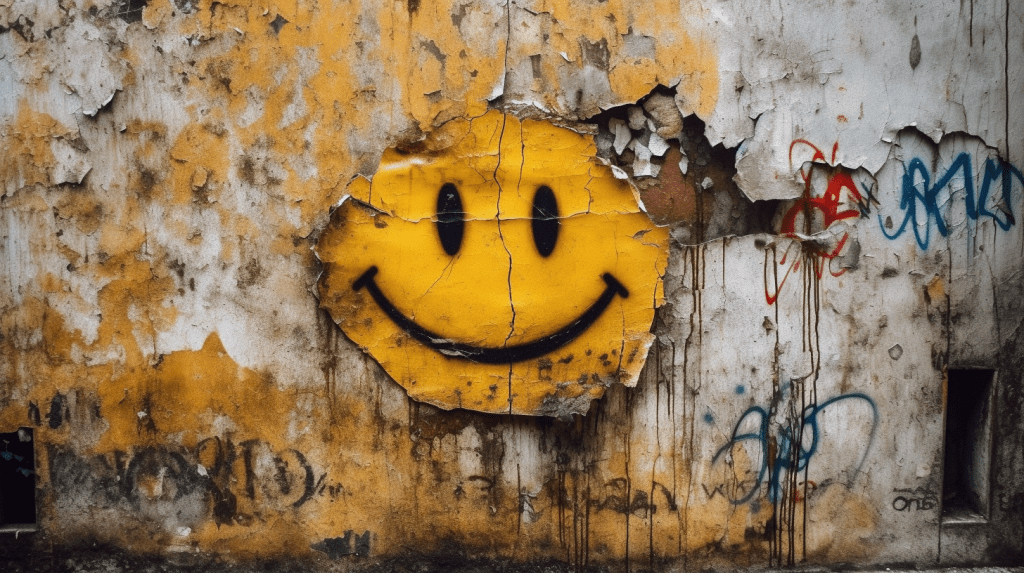
Our story commences in the late 1990s, when law enforcement agencies across the United States began to notice a disturbing pattern—a series of eerily similar deaths involving young, athletic males. What made these cases particularly intriguing was the mysterious appearance of smiley face graffiti near the locations where the victims’ bodies were discovered. This macabre symbol, etched in haunting yellow, seemed to mock the tragic loss of these young lives.
The earliest known case associated with the Smiley Face Killer dates back to 1997, in Minneapolis, Minnesota. The lifeless body of Patrick McNeill, a vibrant college student, was found floating in the Mississippi River. Curiously, a smiley face emblem had been spray-painted nearby, leading detectives to question whether this was a mere coincidence or the signature of a cold-blooded killer.
As news of Patrick McNeill’s death spread, investigators began to connect the dots. Similar smiley face symbols appeared in close proximity to other drowning victims across the country—New York, Wisconsin, Ohio, and beyond. The victims shared strikingly similar profiles: young, white males, often college students or recent graduates, with no apparent connection to each other. The chilling realization that a sinister force might be at work sent shivers down the spines of law enforcement officials and the public alike.
While some skeptics dismissed the Smiley Face Killer theory as mere coincidence or the product of an overactive imagination, others became convinced that a malevolent predator was systematically preying on these young men. This conviction grew stronger as additional cases emerged, seemingly bolstering the sinister narrative. The Smiley Face Killer was no longer just a rumor whispered among true crime enthusiasts; it had become a captivating mystery that demanded answers.

The Investigation Unfolds
As the chilling cases continued to stack up, law enforcement agencies found themselves faced with an unsettling mystery. The appearance of the smiley face symbol near the victims’ bodies seemed to taunt investigators, leaving them desperate for answers. The hunt for the elusive Smiley Face Killer had begun in earnest.
In response to mounting public concern and growing media attention, task forces were assembled in various cities affected by the series of drownings. The aim was to pool resources, share information, and hopefully uncover the truth behind these perplexing deaths. Detectives pored over crime scenes, interviewed witnesses, and scrutinized every possible lead, seeking to connect the dots and identify a pattern that could break the case wide open.
As the investigations progressed, a number of commonalities among the victims began to emerge. Many of them had been out socializing in the hours leading up to their disappearances, often frequenting bars or attending parties. Some were last seen leaving establishments or walking alone late at night, vanishing without a trace. The circumstances surrounding their deaths were eerily similar—each victim was found drowned in bodies of water, such as rivers, lakes, or canals, with no signs of struggle or forced entry.
One of the most perplexing aspects of the Smiley Face Killer theory was the meticulous planning seemingly involved. The precise placement of the smiley face graffiti suggested a deliberate act, hinting at a twisted desire for notoriety. But who was responsible for these chilling messages? Was it the work of a lone psychopath or a coordinated effort by a group of killers?
As the investigations unfolded, skepticism began to creep in. Some experts questioned whether the smiley face graffiti found near the crime scenes was truly connected to the deaths at all. They argued that the symbol’s appearance could be attributed to mere coincidence or the work of unrelated individuals engaging in acts of vandalism. Doubt started to cast a shadow over the Smiley Face Killer theory, leaving both investigators and the public grappling with uncertainty.

The Prevailing Theories
With the investigations into the Smiley Face Killer cases gaining momentum, a range of theories emerged, each attempting to shed light on the chilling enigma. As the public’s fascination grew, experts and armchair detectives alike debated the possible explanations behind the series of mysterious drownings. Let’s explore some of the prevailing theories that captured the imagination of true crime enthusiasts.
Theory 1: The Serial Killer: One prevailing theory proposed that a cunning and elusive serial killer was behind the Smiley Face murders. Advocates of this theory argued that the meticulous planning and consistent patterns found in the cases were indicative of a single individual with a macabre agenda. They believed that the smiley face symbol was the killer’s signature, an audacious mark left behind to taunt investigators. This theory suggested a cold-blooded predator methodically stalking and targeting young men, leaving behind a trail of perplexing deaths.
Theory 2: The Smiley Face Gang: An alternative theory gained traction, proposing that the Smiley Face killings were not the work of a lone perpetrator but rather a group or gang. Advocates of this theory pointed to the geographic spread of the cases and the coordination required to execute the crimes without detection. They suggested that the smiley face graffiti was the gang’s calling card—a symbolic way of signifying their dark deeds. This theory sparked intrigue, raising questions about the motives and organization behind the alleged gang’s actions.
Theory 3: Coincidence and Urban Legends: As skepticism grew, skeptics argued that the Smiley Face Killer theory was nothing more than an urban legend fueled by media hype and a desire for sensationalism. They contended that the smiley face graffiti found near the crime scenes was coincidental, a product of unrelated individuals engaging in acts of vandalism. According to this theory, the similarities between the cases were mere chance, and the connections drawn were a result of confirmation bias and the human tendency to find patterns where none exist.
Theory 4: Accidental Drownings and the Smiley Face Overlay: A more rational explanation posited that the drownings were tragic accidents rather than deliberate acts of violence. Proponents of this theory argued that intoxicated individuals, often after a night of drinking, inadvertently stumbled into bodies of water, resulting in their untimely deaths. They suggested that the smiley face graffiti was coincidental, painted by unrelated individuals who saw an opportunity to contribute to the growing legend. According to this theory, the Smiley Face Killer was an overlay—an imaginative narrative superimposed onto a series of unrelated events.
As investigators continued their pursuit of the truth, these theories generated fervent debate, capturing the imagination of true crime enthusiasts around the world. The Smiley Face Killer phenomenon had morphed into a multifaceted mystery, one that tantalized with the promise of an elusive truth yet to be discovered.
The Enduring Legacy
As the years passed, the Smiley Face Killer theory left an indelible mark on the true crime landscape, captivating the minds of both enthusiasts and skeptics alike. While the cases associated with the theory remained unsolved, their impact on popular culture and the true crime community was undeniable.
The Smiley Face Killer theory became a subject of fascination for armchair detectives, inspiring countless discussions, online forums, and podcasts. It ignited a renewed interest in cold cases and the psychology behind serial killers, prompting a wave of amateur investigations and speculative theories. The allure of the unknown and the desire to uncover hidden truths kept the legend alive, even in the absence of concrete evidence.
Yet, as time passed and investigations failed to provide definitive answers, doubts surrounding the Smiley Face Killer theory continued to grow. Skeptics argued that the connections drawn between the cases were tenuous at best, highlighting the lack of concrete evidence linking the deaths to a single killer or group. The smiley face graffiti, once seen as a haunting signature, came to be seen as mere coincidence or the result of unrelated individuals engaging in vandalism.
In the face of mounting skepticism, some law enforcement agencies decided to reevaluate the cases associated with the Smiley Face Killer theory. They embarked on comprehensive reviews, employing new investigative techniques and technologies in the hope of uncovering fresh leads or uncovering overlooked evidence. These efforts aimed to provide closure to the families of the victims and to definitively answer the question that had lingered for so long: Was there a Smiley Face Killer?
As the true crime community continues to grapple with the mystery of the Smiley Face Killer, one thing remains certain—the allure of unsolved crimes and enigmatic figures will persist. The story of the Smiley Face Killer leaves us with more questions than answers. Perhaps one day, new evidence may come to light, reigniting the investigation and offering the closure that has eluded us for so long.


 Deep Lore