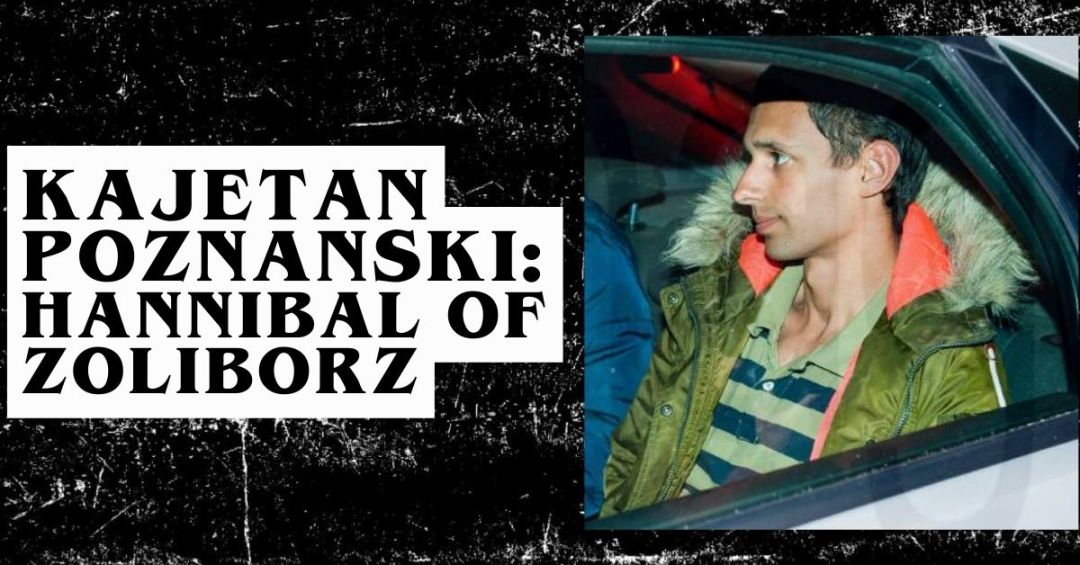

The “Hannibal of Zoliborz”: The Chilling Tale of Kajetan Poznanski
In the shadow of obsession, a young, promising student’s dark infatuation with the fictional character Hannibal Lecter led to a crime that would forever haunt the nation of Poland. Kajetan Poznanski, a 27-year-old student, brutally murdered his language teacher, Katarzyna Jaroszynska, in a twisted act that earned him the moniker “Hannibal of Zoliborz.” Now, in a shocking turn of events, Poznanski’s life sentence is being appealed, with his lawyers claiming that the courts failed to properly consider his psychological state at the time of the crime.
The Gruesome Crime
Once a respected member of a prominent family, Poznanski harbored a secret obsession with cannibalism that would ultimately manifest itself in one of the most gruesome crimes in Poland’s history. In 2016, under the pretense of seeking Italian lessons, Poznanski visited Jaroszynska’s home, where he proceeded to hack her to death with a knife. He then dismembered her body with a saw, packed her remains into a suitcase, and hailed a taxi back to his apartment. When confronted by the driver about the blood seeping from the suitcase, he coolly claimed it contained the carcass of a wild boar.
Driven by his morbid fixation, Poznanski intended to consume his victim’s remains, but instead set fire to his apartment in an attempt to destroy the evidence. Firefighters would soon discover Katarzyna’s mutilated body, her severed head hidden in a backpack. Unrepentant, Poznanski chillingly justified his actions, stating he “had to kill someone to get rid of the belief that a human life was worth more than a pig or a fly.”
The Descent into Darkness
His descent into darkness began during an internship at a prominent current affairs magazine, where he pitched stories revolving around cannibalism – all ultimately rejected. Friends who once described Poznanski as “social and intelligent” began to notice a change in his demeanor, with some even recalling conversations about him being possessed. After committing the murder, he fled to Italy, visiting a heritage site once used for human and animal dissections before his capture in Malta.
The Trial and the Appeal
At his trial, Poznanski’s lawyers argued that he had “limited sanity” when he committed the murder, but the judge dismissed the claim, citing the calculated and premeditated nature of the crime. Criminologists concurred, suggesting that he had been planning the murder for some time, possibly even stalking his victim. Forensic psychologist Teresa Gens posited that Poznanski’s motivations could range from self-improvement through overcoming taboos to a personality disorder or psychotic process.
Ultimately, the court ruled that Poznanski was of sound mind when he carried out the grisly crime, and he was sentenced to life imprisonment. However, his lawyers now appeal the sentence, arguing that the court should reexamine his psychological state and the impact it had on his actions. This appeal has ignited a firestorm of debate in Poland, with many decrying the possibility of leniency for the “Hannibal of Zoliborz,” while others argue that understanding the perpetrator’s mental health is crucial in determining appropriate punishment.
The Impact on Society
Regardless of the appeal’s outcome, the case of the “Hannibal of Zoliborz” will not easily fade from Poland’s collective memory. The brutal murder of Katarzyna Jaroszynska and the shocking actions of Poznanski have left an indelible mark on the nation, prompting questions about the impact of dark obsessions on the human psyche and the responsibility society bears in addressing and preventing such atrocities.
As the judicial system grapples with the complexities of Poznanski’s appeal, the case continues to captivate a nation struggling with the aftermath of a crime that has irrevocably altered the lives of those involved and made a lasting impression on the collective consciousness. The haunting story of Kajetan Poznanski serves as a grim reminder of the sinister potential that lies within the human mind and the destructive power of unchecked obsession.
The Role of Mental Health in Criminal Justice
The ongoing legal battle over Poznanski’s fate raises critical questions about the role of mental health in criminal justice and how the courts should weigh the psychological state of a perpetrator when determining punishment. As the debate rages on, the case of the “Hannibal of Zoliborz” serves as both a harrowing cautionary tale and a call to action for society to better understand and address the factors that can lead individuals down a path of darkness and despair.
As the case of Kajetan Poznanski continues to unravel, the world watches in anticipation, wondering what fate awaits the man whose dark obsession led him to commit an unthinkable act of violence. As the story of the “Hannibal of Zoliborz” unfolds, one thing remains certain – the impact of this chilling crime will be felt in Poland for years to come.


 Deep Lore