
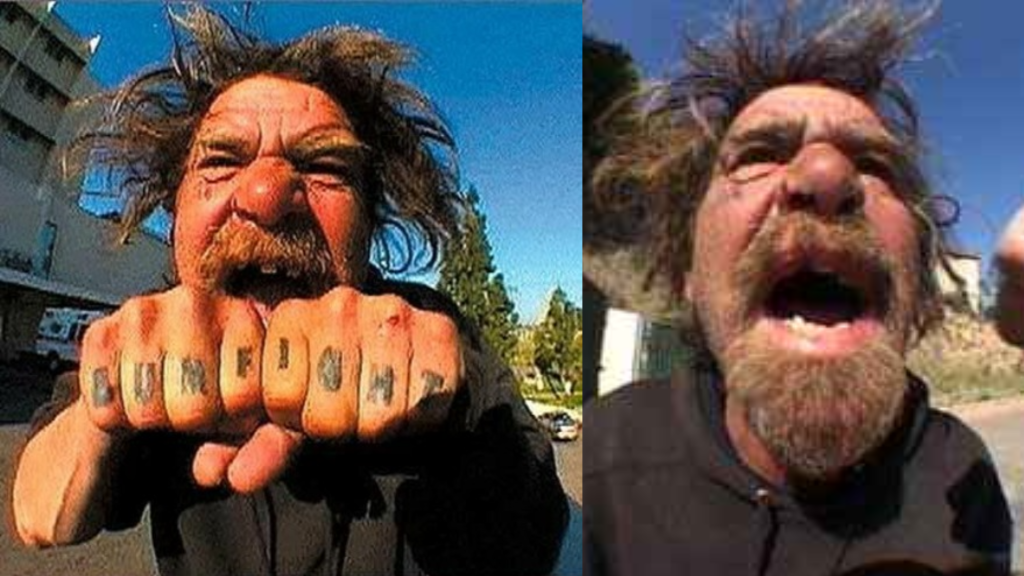
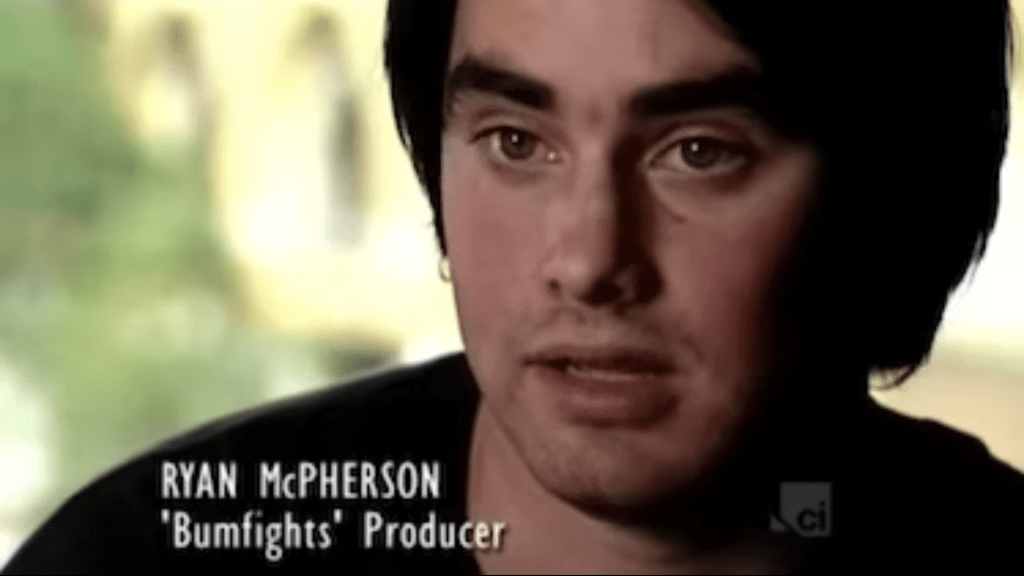
Ryen McPherson, a name that would become synonymous with controversy, was at the center of the production of the infamous video series “Bumfights.” Born in La Mesa, California, McPherson had an early fascination with filmmaking and a drive for pushing boundaries.
During his teenage years, McPherson formed an unlikely connection with two middle-aged homeless men named Donnie Brennan and Rufus Hannah. Hearing tales of their wild antics and amateur stunts, McPherson’s curiosity was piqued. At the age of 13, he decided to document their unconventional lifestyle, capturing their day-to-day lives and the various stunts performed by Rufus, who had gained local notoriety as the “Stunt Bum.”
Initially, McPherson’s footage of Brennan and Hannah was intended for personal use, providing a glimpse into the lives of these individuals on the fringes of society. However, the potential for something greater began to take shape. Seeing the popularity of similar tapes circulating among his peers, McPherson saw an opportunity to create a unique and controversial project.
Teaming up with friends Zachary Bubeck, Daniel J. Tanner, and Michael Slyman, McPherson formed a production company called Indecline. Inspired by the raw and often shocking content of the MTV series “Jackass,” the group decided to compile their footage into a DVD release, giving birth to “Bumfights.”
“Bumfights” became an audacious blend of street fights caught on tape and homeless men performing outrageous stunts. However, it is important to note that despite the provocative title, the videos did not actually depict homeless men physically fighting each other. Instead, they showcased a compilation of street fights captured on tape and the participation of homeless individuals in skits and stunts.
When “Bumfights Vol. 1: A Cause for Concern” was released in 2001, it immediately sparked controversy and drew the attention of both supporters and vehement critics. The videos gained notoriety for their shocking content and unfiltered portrayal of raw street life. This unconventional project struck a nerve, dividing audiences and raising ethical questions about the exploitation of vulnerable individuals.
Despite the controversy, “Bumfights” quickly gained traction, captivating audiences with its blend of shock value and dark humor. The series resonated with a generation drawn to the unconventional and edgy. By tapping into the spirit of rebellion, “Bumfights” became a cultural phenomenon, attracting a significant following and igniting intense discussions about the boundaries of entertainment and morality.
Bumfights Got Popular, Too Popular

With its unconventional approach and boundary-pushing content, “Bumfights” quickly gained notoriety and captured the attention of audiences across the United States.
Advocacy groups and critics condemned the videos for their perceived exploitation of vulnerable individuals. They argued that the series not only perpetuated harmful stereotypes about homelessness but also glamorized violence for entertainment purposes.
Despite the backlash, the popularity of “Bumfights” soared. By 2002, the series had sold an astounding 250,000 copies of the first volume alone, each priced at $22. Its sales figures and merchandise revenue reached unprecedented heights, firmly establishing “Bumfights” as a cultural phenomenon. The controversial series found a significant following, with viewers drawn to its gritty authenticity and provocative nature.
Capitalizing on the success of the initial release, the four original founders of “Bumfights” decided to sell the business for a staggering $1.5 million USD in 2002. Two Las Vegas businessmen, known by the pseudonyms Ty Beeson and Ray Leticia, became the new owners of “Bumfights.” This transaction marked a turning point for the series, as McPherson and his original team severed ties with the project.
Under the new ownership, three more volumes of “Bumfights” were released, featuring additional footage that had been acquired as part of the purchase. However, the new iteration of the series did not involve McPherson or his original collaborators. This development sparked further controversy and raised questions about the direction and integrity of the franchise.

Legal Troubles and Shifting Ownership
In April 2006, the four original filmmakers of “Bumfights” (Ryen McPherson, Zachary Bubeck, Daniel J. Tanner, and Michael Slyman) found themselves facing a lawsuit. The lawsuit alleged that the videos violated the rights of three homeless men who were depicted in the series. Just as the case was about to go to trial, they settled. As part of a settlement agreement, the filmmakers agreed to cease the production and distribution of “Bumfights” videos. They also agreed to provide compensation to the homeless individuals featured in the videos.
This legal settlement marked a significant turning point for the franchise. It signaled the end of the original creators’ involvement with “Bumfights” and the closure of that chapter in their lives. The series had become synonymous with controversy and ethical debates, and its creators decided to distance themselves from its future.
When the settlement was complete, the franchise was sold to Ty Beeson and Ray Leticia, who ventured forward without Ryen McPherson.
The Post-“Bumfights” Journey
After the settlement and the cessation of “Bumfights” production, McPherson found himself at a crossroads. The series had become a lightning rod for controversy, and he sought to move on to new ventures. Las Vegas presented an opportunity for a fresh start and a chance to explore different creative avenues.
In Las Vegas, McPherson ventured into various projects, aiming to distance himself from the notoriety associated with “Bumfights.” He continued to be involved in the world of filmmaking, exploring different genres and artistic expressions. One notable project that emerged during this time was “Indecline: Vol. 1—It’s Worse Than You Think.”
“Indecline: Vol. 1—It’s Worse Than You Think” was a reality video that showcased graffiti art, street crime, people with mental disabilities, and skateboarding segments. It deviated from the focus on homeless individuals that had characterized “Bumfights” and took on a more politically progressive and socially conscious tone. This new project allowed McPherson to channel his creative energy into exploring different societal issues and expressing his views through visual media.
While “Indecline: Vol. 1—It’s Worse Than You Think” received attention, it did not encounter the legal troubles and public outcry that had hindered the “Bumfights” series.
During this time, the “Indecline” website experienced temporary shutdowns and reappearances. This ebb and flow in online presence added to the enigmatic nature surrounding McPherson’s work and kept his audience intrigued.
However, McPherson’s journey in Las Vegas was not without its challenges and setbacks. His production house, “Shoot to Kill Media,” vanished temporarily but later resurfaced under the new name “Critical Focus.”
Despite the efforts to establish a new identity and explore different creative avenues, McPherson’s connection to “Bumfights” and the controversies surrounding it continued to cast a shadow over his work. The legacy of the video series loomed large and impacted how his subsequent projects were received and interpreted.

The Thailand Incident
In November 2014, McPherson, along with his former Bumfights co-creator Daniel Tanner, found themselves embroiled in a bizarre and macabre incident in Thailand. The pair was detained by Thai police after attempting to ship human remains back to the United States. The shocking discovery of five boxes containing a baby’s head, a baby’s right foot, sheets of tattooed human skin, and a murder victim’s heart sent shockwaves through the media.
The circumstances surrounding the Thailand incident were murky and raised numerous questions. McPherson and Tanner claimed that they stumbled upon the body parts at a Bangkok night market and decided to send them as a prank to friends back in the United States. However, this implausible explanation did little to quell suspicions surrounding their involvement.
The Thai authorities launched an investigation into the origin of the body parts. As CCTV footage emerged, it became clear that McPherson and Tanner had entered and left the Siriraj Hospital’s Medical Museum with large backpacks on the same day the items were reported stolen. The stolen specimens resembled those displayed in the museum, which showcased preserved remains of fetuses and organs with traumatic injuries.
As the investigation progressed, McPherson and Tanner became the subject of international attention. News outlets, true crime enthusiasts, and the public at large were captivated by the extraordinary nature of the case. The incident blurred the lines between McPherson’s controversial past with “Bumfights” and his potential involvement in criminal activities.
However, despite the severity of the allegations, McPherson and Tanner were released by Thai authorities without charges. The legal technicality surrounding the incident left many perplexed and fueled speculation about possible corruption or external influences at play. Their subsequent departure from Thailand, into Cambodia, and return to the United States added another layer of intrigue to an already sensationalized story.
The fallout from the Thailand incident had a lasting impact on McPherson’s life and reputation. It further cemented his association with controversy and criminality in the public consciousness. The incident became a focal point for critics, who used it as ammunition to vilify McPherson and question his moral character.
In the years following the Thailand incident, McPherson retreated from the public eye, keeping a low profile. However, he resurfaced in Las Vegas, Nevada, where he revived his original “Bumfights” production studio. He also reignited his “Indecline” studio, which released a video focusing on “culture-jamming” billboard vandals.


 Deep Lore