
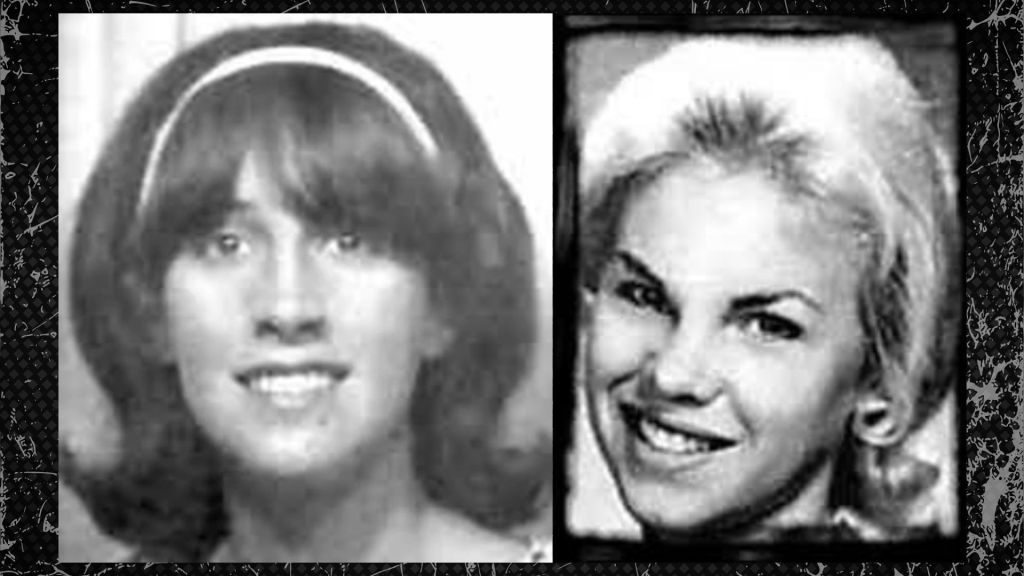
In the heart of Florida’s Ocala National Forest, a mystery unfolded that would haunt the pages of true crime history for over four decades. On a crisp October day in 1966, two young women vanished without a trace, leaving behind a narrative so perplexing that it would challenge the very fundamentals of justice and perseverance. This is the captivating story of Pam Nater and Nancy Leichner, whose disappearance became a cold case emblematic of lost innocence and an unyielding quest for answers.
Pam Nater and Nancy Leichner, two vibrant spirits of their time, embarked on what was meant to be a leisurely outing with their significant others, Ben Dauterman and Craig Mackie. Their destination: the serene yet sprawling expanse of the Ocala National Forest, a place where nature’s beauty promised a day of adventure and relaxation. The plan was simple: explore the allure of Alexander Springs with a combination of picnicking and scuba diving. Yet, fate had charted a course far from the day’s innocent intentions.
Upon realizing the springs were too shallow for their diving aspirations, the group adapted their plans with the men opting for a hike, leaving Pam and Nancy to enjoy the tranquility of the picnic area. This seemingly insignificant decision marked the last moments the young women would be seen.
The return of Dauterman and Mackie to an empty picnic spot marked the beginning of a nightmare. With Pam and Nancy nowhere in sight and their belongings left behind, silently bearing witness to their sudden disappearance, confusion quickly spiraled into panic. The initial thought that the women might have taken a spontaneous walk through the park soon gave way to a deeper, unsettling worry.
The search began with urgency, a blend of personal determination and official intervention. Yet, as hours turned into days, the lack of clues and the impenetrable silence of the forest compounded the agony for all involved. The mystery of their disappearance was as dense as the foliage that surrounded them.
In the wake of their vanishing, theories abounded, yet none could fill the void left behind. The investigation, led by local authorities, stumbled in the shadow of jurisdictional egos and outdated methodologies. Meanwhile, the families of Pam and Nancy, gripped by an unimaginable loss, faced not only the absence of their loved ones but a growing realization that finding answers would be a battle against time and bureaucracy.

The Investigation and Challenges
As the sun set on Alexander Springs on that fateful October day, the shadow of uncertainty grew longer, casting a pall over the investigation into the disappearance of Pam Nater and Nancy Leichner. What initially seemed like a straightforward case of missing persons soon unraveled into a complex web of missteps and controversies, highlighting the challenges of law enforcement in an era before digital records and DNA analysis.
In the immediate aftermath of the disappearance, local authorities, led by the enigmatic Sheriff Willis McCall, launched a search operation. The sheriff’s office, however, was ill-equipped for the complexities of a missing persons case that offered few clues and no witnesses. The early investigation was marked by a palpable sense of urgency but hampered by a lack of coordination and modern investigative techniques.
Sheriff McCall, a figure both feared and respected, wielded his power with an iron fist, his reputation tainted by allegations of brutality and racism. His approach to the investigation was, at best, antiquated, focusing on simplistic theories that lacked evidentiary support. Initially convinced that Pam and Nancy had run away, McCall’s stubborn adherence to this unfounded hypothesis led to valuable time being wasted.
As pressure mounted, and the runaway theory crumbled under the weight of reality—the girls’ belongings left untouched at the picnic site—McCall’s focus shifted toward the boyfriends, Dauterman and Mackie. This shift toward suspecting those closest to the victims, while not uncommon in criminal investigations, was marred by a lack of substantive evidence and seemed more an act of desperation than reasoned deduction.
Frustrated by the lack of progress and McCall’s obstinate methods, the families of the missing girls took matters into their own hands. They enlisted private investigators, sought the help of psychics, and even attempted to engage state and federal authorities, only to be met with bureaucratic hurdles and McCall’s resistance. The sheriff, it seemed, was more interested in maintaining control over the case than in solving it.
This period of the investigation was characterized by a growing divide between the families and law enforcement, a chasm filled with grief, frustration, and the nagging fear that justice for Pam and Nancy might never be served.
As years turned into decades, the case grew cold, but its impact lingered like a shadow over those touched by the tragedy. Dauterman, in particular, bore the brunt of suspicion and the weight of unanswered questions. The cloud of doubt, though eventually dispelled by the passage of time and lack of evidence, never fully lifted, leaving scars that would shape his life in profound ways.
Finding Closure
Decades passed with the disappearance of Pam Nater and Nancy Leichner shrouded in mystery, a cold case that seemed destined to remain unsolved. However, the persistence of those who sought justice would eventually shed light on the darkness, leading to a breakthrough that altered everything.
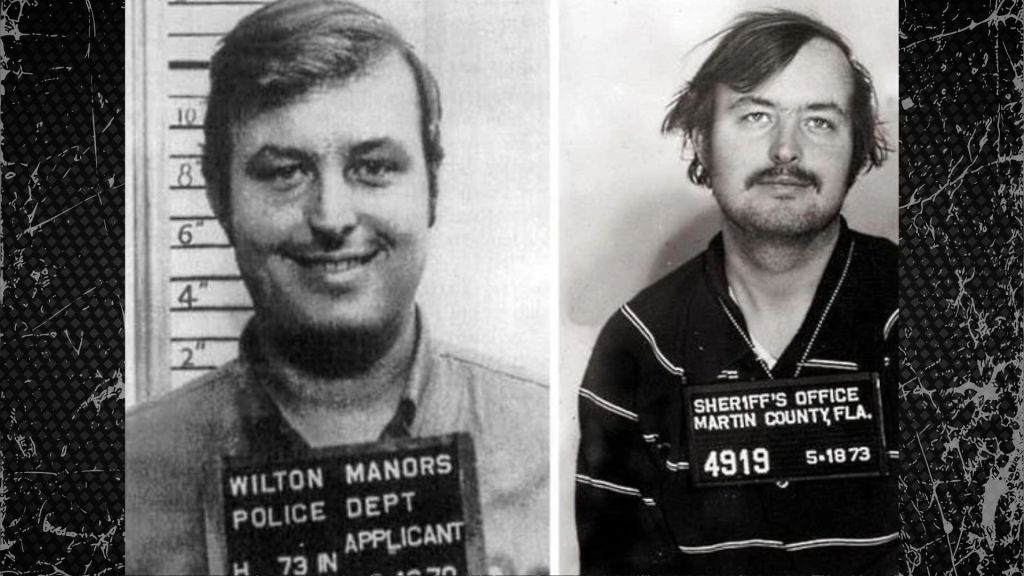
The turning point in the decades-long investigation came unexpectedly, rooted in the confessions of a man already notorious for his heinous crimes. Gerard J. Schaefer, a former Martin County sheriff’s deputy turned convicted murderer, was posthumously linked to the disappearance of Pam and Nancy. Schaefer, who had a sinister history of violence against women, had confessed to the murders of Nater and Leichner to a fellow inmate, a confession that had lain dormant among the inmate’s notes for years before finally coming to light.
The evidence that emerged connecting Schaefer to the case was compelling, if not haunting. Investigators, armed with Schaefer’s confession and corroborated by additional evidence, including personal items believed to belong to the victims found among Schaefer’s possessions, painted a grim picture of the girls’ final moments. Despite the lack of physical evidence to conclusively prove Schaefer’s involvement, the circumstantial and testimonial evidence was enough to convince authorities of his guilt.
The revelation brought a bitter form of closure to a case that had languished in uncertainty. Schaefer, who had been murdered in prison in 1995, could never be brought to justice for the disappearance of Pam and Nancy, but the pieces of the puzzle finally began to fit together, offering answers to questions that had haunted their families, friends, and the community for nearly four decades.


 Deep Lore