
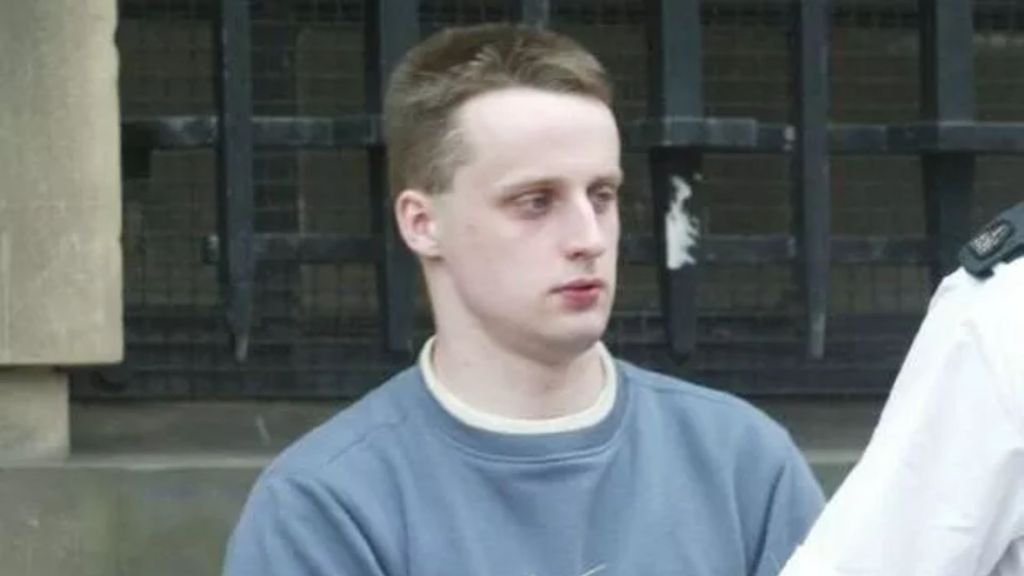
In the hushed halls of Whitburn Academy, a young Allan Menzies committed an act that shocked his community, offering an early glimpse into a troubled psyche. For true crime enthusiasts, the Menzies case is not just about the infamous murder in his later years but also about understanding the early indicators that hinted at a darker path.
Whitburn Academy, situated in West Lothian, Scotland, was like many other schools in the area. Students bustled about, teachers patrolled the corridors, and the usual schoolyard chatter filled the air. But beneath this veneer of normalcy, tensions were brewing.
Rumors began circulating about the then 14-year-old Allan Menzies. Whispers of him carrying a nine-inch hunting knife spread through the school, but many dismissed it as just talk. That was until the fateful day he confronted Bryan Fell, another student of the same age, in a school corridor. Without any evident provocation, Menzies unleashed his pent-up rage, stabbing Fell and leaving a two-inch scar as a grim testament to the assault. The corridors, usually filled with the innocent laughter of students, echoed with screams and the chilling sight of Fell’s blood.
As teachers and students rushed to the scene, Menzies, realizing the gravity of his actions, fled to his grandmother’s home. Recognizing the severity of the situation, his grandmother locked him in a room, ensuring he couldn’t escape, and called the police. The incident left the school and community in shock, trying to grapple with how such violence could erupt in their midst.
In the aftermath of the stabbing, Menzies was sentenced to three years in a young-offenders institute. It was a jarring transition for the teenager, moving from the familiar surroundings of his school and home to the cold, restrictive environment of the institution. The hope was that this sentence would be a turning point for Menzies, providing a chance for rehabilitation.
Upon his release, there were signs that Menzies might reintegrate into society. He resumed a relatively low-profile life in Fauldhouse, West Lothian. However, beneath this surface, an undercurrent of dark fascination was emerging. His interests began veering towards the macabre, with a particular inclination towards vampirism and dark themes. These obsessions, while initially dismissed as teenage angst or a phase, would soon take a more sinister turn, setting the stage for the horrific events in his adult life.
A Deadly Obsession
The transition from adolescence to adulthood often sees individuals struggling to find themselves and their calling. For Allan Menzies, this period marked the beginning of a dark descent, driven by an obsession that blurred the lines between cinematic fantasy and grim reality.
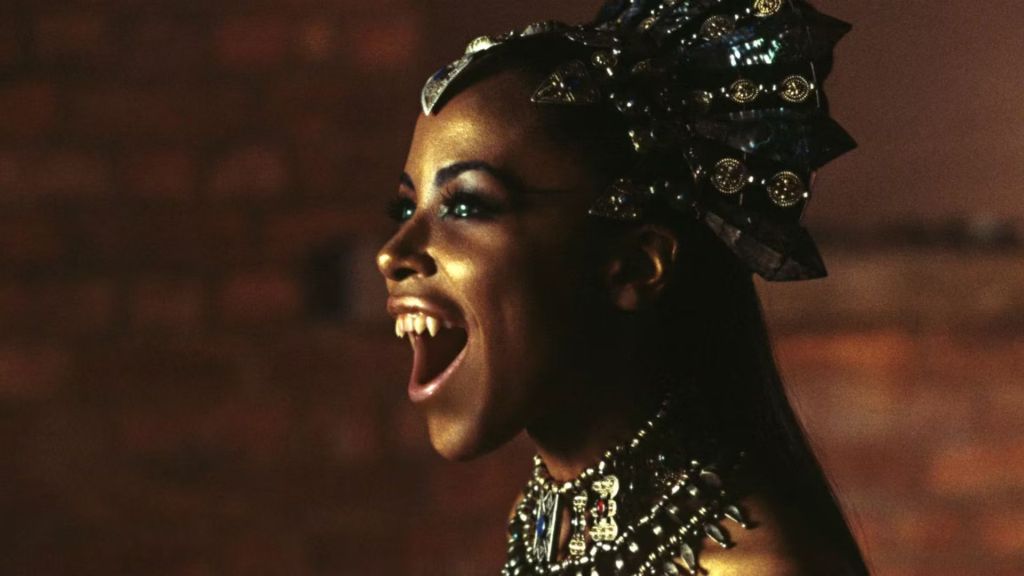
In Fauldhouse, West Lothian, Menzies settled into a seemingly ordinary routine. However, behind closed doors, he nurtured an unhealthy fixation on the film “Queen of the Damned.” This wasn’t a casual interest or a fleeting entertainment; Menzies watched the film with an intensity that was alarming. Over 100 viewings later, the movie’s narrative began to consume him, its characters whispering to him, its dark themes intertwining with his daily life.
His relationship with Thomas McKendrick, a close friend, began to evolve during this time. While the specifics of their interactions remain shrouded in mystery, it’s evident that McKendrick became an integral part of Menzies’ distorted reality. Perhaps it was a casual conversation about the movie, or maybe McKendrick voiced concerns about Menzies’ obsession. Whatever the trigger, Menzies could no longer separate friend from foe in his distorted perceptions.
The culmination of Menzies’ obsession arrived on a fateful night when he invited McKendrick to his home. What should have been an evening between friends took a nightmarish turn. Under the delusion that he was fulfilling a command from a “Queen of the Damned” character, Menzies attacked McKendrick. The sheer brutality of the assault left many in disbelief: 42 stab wounds, each more ferocious than the last.
But the horror didn’t end with the stabbing. In a perverse attempt to emulate the vampires he idolized in the movie, Menzies took the unthinkable step of drinking McKendrick’s blood. The act was symbolic, an attempt to absorb his victim’s essence, to become immortal, to transcend the boundaries of life and death.
The immediate aftermath was a haze of shock and denial. Menzies’ mind grappled with the reality of his actions, and as days turned to weeks, the immensity of the crime began to weigh on him.
The Trial and the The End
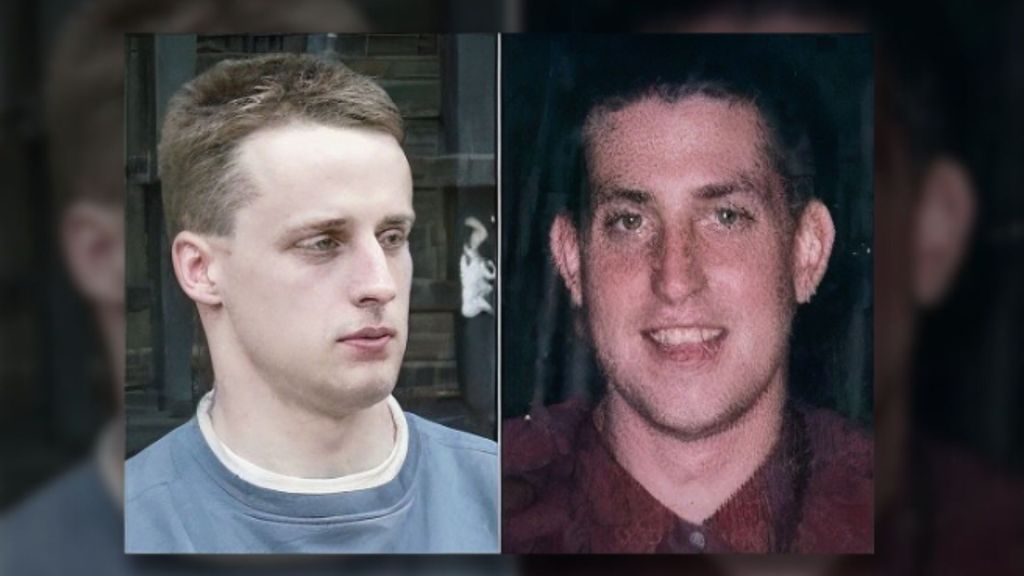
The grim shadow of Thomas McKendrick’s murder loomed large over the Scottish legal system. As news of the crime spread, the nation braced itself for a trial that promised to be as sensational as the events leading up to it. At the center of this judicial storm was Allan Menzies, a man whose obsessions had led him down a dark path.
Edinburgh’s high court became the stage for a legal drama that drew attention from all corners of Scotland and beyond. The prosecution presented a damning case, painting Menzies as a premeditated murderer whose actions were driven not by delusion but by choice. They recounted the brutality of the murder, the 42 stab wounds, and the chilling act of drinking the victim’s blood.
Menzies’ defense, on the other hand, revolved around his mental state. They argued that he was not in control of his actions, that he genuinely believed a character from “Queen of the Damned” had commanded him to kill. Expert witnesses were brought in, attempting to delve into Menzies’ psyche, to understand the depth of his delusions.
As testimonies were heard and evidence presented, a picture emerged of a man trapped between reality and a fictional world, unable to discern where one ended and the other began. The jury was faced with a complex decision: Was Menzies truly mentally ill, or was this all an act to escape the consequences of his actions?
The verdict was clear. The jury, unconvinced by the defense’s arguments, found Menzies guilty. He was handed a life sentence with a stipulation to serve a minimum of 18 years, ensuring he would be confined behind bars for the foreseeable future.
Menzies was incarcerated at Shotts Prison, near Glasgow. The confines of prison life, with its strict routines and lack of freedom, weighed heavily on him. Rumors circulated that he remained fixated on the world of vampires and the supernatural while behind bars.
However, the tale took one final, tragic turn. On November 15th, 2004, a routine morning check by prison guards led to a grim discovery: Allan Menzies was found dead in his cell. The specifics of his death were kept under wraps, but speculation was rife. Many believed that, overwhelmed by the enormity of his crime and a lifetime of imprisonment, Menzies had taken his own life.
The Allan Menzies case remains one of the most chilling cases in Scottish criminal history. It serves as a stark reminder of the fragile boundaries between fiction and reality and the devastating consequences when those boundaries blur.


 Deep Lore