
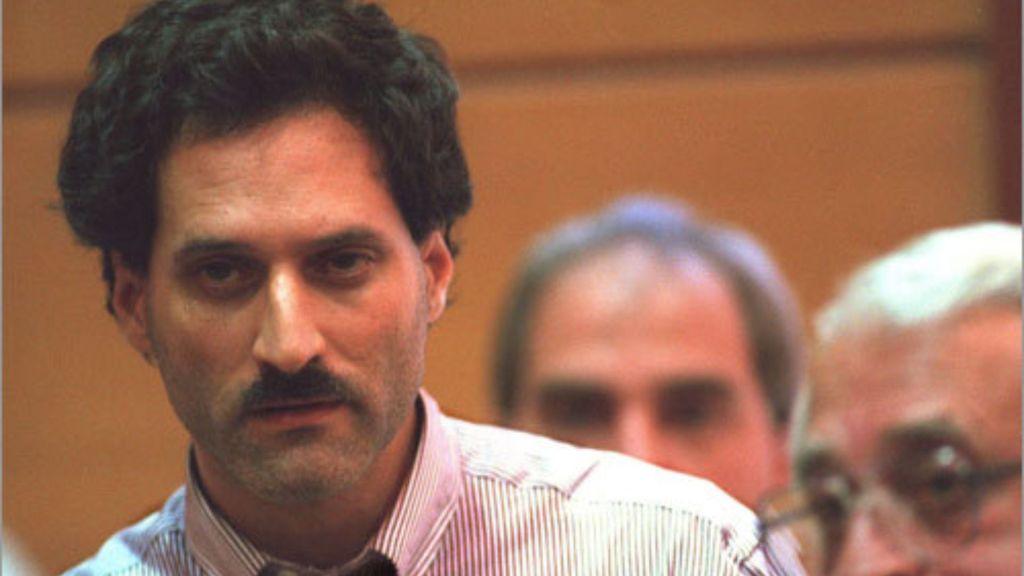
In the tranquil community of Framingham, a burnt ziti dish would become the unlikely catalyst for a crime so heinous that it would forever scar the collective psyche of its residents.
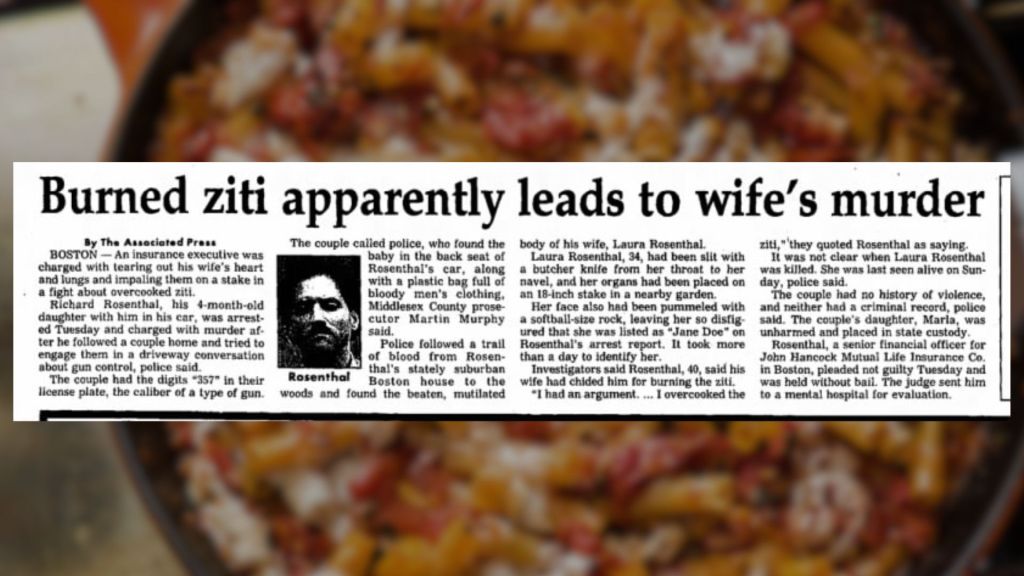
On August 31, 1995, the Rosenthal household, which should have been filled with the aroma of a delightful Italian dish, instead became the epicenter of a dark storm. Richard Rosenthal, a respected 40-year-old insurance executive, found himself at odds with his wife, Laura, over the overcooked ziti. What began as a seemingly trivial culinary critique quickly escalated into a maelstrom of violence. In a fit of uncontrollable rage, Richard strangled Laura, extinguishing the life of a woman once known for her vibrant spirit.
But the darkness of that day didn’t end with the act of murder. Driven by an unfathomable motive, Richard proceeded to desecrate Laura’s body in their very backyard. With deliberate precision, he used a butcher knife to make ghastly incisions from her throat to her navel, creating a gruesome tableau of horror. To compound the atrocity, Laura’s heart and lungs were grotesquely displayed on an 18-inch stake in the garden, a macabre testament to the brutality of the act. As if this wasn’t horrific enough, Richard used a rock to brutally disfigure Laura’s once-beautiful face, leaving it so unrecognizable that the initial arrest report could only label her as “Jane Doe.”
As the sun set, in a perplexing move, Richard decided to take a drive with his 4-month-old daughter. His journey led him to follow a couple home, drawn inexplicably to their license plate reading “357-BAN.” Believing it to be a reference to .357-caliber Magnum handguns, he approached them, eager to discuss gun control. Alarmed by Richard’s erratic behavior and the presence of a seemingly abandoned infant in the back seat, the couple swiftly alerted the local police.
When the Framingham police arrived, they were met with a series of grim discoveries. The infant, thankfully unharmed, was found next to a bag saturated with blood-soaked men’s clothing. This unsettling find spurred an immediate search, which ended with the tragic discovery of Laura’s desecrated body in the woods near the Rosenthal residence.
News of the crime spread rapidly, leaving the community in a state of shock and disbelief. How could a disagreement over a simple pasta dish lead to such a monstrous act? Whispers of the grotesque details circulated, with many struggling to comprehend the motivations behind Richard’s actions. The Framingham community would grapple with grief, fear, and a desperate search for answers in the days that followed.
The Trial – Arguments, Defense, and Verdict
In the wake of the shocking crime that rocked Framingham, the courtroom became the epicenter of drama as Richard Rosenthal’s fate hung in the balance. The air was thick with tension as both sides prepared to present their arguments, with the defense set to challenge the very perceptions of guilt, innocence, and mental health.
From the outset, it was clear that the defense, led by the adept attorney Norman Zalkind, would pursue a strategy rooted in the complexities of the human mind. They set forth a narrative portraying Richard not as a calculated murderer but as a man ensnared in the throes of mental illness. The burnt ziti, they argued, was merely a trigger for an underlying psychosis that had been simmering beneath the surface. Expert witnesses, including renowned psychiatrists, were paraded to the stand, each echoing the same sentiment: Richard was delusional at the time of the crime. His actions, however heinous, were the result of a mind detached from reality.
The prosecution, undeterred by the defense’s narrative, built their case on a foundation of cold, hard facts. Their aim was to disentangle the act from the supposed mental state, emphasizing the premeditation and brutality that characterized the crime. Their trump card was their own psychiatric evaluation of Richard. After an exhaustive 17-hour assessment, their expert concluded that Richard’s actions and subsequent behavior were inconsistent with someone in a delusional state. They argued that the act was not a product of mental illness but a conscious, deliberate choice.
As the trial progressed, the prosecution also drew attention to Richard’s post-crime actions, particularly his interaction with the couple over gun control. They posited that these actions showcased a man fully aware and in control of his faculties, further weakening the defense’s claims of delusion.
The corridors of the courthouse buzzed with anticipation as days of testimonies and arguments culminated in the final judgment. The jury, having been presented with two starkly contrasting narratives, retreated for what would be an intense deliberation.
The gavel finally fell, sealing Richard Rosenthal’s fate: guilty of first-degree murder. As the verdict echoed through the courtroom, a wave of emotions swept over the attendees. For many, it was a moment of closure, a semblance of justice for Laura. For others, it was a grim reminder of the fragility of the human mind and the complexities of justice.

The Aftermath
The conclusion of Richard Rosenthal’s trial marked the end of one chapter but the beginning of another. Framingham would forever be marked by the chilling events that transpired, and the reverberations of the trial would be felt throughout the community for years to come.
The Rosenthal family, now shattered by the dual tragedies of Laura’s death and Richard’s conviction, found themselves thrust into the public eye. Laura’s family, while grappling with their own grief, expressed deep concern for the couple’s young daughter, Marla Kate. With her mother gone and her father incarcerated, questions about her future and well-being became paramount. Friends and neighbors rallied around the child, showcasing the community’s support and unity in the face of adversity.
On the other side, Richard’s family, though devastated by his actions, grappled with a mix of denial, sorrow, and the heavy burden of the “what ifs” concerning his mental health. They, too, were victims of sorts, facing societal scrutiny and judgment.
The Rosenthal case, beyond its immediate shock value, forced a community-wide introspection on the nature of domestic disputes. Local organizations and advocates for domestic violence prevention saw a surge in attention and support. Workshops, community discussions, and counseling services became more prevalent, aiming to address and mitigate the risks of domestic disputes escalating into violence.


 Deep Lore