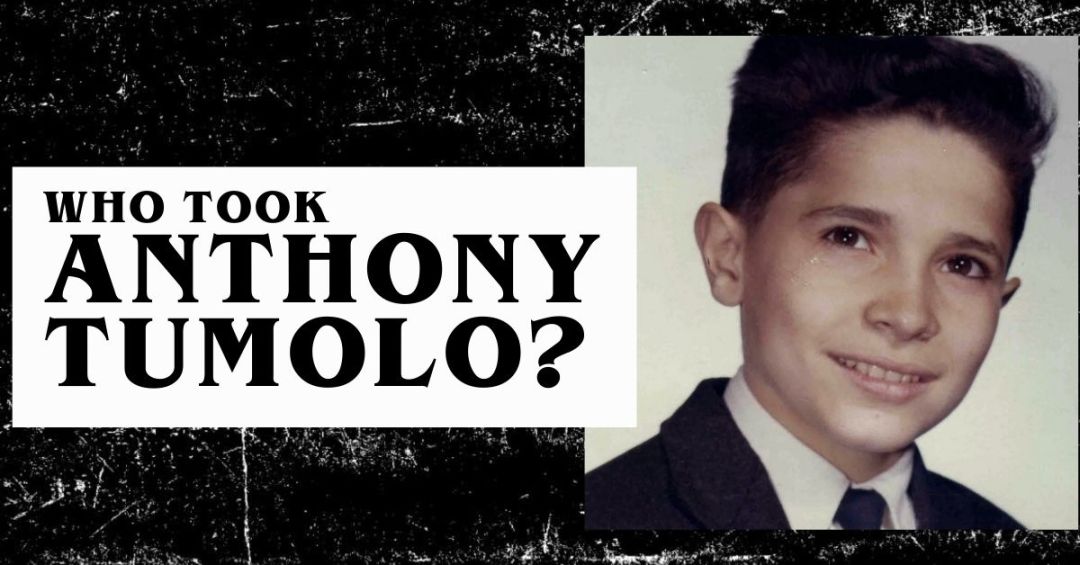

The morning of October 15, 1966, Anthony Tumolo and his best friend, Jack Marino, pedaled through the crisp autumn air of Philadelphia, their bicycles laden with the day’s “Inquirer” newspapers. Their laughter resonated through the neighborhood, echoing off the brick facades as they embarked on their delivery route. The boys, both in their eighth-grade year at Lady of Consolation School, shared more than just their daily duties; they shared the unspoken bond of childhood camaraderie that promised adventures and whispered secrets.
After the morning’s work and a shared dozen doughnuts, the day unfolded with the ordinary grace of a 1960s childhood. Anthony, described by those who knew him as stubborn and independent yet deeply family-oriented, navigated the day with the typical enthusiasm of a young teen. The afternoon found him and Jack, along with a few other friends, on the steps of their school, a common gathering spot where laughter and chatter filled the air until the boys parted ways for dinner, planning to reconvene afterward.
As the evening approached and Anthony, having hurried through his meal at home, set out to meet Jack once more, fate intervened. Jack, arriving at Anthony’s home to find his friend had just left, retraced his steps in confusion, their paths misaligned by mere moments. Anthony, on his journey to Jack’s house, vanished into the thinning daylight, his presence fading into the fabric of the city.
The night passed with an eerie quiet. Anthony’s family, accustomed to the boys’ frequent sleepovers, felt no immediate alarm at his absence. It was the dawn of the next day, with the weight of silence and undelivered newspapers, that concern crept into the Tumolo household. Calls from waiting customers began to paint a grim picture: Anthony had not completed his route, an uncharacteristic break in his reliable pattern.
The unfolding realization that Anthony was missing sent ripples through his family and the neighborhood. Initial theories ranged from a simple overnight at Jack’s to more sinister possibilities, but none could foresee the enduring mystery that Anthony’s disappearance would become. As the sun rose on October 16, the search for Anthony Peter Tumolo began in earnest, setting the stage for a decades-long quest for answers that continues to captivate and haunt true crime enthusiasts and those who knew him best.

Search and Speculation
In the days following Anthony’s disappearance, the Philadelphia Police Department pieced together a narrative familiar in missing children cases of the time: a boy, possibly aggrieved by familial expectations and restrictions, chooses the path of a runaway. This theory was bolstered by recent tensions within the Tumolo household over Anthony’s paper route and his academic performance. The discovery that Anthony had left behind an uncashed paycheck and personal belongings did little to sway this initial assessment. Meanwhile, the Tumolo family and their extended community found this runaway theory inconsistent with the boy they knew—one deeply rooted in his familial ties and friendships.
Jack Marino, Anthony’s steadfast friend and the last to have plans with him, never reconciled with the idea of Anthony as a runaway. His skepticism of the official narrative led him to pursue a career in law enforcement, a decision inspired by his unresolved quest for answers. Over the years, Marino developed an alternative hypothesis grounded in the tragic simplicity of an accident. He speculated that Anthony might have been struck by a vehicle, with the driver in a panic, concealing the evidence of this calamity. This theory, though speculative, gained traction among those dissatisfied with the investigation’s progress, offering a plausible scenario that accounted for the lack of any trace of Anthony or his bicycle.
Marino’s transition from childhood companion to Philadelphia police officer embodied a commitment to understanding Anthony’s fate. His professional training provided him with the tools to critically assess the initial investigation’s shortcomings and the insight to consider alternative outcomes. Despite the passage of time and the evolution of investigative techniques, Marino remained a vocal advocate for revisiting Anthony’s case, convinced that modern forensic methods could shed light on long-standing questions.
As the investigation into Anthony’s disappearance meandered through decades of dead ends and revived leads, the contrast between early assumptions and later theories reveals much about the shifting landscapes of law enforcement, community involvement, and the quest for truth.

In Pursuit of Answers
Joanie Hess, Anthony’s elder sister, embodies the relentless pursuit of truth that often characterizes the loved ones of the missing. Over the decades, her hope has evolved but never extinguished. Hess navigated the complex landscape of grief, hope, and determination, often finding herself at odds with a system that, at times, seemed indifferent to her brother’s case. Her journey from the shock of initial loss to the advocacy for Anthony’s case reflects a broader narrative of family members fighting to keep their loved ones’ stories alive.
Hess’s engagement with law enforcement and her proactive approach to utilizing advancements in forensic science underscore a significant shift in how missing persons cases are handled. The submission of family DNA to the National Center for Missing and Exploited Children and the updating of Anthony’s profile with age-progressed images are testaments to the family’s commitment to finding closure.
The digital age has redefined the landscape of unsolved cases. Online communities, true crime enthusiasts, and social media platforms have given new life to cold cases like Anthony’s. These digital arenas have become spaces for collective memory, speculation, and, crucially, the sharing of information that could lead to breakthroughs. For Anthony’s family and friends, the internet has provided a means to keep his memory alive, to reach out to potential witnesses, and to remind the public and law enforcement that the case remains unresolved.


 Deep Lore