
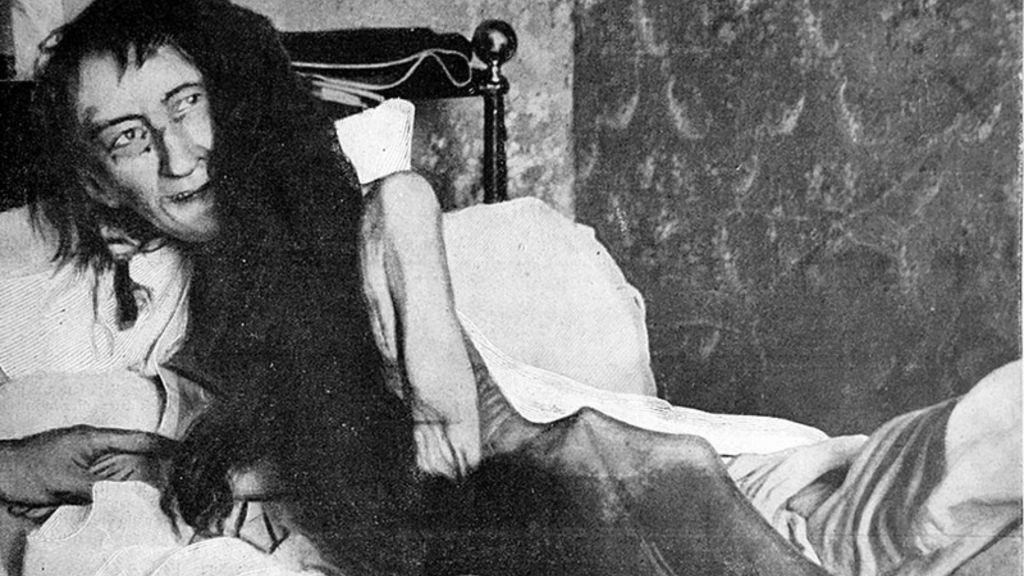
In the spring of 1901, a Paris attorney general received an anonymous letter that would unravel a dark secret hidden within the walls of a respected French aristocratic family. The letter revealed the plight of Blanche Monnier, a woman missing from society for 25 years, held captive by her own family. What led to such a drastic measure, and how did a prominent family manage to conceal such a grim reality? The story begins decades earlier, in the seemingly tranquil life of the Monnier family.
Blanche Monnier was born in 1849 into comfort and prestige. Her father, Charles-Emile Monnier, was a scholarly figure, the dean of the University of Poitiers, and her mother, Louise Monnier, was known for her stern disposition and social influence. Blanche’s early years were marked by cultural enrichment and high social expectations, typical of a family held in high regard by the local community.
As Blanche matured, her interests began to shift towards more spiritual and mystical pursuits. She grew increasingly fascinated with religion, often seeking solitude to immerse herself in her thoughts and prayers. This reclusiveness was initially seen as a devout young woman’s pious dedication, but it later sowed the seeds of concern among her family. Her retreat into solitude became more pronounced after she fell ill with a fever at the age of 23, an event that seemed to alter her trajectory in life. Although she recovered physically, her behavior suggested a lingering psychological aftermath.
The turning point in Blanche’s life came when she fell in love with a lawyer whose modest means and Protestant faith made him unsuitable in the eyes of her Catholic, aristocratic family. This relationship conflicted with the family’s expectations and aspirations for Blanche, setting the stage for a severe family rift. When persuasion failed, Louise Monnier resorted to extreme measures to end her daughter’s unacceptable liaison.
In 1876, at the age of 27, Blanche vanished from public view. Behind the closed doors of the Monnier family’s opulent residence, Blanche was confined to a small, dark room, completely isolated from the world she once knew. Her room, devoid of light and filled only with the bare necessities, became her new world, where she would spend the next quarter-century in silence and shadows.
The Monnier family, meanwhile, continued their public life as if nothing had changed. Louise told inquirers that Blanche had moved abroad, a fabrication that satisfied most casual inquiries amidst the social whirl of 19th-century France. The truth, however, was far darker and remained hidden from even the closest family friends. This facade of normalcy was maintained with strict control and unyielding secrecy, showing the lengths to which Louise Monnier would go to protect the family’s honor over the well-being of her own daughter.

Life in Captivity
As the years turned into decades, Blanche Monnier lived a life of confinement that was unimaginable to those outside the imposing walls of her family home. Inside a locked room with shuttered windows and thick curtains, she was cut off from the world, her existence marked by darkness and solitude. The room where she was kept was small and stark, devoid of comfort or hygiene, a sharp contrast to the opulent surroundings of the rest of the Monnier residence. This hidden cell became a place of neglect and suffering, where Blanche endured conditions that were barely survivable.
The person most responsible for maintaining this cruel imprisonment was Louise Monnier, Blanche’s own mother. Her decision to lock away her daughter was driven by a mixture of rigid social norms and personal domination. Louise, who once held a prominent social position noted for her charitable works, showed a different face within the confines of her home. Her control over the family was absolute, and her decision to confine Blanche was unchallenged within the household, even by her son, Marcel Monnier.
Marcel, who was aware of his sister’s situation, was a complex figure in this family drama. Although he lived across the street and often visited the family home, he lacked the resolve to confront his mother or alter Blanche’s plight. His compliance revealed a weakness that stemmed perhaps from a combination of fear, familial loyalty, and a deep-seated inability to defy his mother’s authoritarian rule. This compliance made him complicit in the ongoing abuse, even if his direct involvement was minimal.
The Monnier family managed to keep Blanche’s confinement a secret for 25 years, with only the closest household staff aware of her existence. These servants, bound by their dependence on the Monnier family and the era’s rigid social hierarchies, remained silent, perhaps out of fear or a misplaced sense of loyalty. The community’s respect for the Monnier family as pillars of local society further helped cloak the grim reality of what was happening inside the family home.
The truth about Blanche’s captivity only began to unravel following the receipt of an anonymous letter by the Paris attorney general in May 1901. This letter, written by an unknown author, urged immediate investigation into the welfare of a woman locked away and forgotten by the world. The contents of the letter were alarming enough to prompt a swift police response. When the authorities arrived at the Monnier household, they were met with resistance, but persistence led them to Blanche’s hidden chamber.
The officers who broke into Blanche’s room were unprepared for the horrific scene that awaited them. The stench of decay and human waste was overwhelming. They found Blanche lying on a rotting straw mattress, surrounded by remnants of meals long past and living in conditions that no human should endure. The once vibrant and beautiful young woman was now a frail figure, her physical state a shocking testament to the years of neglect.
This discovery shocked not only the local community but also the nation. The stark contrast between the Monnier family’s public persona and the hidden truth of Blanche’s suffering highlighted a disturbing reality about the depths of human cruelty and the masks worn by those in high society. The repercussions of this discovery were immediate and profound, shaking the foundations of societal norms and challenging the community to reflect on the unseen horrors that might lurk behind the façades of respectability.
Aftermath and Legacy
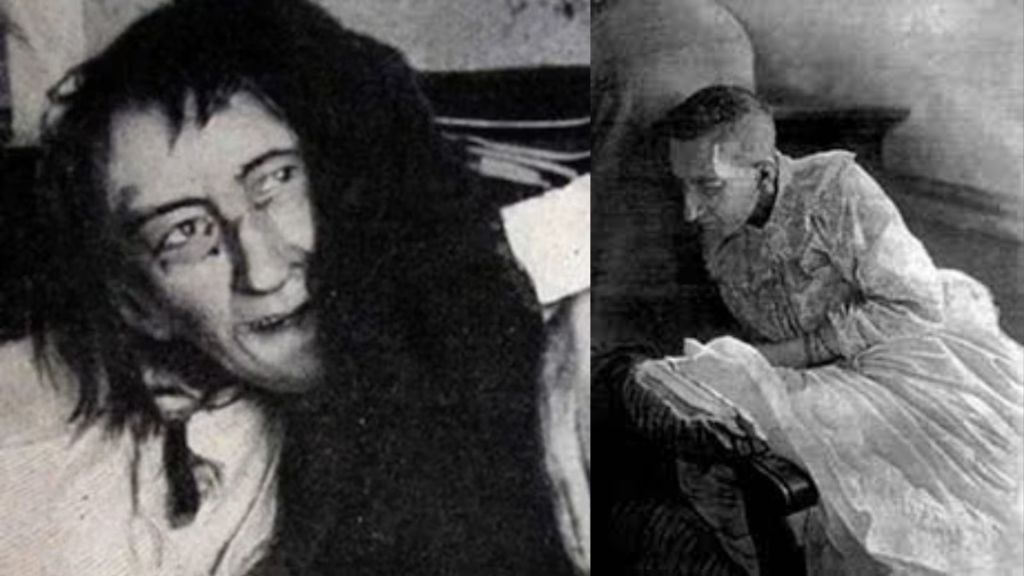
The immediate aftermath of Blanche Monnier’s discovery was a whirlwind of legal and social repercussions that rocked the Poitiers community and rippled through French society. As the details of Blanche’s long captivity came to light, the public outcry was immense. Louise Monnier, the matriarch responsible for the imprisonment, faced swift justice in the court of public opinion, but her life ended abruptly due to heart complications only 15 days after Blanche’s rescue, preventing any legal reckoning.
Blanche herself was quickly taken to a hospital where her physical and psychological traumas could be addressed. Despite the severe malnutrition and the inhumane conditions she had endured, Blanche was remarkably lucid, appreciating simple pleasures like fresh air which she had been deprived of for over two decades. Unfortunately, the psychological scars were deep, and she never fully recovered. Blanche spent the remainder of her life in a sanitarium, where she received care until her death in 1913, living in relative obscurity, far removed from the societal circles that once might have celebrated her.
Marcel Monnier, Blanche’s brother, found himself entangled in legal proceedings, charged with complicity in the confinement and neglect of his sister. His trial exposed not only his weaknesses and failures but also highlighted the societal norms that had allowed such an atrocity to occur unchecked. Marcel argued that Blanche had never expressed a desire to leave the room, a defense that stirred controversy and debate about the responsibilities of individuals within a family to act against moral transgressions. Ultimately, he was initially sentenced to 15 months in prison, but an appeal citing the absence of a legal duty to intervene led to his acquittal. The lack of a “duty to rescue” law at the time played a pivotal role in this outcome.
The scandal profoundly impacted the Monnier family’s legacy. Their story became a cautionary tale about the dangers of unchecked power within families and the potential for societal elites to abuse their privileged positions. The public and media extensively covered the trial and its surrounding events, with many questioning how many more ‘Blanche Monniers’ might exist, hidden away by powerful or respected families.
Blanche’s ordeal and the subsequent trial forced a reconsideration of mental health care and guardianship laws in France. It highlighted the need for reforms in how society handles the care of the mentally ill, particularly those kept out of public sight in family homes. The case also spurred discussions about the need for laws that would require individuals to report suspected abuses, especially in situations where those affected are unable to advocate for themselves.


 Deep Lore