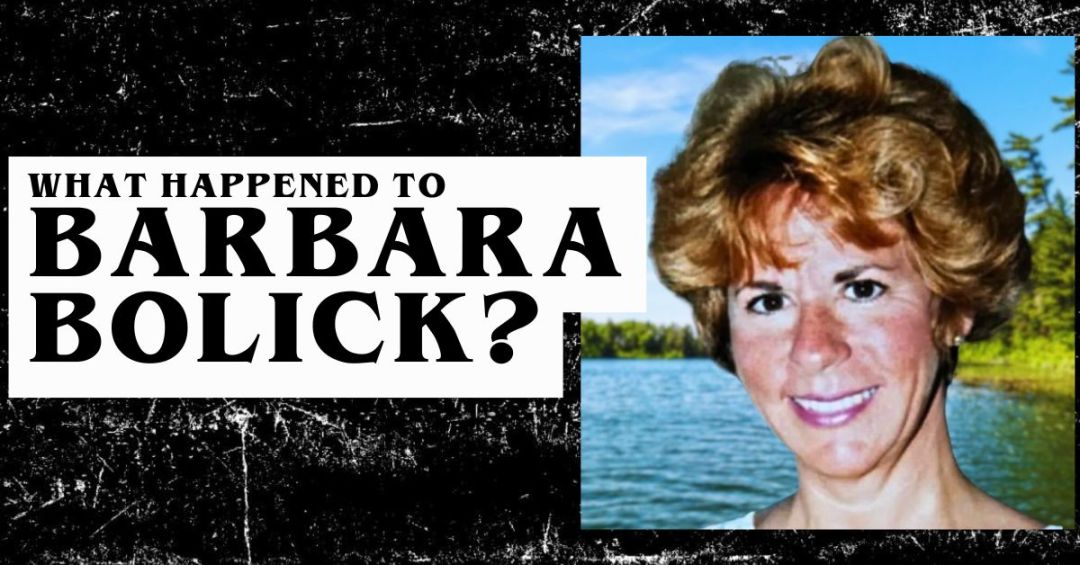
July 18, 2007, began like any other summer morning in Montana’s Bitterroot Valley. The sky was clear, the air crisp, and for 55-year-old Barbara Bolick, it was the perfect day for a hike. An avid outdoorswoman, Barbara loved the rugged beauty of Montana. Since moving to Corvallis six years earlier, she had found peace in these hills, often hiking alone or with friends. She was intimately familiar with every curve of the Bear Creek Overlook trail—a moderately challenging 2.6-mile route through thick pine forests and loose shale, with a breathtaking view of the valley below.
Barbara was an experienced, cautious hiker, always prepared for the unexpected. She carried her black daypack, which held food, water, and her .357 Magnum revolver for protection—standard practice in bear country. At just 5 feet tall and 115 pounds, Barbara wasn’t imposing, but she was resilient. Carl, her husband, knew that when Barbara hit the trails, she always came home.
That day was different. Carl’s cousin, Donna Biles, was visiting from out of town with her boyfriend, Jim Ramaker. Barbara, ever the gracious host, had planned to take them hiking. But when the morning came, Donna, hungover from the night before, decided to stay behind. Barbara didn’t want to cancel the hike, and Jim was eager to see the overlook. Around 9:00 a.m., they set off, leaving Carl behind with promises of returning by dinner.
The Bear Creek Overlook was more than a scenic route for Barbara; it was familiar, comforting. She had hiked it countless times, enough to know its dangers. The path could be steep, lined with loose rock, and the cliffs near the overlook were daunting. Barbara’s fear of heights made her extra cautious on those edges.
Jim, a first-time visitor, followed closely behind her. They stopped to chat with two young men and their black-and-white dog—a casual, friendly exchange, according to Jim. After a short break near the overlook, they turned to head back down the trail.
It was then, somewhere between the overlook and the trailhead, that Barbara disappeared. Jim, pausing to take in the view, glanced away for what he said was no more than 30 to 45 seconds. When he looked back, Barbara, who had been 20-30 feet ahead, was gone. There was no sound—no rustling, no shout. The trail was eerily quiet.
Jim called out to her, but there was no reply, no sign of Barbara. He walked further down the trail, thinking maybe she had somehow moved ahead without him noticing. But Barbara was nowhere to be found.

The Investigation
Jim’s initial confusion quickly turned into panic. How could someone vanish from the trail without a trace? He retraced his steps, calling her name louder, but there was nothing. Frustrated, he hurried down to the trailhead, where construction workers were repairing the access road.
“Have you seen a woman come through here?” Jim asked, breathless and frantic.
The workers hadn’t seen anyone matching Barbara’s description—just the two young men with their dog who had left earlier. With no sign of her, Jim knew something was wrong. He reached out to the authorities by early afternoon.
Back at home, Carl was unaware of the crisis unfolding. He spent the morning working on a carpentry project, expecting Barbara and Jim to return as planned. But by noon, Donna began to worry. Carl, familiar with Barbara’s hiking habits, reassured her that they had likely just lost track of time.
By 2:00 p.m., the phone rang, shattering Carl’s calm. The voice on the other end belonged to a forest service officer. “Is your wife Barbara?” she asked. Carl’s stomach dropped. He rushed to the trailhead, hoping she would have been found by the time he arrived. But she hadn’t.
The official search began that afternoon. At first, a small team of search-and-rescue workers scoured the trail where Barbara was last seen. But as night fell, the effort expanded. Search dogs were brought in to track her scent, and helicopters equipped with infrared sensors scanned the dense forest. The initial hope was that Barbara had gotten lost or fallen, and it was only a matter of time before they found her.
But as days passed, hope faded. The dogs couldn’t pick up her scent. No footprints, no clothing, no signs of a struggle—nothing. It was as if Barbara had been erased from the trail entirely.
By the end of the first week, the search included hundreds of volunteers, professional trackers, and additional aircraft. The Bitterroot Valley became the epicenter of a growing mystery. Sheriff Chris Hoffman voiced his frustration at a press conference: “We are perplexed. We’ve searched this area thoroughly, and no trace of Barbara has been found.”
Jim’s account of the events was scrutinized by investigators. He repeated the same story—Barbara simply vanished when he looked away. There were no signs of foul play, and Jim cooperated fully, even offering to take a polygraph test, which authorities declined. Despite his cooperation, questions lingered. How could he not have heard anything—no cry for help, no sound of a fall? How could someone vanish so completely on such a well-traveled trail?
The two men with the dog became persons of interest, but they were never located. They had left before Barbara disappeared, but their presence was one of the few leads investigators had. The fact that they never came forward left an unsettling gap in the timeline.
Meanwhile, Carl was inconsolable. He returned to the overlook day after day, searching for any sign of his wife. But nothing ever turned up. “I just couldn’t accept it,” he later said. “I knew she was going to show up, one way or another.”
But Barbara didn’t show up. Weeks turned into months, and then years, with no answers.

The Mystery Continues
Years pass, and the mystery of Barbara Bolick’s disappearance deepens. No new evidence comes to light. There are countless theories. Some speculate Barbara fell, but the rugged terrain would have made such an accident loud, and no physical evidence was ever found. Barbara’s fear of heights made her cautious, especially on cliffs. Others wonder if foul play was involved, though Jim had been cleared and there was no indication anyone else was involved.
Could Barbara have chosen to disappear? It seemed unlikely. She was content with her life in Montana, excited about the future. She had recently begun taking flying lessons and was looking forward to an upcoming trip to Mexico with Carl. Her wallet, ID, passport, even her beloved pets, were all left behind.
Then there are the stranger theories—those that suggest Barbara was abducted by someone, or something, unseen. Her case drew the attention of Missing 411 enthusiasts, people who track strange disappearances in national parks and wilderness areas. David Paulides, an author who specializes in such cases, has looked into Barbara’s disappearance but offered no definitive opinion.
In the end, the questions remain. Carl spent the rest of his life wondering what happened to his wife, torn between hope and despair. He passed away in 2021, never knowing the truth.
And so, the mystery lingers, hanging over the Bitterroot Valley like a fog. Barbara Bolick, a woman who loved the outdoors, disappeared from a trail she had walked countless times before. The forest keeps its secrets, and Barbara remains one of them.


 Deep Lore