
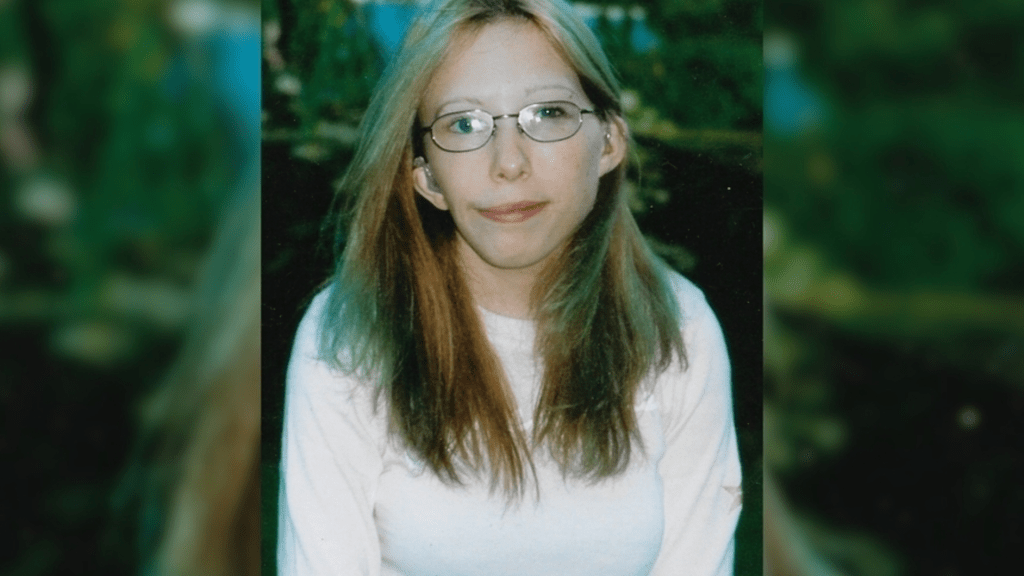
Laura Winham lived in the shadows. Not by choice, but by the slow, creeping isolation that comes with severe mental illness. Her home was an apartment in Sheerwater, a quiet suburb of Woking in Surrey, England. On the outside, it was an ordinary block of flats. Neighbors came and went, lived their lives. No one gave much thought to the woman in Flat 23, the one they hadn’t seen in years.
For Laura’s family, her disappearance was gradual, painful, and, at first, something they felt powerless to stop. Laura had been diagnosed with schizophrenia, a condition that took hold of her mind and warped her perceptions of the world, including the people closest to her. She believed her family was trying to harm her, convinced that those who loved her most were plotting against her. Paranoia grew until it forced her to sever ties. Calls went unanswered. Letters ignored. Eventually, the visits stopped too.
By the time the police arrived at her apartment in May 2021, it wasn’t Laura they were expecting to find, but rather an explanation—something to make sense of the silence that had stretched on for years. Her mother and brother had requested the police break in, a last, heart-wrenching resort after years of attempts to reconnect. They hoped for a miracle, though deep down, they must have known the odds of finding her alive were slim.
The officers pried open the door, stepping into an apartment frozen in time. The smell hit them first—a thick, unmistakable staleness that clung to the walls, to the furniture, to every forgotten corner of the flat. Laura’s body was found in the hallway, curled into a fetal position, her skeletal remains shrouded in clothes she had likely worn in those final days. “Mummified” was the word used to describe her condition. Years had passed since her death, and time had done its work, erasing nearly all traces of the vibrant young woman she once was.
Laura was just 38 when they found her, but she’d likely been gone since November 2017. That was the last time she had marked her calendar, crossing off the days one by one until November 1st, when the ticks abruptly stopped. The thought of it—the quiet marking of time in a life so profoundly isolated—would later haunt her family. For more than three years, her body lay there, undisturbed, unnoticed. No one checked on her. No one realized she was gone.
But Laura had been fading long before her death. Deaf since birth, Laura’s ability to communicate with the world had always been limited, a challenge compounded by her deteriorating mental health. Schizophrenia distorted her reality, creating a barrier between herself and the outside world that no one, not even her family, could break through. She had slowly disappeared from the lives of those who loved her most, pushing them away out of fear, confusion, and illness.
Her apartment became a fortress, one she rarely left in those final years. When the door closed behind her, it seemed to close her off from everyone and everything. Laura’s fear of the outside world grew stronger, and eventually, even basic tasks like going to the grocery store became too much. Her diary entries, later read aloud during the inquest, painted a picture of a woman slowly starving—not just for food, but for connection, for help.
In September 2017, Laura wrote about her hunger, about dreaming of food, but being too scared to leave her flat. She was subsisting on what little was left in her kitchen—potatoes, cheese—and she wrote that she had only about £5 to her name. It had been weeks since she’d last gone shopping, and each day without food seemed like a small miracle of survival, though her tone was far from hopeful. “I cannot believe I have survived this long,” she wrote in one heartbreaking entry.
By the time her last calendar date was crossed off, Laura had all but disappeared. Her life had shrunk to the walls of her apartment, her mind trapped in a cycle of fear, hunger, and isolation. Her family, still reeling from the estrangement, had tried everything they could to stay in touch, but Laura’s paranoia kept them at bay. Calls to social services yielded little help. Laura was an adult, they were told. If she didn’t want to engage, there was nothing they could do.
Still, the question hung in the air: How could this happen? How could someone so vulnerable, so clearly in need, be allowed to slip through the cracks? For years, she lived and died without anyone intervening—not neighbors, not social workers, not housing authorities. It was as if Laura had vanished from the world long before her body did.

The Inquest
The years leading up to her death were harrowing, and the investigation that followed revealed a series of tragic, preventable failures. Laura’s mental health had spiraled out of control, her fear and paranoia growing until she was too scared to even step outside for groceries. Her diary entries, now part of the investigation, described the slow decline in grim detail. “Wish I’d bought rice. Dreaming of [food]. Anyway, I’m starving,” she wrote in mid-September 2017. Her isolation wasn’t just a symptom of her mental illness—it had become her reality.
Laura’s family was haunted by the knowledge that she had been so close, yet so far from help. They’d tried to reach out, but Laura’s schizophrenia had convinced her they meant her harm. Without anyone else stepping in, Laura remained alone, isolated in a mental prison she couldn’t escape.
The Lingering Sadness
Laura Winham’s story remains unresolved, her death casting a long shadow over the inquest that continues to investigate how such a tragedy could happen. Her family, still heartbroken, has accused social and mental health services of abandoning her. “She was left to die,” her brother said, his voice heavy with anger and grief during the inquiry. The inquest seeks to uncover what exactly went wrong—how a vulnerable woman could be left so utterly alone.
The investigation has raised difficult questions about the care of individuals with severe mental health challenges. Why were there no follow-up visits? Why wasn’t her vulnerability flagged sooner? In the years since Laura’s death, both Woking Borough Council and Surrey County Council have introduced new policies to ensure that cases like Laura’s are not overlooked. But for her family, these changes come too late.
The calendar in Laura’s apartment stopped on November 1, 2017, but her story lives on, a haunting reminder of how easily someone can disappear when the systems in place fail. There’s no satisfying ending here—no closure, only the bitter knowledge that Laura’s death could have been prevented.


 Deep Lore