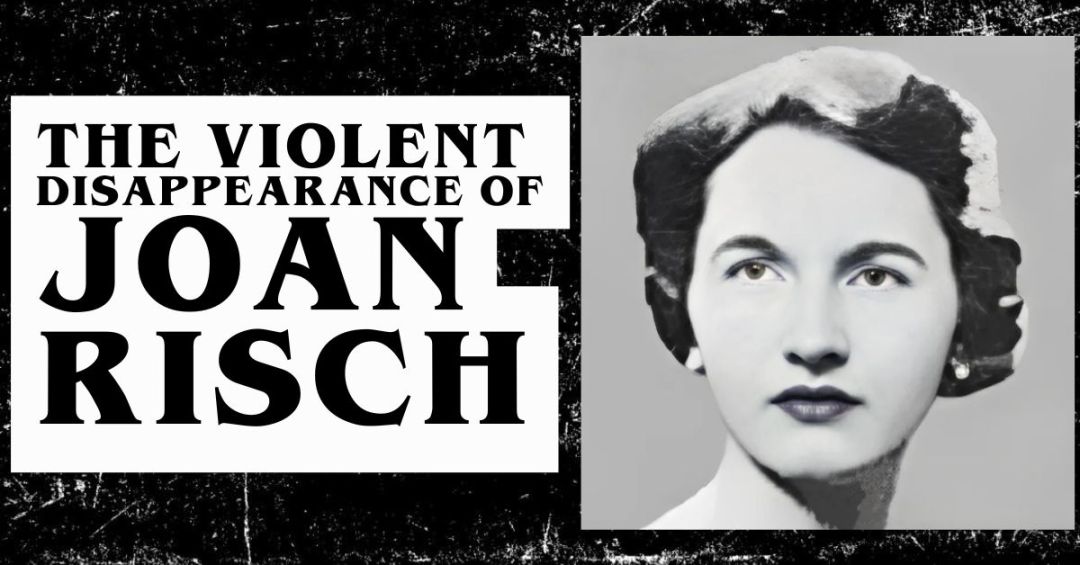

Joan was the picture of a mid-century American housewife, though her background hinted at a more complex story. Born in Brooklyn in 1930, she had been orphaned at a young age when her parents died in a suspicious house fire. She was adopted by relatives and grew up under the name Joan Nattrass, leaving her past behind. Joan was bright and driven; she attended Wilson College in Pennsylvania, where she graduated with a degree in English Literature before pursuing a career in publishing. It was during her time as an editorial assistant that she met her husband, Martin, an ambitious young executive in the paper industry. They married in 1956, and Joan left her job behind to start a family. By all accounts, they lived the American Dream—two beautiful children, a house in a quiet, safe neighborhood, and a community where everyone knew each other.
On this particular day, Martin had left early for a business trip, heading to Logan Airport for a flight to New York City. He planned to stay overnight, leaving Joan to manage the household. After he left, Joan slipped into her routine. She dressed her children—Lillian, age four, and David, two—and prepared breakfast in their modest but comfortable home on Old Bedford Road. Their house, a typical Cape Cod-style structure, was one of many similar homes that dotted the street. It was a peaceful place, far removed from the chaos of her early life.
That morning, Joan took Lillian to a dentist’s appointment in nearby Bedford, about a 15-minute drive from Lincoln. It was a mundane errand, one of the countless tasks that made up the fabric of her day-to-day existence. After the appointment, Joan made a quick stop at a local department store, picking up a few small items and paying in cash. She then returned home, where the family’s milk and mail had been delivered while they were out. Everything was in its usual place. By all accounts, the day was unfolding exactly as it should.
Joan spent the late morning and early afternoon at home with the children. She made lunch for them, likely something simple—a sandwich for Lillian, maybe some soup for David. Then, as she often did, Joan put David down for his afternoon nap around 1:00 p.m. His naps were a regular part of their routine, typically lasting until about 2:00 p.m., giving Joan a short window of quiet time.
At 1:00 p.m., Barbara Barker, the neighbor who lived across the street, brought her son, Douglas, over to play with Lillian. Joan allowed the two children to play in the yard while she went about her chores. At one point, she stepped outside to trim some plants in the garden, briefly chatting with Barbara before putting the pruning shears away in the garage. Everything seemed perfectly normal.
But then, something changed.
Around 2:15 p.m., Barbara saw Joan one last time. Joan was hurrying up her driveway, wearing a trench coat over her blue housedress, carrying something red in her outstretched arms. From a distance, Barbara couldn’t make out what the red object was, and she assumed Joan was simply chasing after one of the children or dealing with an urgent household matter. In a quiet suburban town like Lincoln, nothing ever seemed urgent. Joan disappeared into the garage, and that was the last time anyone would ever see her.
Just after 3:00 p.m., the peaceful rhythm of the afternoon was shattered. Barbara had taken her children, along with Lillian, back to her house, planning to go shopping. When she returned to the Risch home at 4:15 p.m. to drop Lillian off, she was confronted with an unsettling sight. Lillian stood in the doorway, confused and a little frightened. “Mommy is gone,” she said in a small, unsure voice, “and the kitchen is covered with red paint.”
Barbara’s heart raced. Red paint? Something was wrong. She stepped inside the house, expecting a mess, maybe some spilled paint from a household project. But what she found was much worse.
The kitchen was in complete disarray. Blood—bright red and unmistakable—was smeared across the walls and floor. A table was overturned, and the telephone, which had been mounted on the wall, was ripped out of its cradle and discarded in the middle of the floor, inside the wastebasket. The scene was chaotic, but eerily silent. The house felt empty.
Barbara’s eyes darted around the room. Where was Joan? She called out, but there was no response. Upstairs, David was still in his crib, unharmed but crying, his diaper wet. Joan was nowhere to be found.
In a panic, Barbara called the police. Within minutes, Sergeant Mike McHugh arrived at the Risch home. As he surveyed the scene, he knew immediately that something terrible had happened. The blood, the overturned furniture, the disheveled state of the kitchen—this wasn’t the aftermath of a simple accident. Joan was missing, and the trail of blood led from the kitchen to the driveway, where it stopped cold.
McHugh began to piece together what little evidence he had. But the more he looked, the stranger the scene became. How could someone vanish in the middle of a quiet afternoon, in broad daylight, without anyone noticing? Where had Joan gone, and what had happened in that house between 2:15 and 4:00 p.m.?
As the investigation would soon reveal, Joan Risch’s disappearance was no ordinary case. It was the beginning of one of the most perplexing unsolved mysteries in American history.
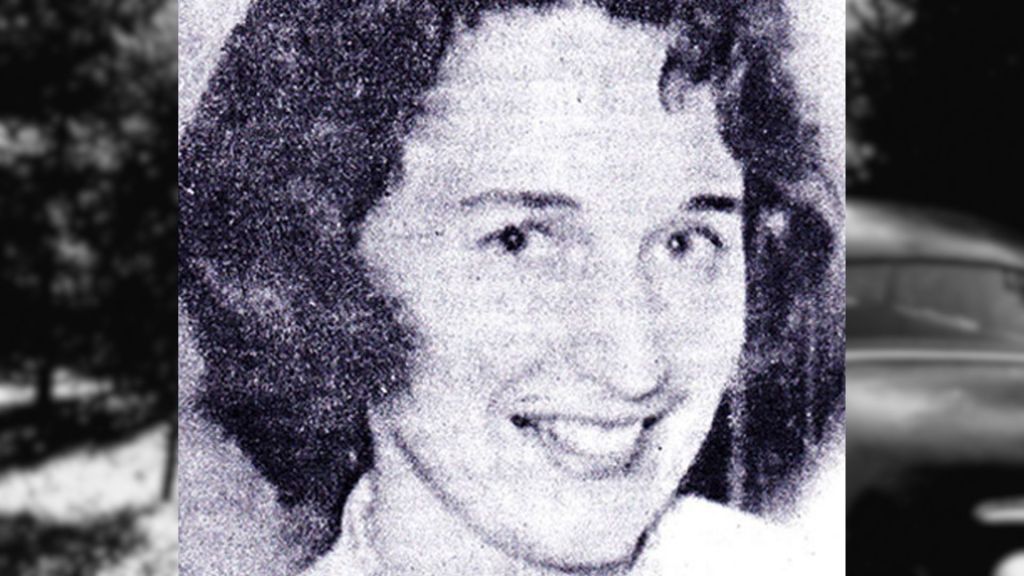
The Puzzle of Blood and Silence
Sergeant Mike McHugh of the Lincoln Police arrived at the Risch home within minutes of the neighbor’s call. His initial thought was grim: this looked like the scene of a violent struggle, possibly a homicide. Blood, identified as type O—Joan’s blood type—was found smeared on surfaces throughout the kitchen, but there was no sign of Joan herself. A trail of blood led from the kitchen out to the driveway, where it abruptly ended near Joan’s car. Yet despite the apparent signs of violence, something didn’t add up. The blood loss, while substantial, only amounted to about a pint—far less than what would suggest a fatal injury. There were no bloody footprints, no clear evidence of a body being dragged or carried away.
David, Joan’s two-year-old son, was found crying in his crib upstairs, unharmed. The house, apart from the chaos in the kitchen, appeared undisturbed. Martin Risch, Joan’s husband, was contacted and rushed home from New York. He was as baffled as the police—Joan had seemed fine that morning. What could have possibly happened in the span of just a few hours?
In the days that followed, investigators scoured the area. Neighbors came forward with odd but inconclusive accounts. One neighbor, a young girl named Virginia Keene, reported seeing an unfamiliar two-tone car in the Risch driveway around the time Joan disappeared. Another neighbor, five minutes later, recalled seeing a car backing out, though the driver remained a mystery. Additionally, there were reports of a disoriented woman, possibly Joan, walking along nearby highways, her clothes stained with blood. Sightings placed this woman walking near Route 128, but none of these leads were ever confirmed.
As police dug deeper, the mystery only grew. Joan’s life seemed peaceful, devoid of enemies or conflict, yet a bizarre discovery pointed to something darker. A local reporter uncovered that Joan had borrowed 25 library books in the months leading up to her disappearance. Most were about unsolved murders or missing persons cases, and one bore eerie similarities to her own disappearance—a woman who had left behind blood smears and vanished without a trace. This strange detail led to the theory that Joan had staged her own disappearance, meticulously planning her exit.
But if Joan had staged her disappearance, why? Was it an escape from suburban life, or something more troubling?
Other theories emerged. Some speculated that Joan had suffered a traumatic medical event, possibly linked to an illegal abortion, which could have gone wrong. This theory held some weight in the context of the early 1960s, when access to safe, legal reproductive healthcare was severely limited. Still, there was no concrete evidence to support it. Others believed Joan may have fallen victim to an accident, perhaps at the nearby construction site for Route 128. Did she, injured and disoriented, wander into danger?
Despite these leads, nothing definitive came to light. Investigators found no signs of Joan at the construction site, no additional clues from witnesses, and no suspects who could explain the chaotic, bloody scene in the kitchen. Joan’s family and friends were left in a state of agonizing limbo, searching for answers where none seemed to exist.

A Haunting Silence
More than 60 years later, Joan Risch’s disappearance remains unsolved. The case, once a local sensation, has faded into the background of American true crime history, yet the lingering mystery still grips those who revisit it. Theories about her fate persist—was Joan Risch a victim of foul play, or did she orchestrate her own vanishing act? Did she meet a tragic accident, her body never found, or is there a more sinister explanation?
For her husband, Martin, who lived the rest of his life in the same home, the lack of answers was devastating. He never sought to declare her legally dead, holding onto a glimmer of hope that she might return. Others in the community, particularly those who knew Joan well, couldn’t shake the sense that something darker had transpired that day.
The blood in the kitchen, the missing trench coat, the strange car in the driveway—these were pieces of a puzzle that never fit together. The haunting image of Joan Risch, a mother of two, disappearing from her own home in the middle of a peaceful afternoon, lingers like a specter over Lincoln, Massachusetts. Whether she met a violent end, escaped from a life she no longer wanted, or succumbed to a tragic accident, Joan Risch left behind more questions than answers.
Joan’s story stands as a reminder that, even in the most ordinary of places, the truth can remain elusive, and some mysteries refuse to be solved.


 Deep Lore