
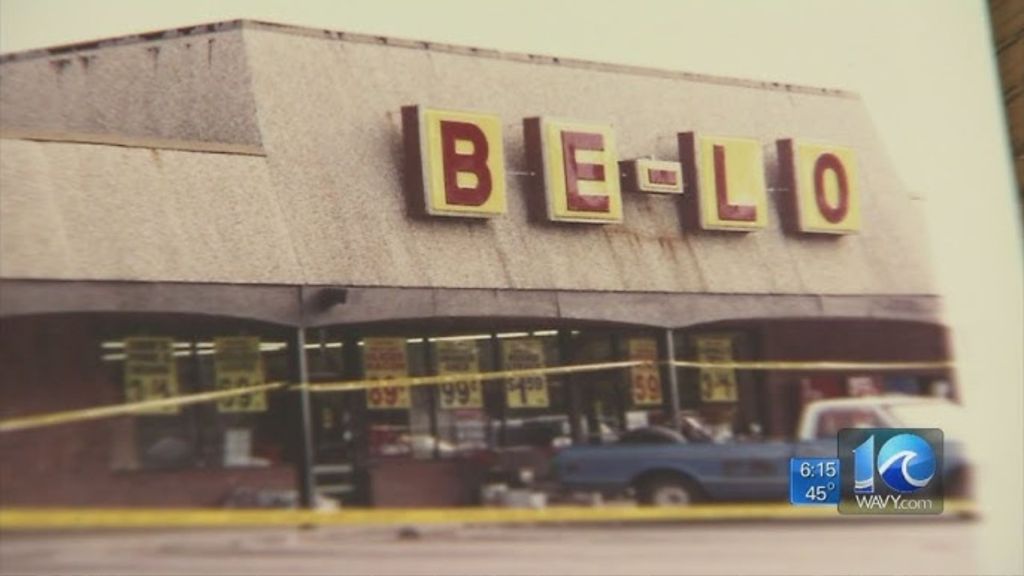
It was one of those sticky summer evenings in Windsor, North Carolina. The kind of day where the air clings to your skin, where even the hum of the streetlights feels heavy. The Be-Lo grocery store was getting ready to close for the night of Monday, June 6, 1993. It wasn’t a big place, not by any means. Just a small grocery, tucked along a quiet road in this town of barely 2,000 people, where regulars stopped in to grab milk or eggs on their way home. By 6:15 p.m., the six employees inside were just counting the minutes until they could head home.
Joyce Coburn Reason, a 36-year-old mother who worked the register, was chatting with Johnnie Rankins Jr., 48, who was part of the cleaning crew that night. Johnnie had worked at the store for a few months, sweeping floors and keeping things tidy. Grover Lee Cecil Jr., 52, the store manager, was a steady presence in the back office, a man who had probably seen everything over his years in retail. Brothers Thomas Hardy, 45, and Jasper Hardy Jr., 40—both from nearby Edenton—had come in that day to help with some extra work. And Sylvester Welch, 43, a gentle giant of a man, was with them, keeping an eye on things as the store wound down for the night.
Windsor is a small town in Bertie County. The kind of place where everyone knows everyone, where kids grow up alongside one another, and where trust isn’t something that’s questioned. People like Joyce and Grover were fixtures in the community. They didn’t expect violence in their lives, not here. It wasn’t a place where bad things happened, at least not on this scale.
But that night, something was different.
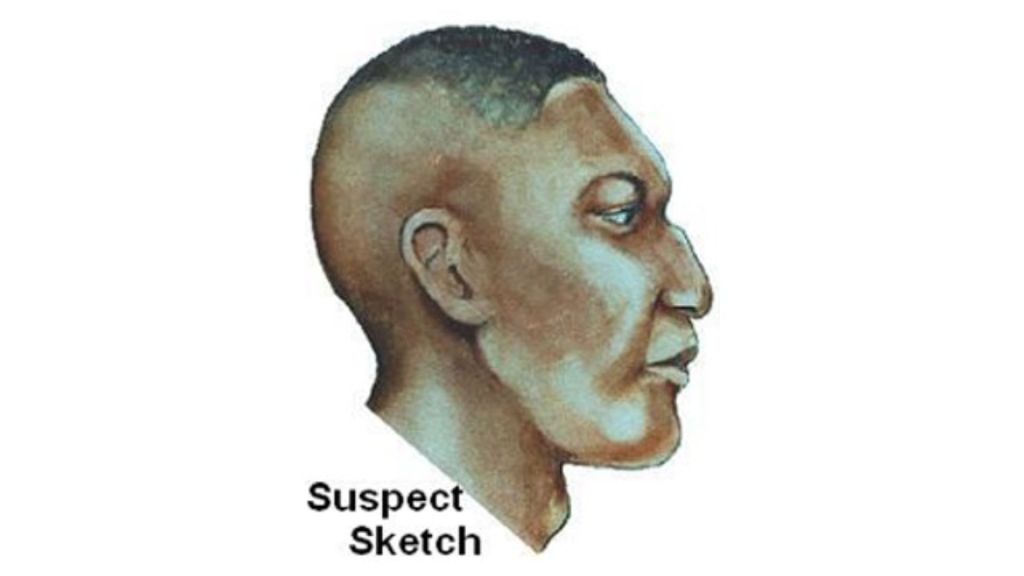
As they prepared to lock up, they didn’t know that the man who would forever change their lives was already inside. He hadn’t burst in dramatically. He didn’t come in guns blazing. Instead, he slipped in quietly, blending in like any other customer. He was slender but solid-built, a black man in his thirties with slanted light brown eyes and a military-style haircut. No one noticed him at first. He was just another face in a town of familiar faces.
And then, it happened.
Out of nowhere, he stepped forward, pulling a .45 caliber pistol—calm, deliberate, as if this was part of a plan he’d rehearsed. The suddenness of it caught everyone off guard. Their ordinary evening was over in an instant, replaced by the icy grip of fear.
“Get down,” the man commanded, his voice cutting through the small store. He waved the pistol at them, motioning for them to move, to follow his orders without question. This wasn’t someone who hesitated. There was no nervous quiver in his voice. Just a low, cold resolve.
He wasn’t here to make friends.
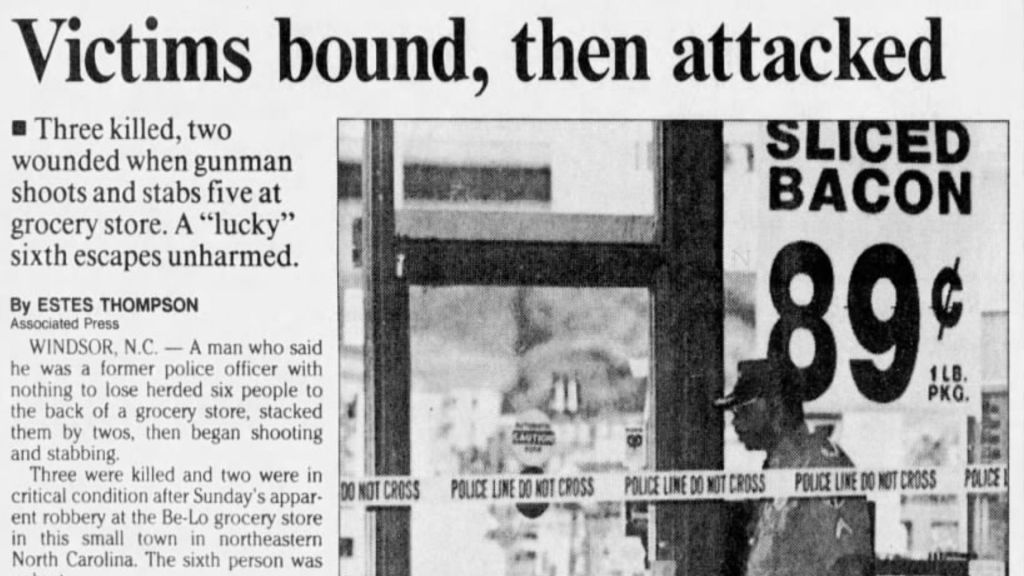
He quickly took control, rounding them up, directing them to lie on the floor. Duct tape—gray, industrial, the kind that binds things tight—was pulled out, and one by one, he wrapped their wrists. It was Joyce first, then Grover, then the others. The tape bound them to the floor, their hands stuck awkwardly in front of them.
And still, no one screamed.
Maybe it was shock, maybe fear, or maybe they thought they might make it out if they just did what he said. But somewhere, deep down, a feeling must have been growing—the knowledge that this wasn’t going to end well.
The stranger, with his eyes fixed, expression unreadable, walked around the store. His victims, lying face-down, didn’t see his face anymore. But they could hear his footsteps as he moved, hear the soft sounds of duct tape ripping from the roll, the metallic click of his pistol.
Then, he did something that no one, even in their darkest moments, could have anticipated. He arranged them into three piles, moving their bodies like objects. The man was no longer just a robber—he had control over life and death, and he was reveling in it.
The Murders
What happened next took mere minutes. The gunman raised his pistol and, without hesitation, fired multiple shots. Bullets tore into bodies as the smell of gunpowder filled the air. Grover, Joyce, and Johnnie didn’t survive. Thomas Hardy and Sylvester Welch were critically wounded, clinging to life.
The gunman then turned his attention to Thomas Hardy. Thomas, lying there, duct-taped and helpless, could only watch as the man produced a butcher knife. What followed was horrifying. The gunman slashed Thomas’s throat, the blade ripping through skin and muscle. Then, with a deliberate cruelty, he drove the knife into Thomas’s back—so hard, the blade snapped off inside him.
Thomas’s body, already broken, now bore the kind of wound that should have meant certain death. But somehow, miraculously, he survived.
Amidst the carnage, there was one small flicker of mercy—or perhaps it was something colder. Jasper Hardy Jr., Thomas’s younger brother, had been spared. “I’m going to let you live, big man,” the gunman had said to him before he disappeared into the night. Why? No one knew.
Sylvester Welch, shot in the back, refused to give up. In agony, he dragged his bloodied body across the slick floor toward a phone. With every inch, his vision blurred and his strength waned. Finally, he reached it. With shaking hands, he dialed 911.
By the time the police arrived, the gunman was long gone, vanishing into the thick humidity of a North Carolina summer. He escaped with approximately $3,000 in stolen cash. Windsor, once quiet, was now shattered. The local police and the State Bureau of Investigation swarmed the scene, but nothing could bring back the lives that had been taken.
The investigation hit a wall almost immediately. Despite the clear description from the survivors, no suspects emerged. The gunman seemed to vanish into thin air. Rumors swirled through the town. Was it someone local? Someone passing through? A professional killer, or just someone with a grudge? No one knew, but everyone in Windsor had a theory.
A Hopeless Investigation
Three decades later, the Be-Lo grocery store building stands empty, a silent reminder of that tragic night. The horror of June 6, 1993, still haunts Windsor. A reward of $30,000 for information leading to an arrest sits unclaimed. No one has come forward. No new leads. No answers.
Thomas Hardy and Sylvester Welch survived to tell their stories, though the trauma would stay with them forever. Hardy lived with the physical reminders: a scarred throat and the memory of a knife in his back. Welch, whose determination to reach that phone saved lives, passed away in 2015 after battling cancer. Their testimonies remain crucial pieces of this unsolved puzzle.
In Windsor, the whispers still circulate. Some believe the killer must have left town immediately, that he’s far from here by now. Others think he might be closer. It’s the kind of crime that embeds itself into a community’s memory—unsolved, unexplained, but never forgotten.
Jasper Hardy Jr., the man the killer chose to spare, still carries the weight of that moment. The question of why he was selected to live haunts him. The survivors’ descriptions of the gunman remain clear in their minds, but they haven’t led to an arrest. His light brown eyes, his military haircut—details that should have helped identify him—instead became part of Windsor’s darkest mystery.
Even now, as Windsor moves forward, the questions remain: Who was he? Why did he do it? And will anyone ever come forward to bring justice to those whose lives were forever changed that summer evening?


 Deep Lore