
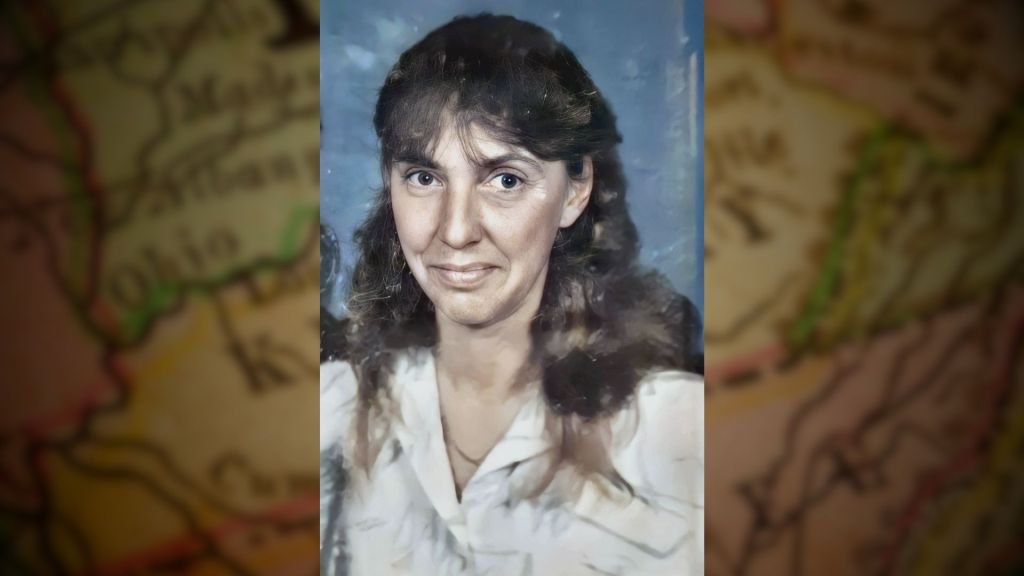
It’s October 9, 2001—just another workday for a land surveying crew inspecting an embankment along Interstate 65 in Simpson County, Kentucky. The hum of traffic rumbles in the background as the workers move along the steep incline, eyes focused on the terrain. Then, something unusual catches their attention. Tangled in the brush, just beyond the guardrail, lies the decomposed body of a woman. She’s half-hidden in the trees, as if someone had wanted her to be forgotten.
The police arrive swiftly. The location, just 12 miles north of the Kentucky-Tennessee border, suggests she could be from anywhere—just passing through, maybe hitching a ride, perhaps running from something or someone. She’s wearing a white T-shirt, blue shorts, and sandals, her long hair matted and tangled—evidence of weeks, maybe months, exposed to the elements. The only personal effects that remain are the rings: one gold, simple, perhaps a wedding band; the other silver with a delicate floral design.
Her body is skeletal in places, so decomposed that visual identification is impossible. There are no fingerprints to lift. Her face is unrecognizable. It’s immediately clear to investigators that she didn’t die naturally. She was left—dumped by someone who expected her to disappear into the foliage. The team realizes they have a long road ahead in trying to figure out who this woman is and an even longer one to discover who took her life.
Without a name, she’s just another Jane Doe—another body by the side of the road. But she’s not forgotten—not yet. The Kentucky State Police file her case, and forensic anthropologist Dr. Emily Craig is brought in to help piece together the fragments of her life. From the outset, the odds seem slim, but as they start to gather what little evidence they have, a story begins to emerge.
The Search for a Name
As Dr. Craig examines the body, she finds signs of a troubled life. The woman had a history of severe dental neglect, with several teeth missing or decayed beyond repair—a possible sign of prolonged hardship. There’s evidence of physical trauma, too—healed fractures in her ribs and right arm, as though she’d endured violence at some point. She may have even suffered from chronic pain in her back. This woman, who looked no older than 35 at the time of death, had clearly lived a rough life.
But that’s not all. Craig notices a tattoo—an outline of a rose on her left breast. It’s faded, like everything else about her, but it stands out as a small clue to who she might have been. More disturbingly, Craig finds signs that the woman may have been pregnant before her death, adding another layer of tragedy to an already grim discovery.
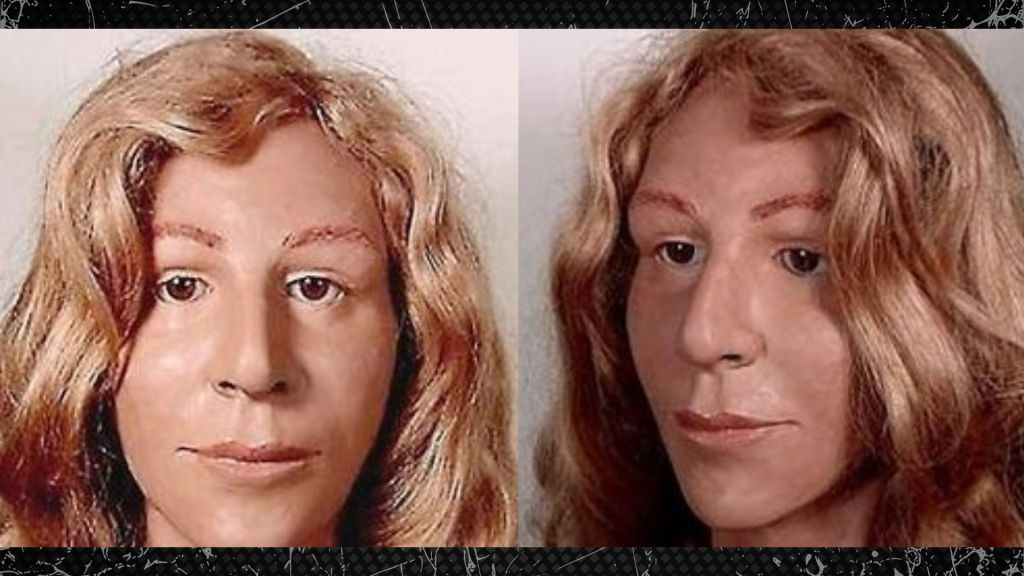
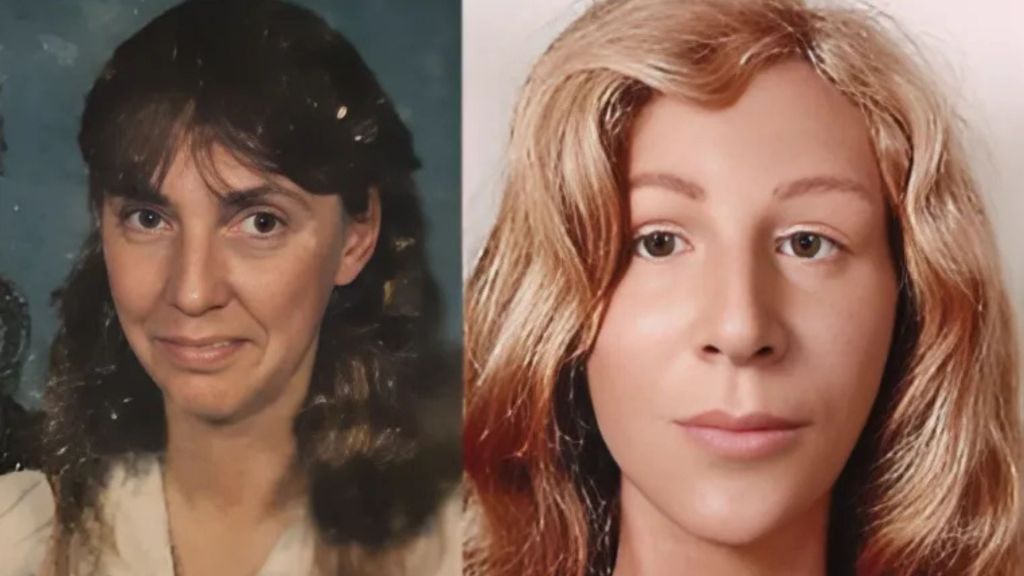
Isotope analysis gives investigators another piece of the puzzle. It shows that she likely spent her childhood in the Great Lakes region—a detail that fits with her physical appearance but still doesn’t help pinpoint her identity. The investigation continues, with police releasing a forensic reconstruction of her face, hoping someone will recognize her. A witness comes forward, claiming to have seen a woman fitting her description hitchhiking in Nashville, Tennessee, not long before her body was found. She was trying to travel east, they say, perhaps to North Carolina or Virginia.
Despite this lead, the case stalls. No missing persons report has been filed for her, and no one steps forward to claim her as family or friend. And so, Jane Doe becomes another cold case, locked away in the evidence room, waiting for someone to care enough to reopen the file.
Then, in 2018, new hope emerges. The Kentucky State Police partner with the DNA Doe Project, a nonprofit organization specializing in genetic genealogy. Using DNA analysis, they begin searching for family matches through public genealogy databases. But it’s a slow process, with only distant relatives showing up in the results. Two long years pass before they get a breakthrough, and in July 2021, Kentucky Jane Doe is finally given a name.
Dawn Clare Plonsky Wilkerson.
Born in Wisconsin in 1956, Dawn was the second youngest of six siblings. By age 18, she had married and had a son, but her life wasn’t easy. Her first marriage ended in divorce, and though she had periods of stability—like getting engaged again in the 1980s and eventually relocating to Nashville, Tennessee, where she married a man named D. Wilkerson—there were darker stretches too. By 2001, Dawn had slipped off the radar, her once-connected life fading into the shadows of anonymity. At the time of her death, she was 45 years old, far older than the 35 years forensic experts had guessed. Yet, there was little else anyone knew about her final days.
A Life Lost, A Case Unsolved
Even with her identity restored, Dawn’s death remains a mystery. Kentucky State Police announced her name publicly, hoping it would lead to more information about how she met her end. But leads have been scarce. While Dawn’s family finally has some closure, knowing where she was found and that she was identified, the cause and circumstances of her death are still unknown. The official cause of death has never been released, leaving it unclear whether she was killed by someone she knew or was the victim of random violence.
What we do know is that at some point in 2001, Dawn was seen hitchhiking in Nashville, trying to make her way east. Her path took her near the Kentucky-Tennessee border, where she was found months later, alone and abandoned. Why was she there? Where was she trying to go? And most importantly, who took her life and left her discarded by the roadside?
Despite nearly 20 years passing between her death and identification, Dawn’s case remains unsolved. The Kentucky State Police continue to appeal for information, asking for even the smallest clue. Her family, scattered and distant, still hopes that someone, somewhere, will come forward with answers.
Dawn Clare Plonsky Wilkerson’s story is both tragic and incomplete. Though her name is now known, the questions surrounding her death still linger, casting a shadow over the small Kentucky town where her remains were found. Who was she in those final days, and why did no one notice she was missing? More than two decades later, the case remains open, a reminder that not every mystery gets solved, even with a name.


 Deep Lore