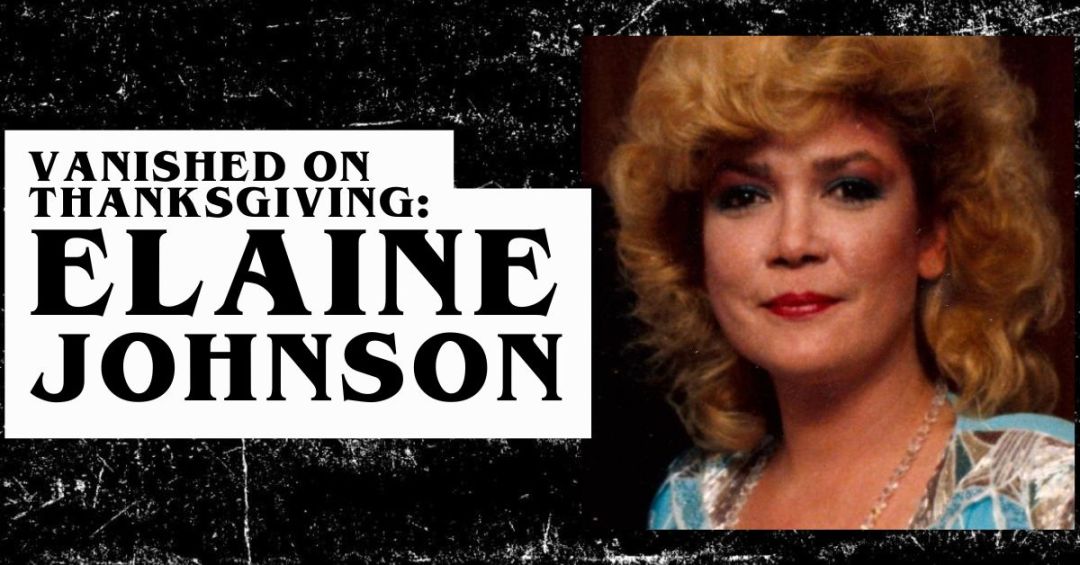

On Thanksgiving Day, 1990, forty-one-year-old Elaine Johnson’s apartment in Parma, Ohio’s Kimberly Park complex stood quiet—neat, organized, the home of a meticulous person. She’d raised two kids, worked a steady job at the Tri-C Unified Technology Center, and by all accounts, was doing her best to hold life together. But this Thanksgiving, something wasn’t right.
Elaine’s daughter, Jodi, remembers that day vividly. She’d come over for Thanksgiving dinner, expecting it to be like any other holiday. The tension was palpable from the moment she walked in. Elaine’s ongoing struggle with alcohol and depression had recently worsened. She’d just met a new boyfriend, Brian Sachs, a mystery man Jodi had never met but had heard enough about to be wary. Brian’s sudden appearance added another layer of uncertainty to Elaine’s life.
Mother and daughter didn’t see eye-to-eye on Brian. Each mention of his name turned the conversation tense. Jodi wanted her mother to be happy, but the pace of things worried her. Elaine announced her plans to marry Brian in February, just months away, yet seemed strangely hesitant to introduce him to Jodi. In fact, she said she thought Jodi wouldn’t like him.
By night’s end, emotions boiled over into an argument. Jodi left, unable to shake the feeling that something was wrong. She later called to check in, and when Elaine picked up, her voice sounded unsteady. Their final conversation drifted into unusual territory, with Elaine’s words taking on a cryptic, almost unhinged quality. After reiterating her decision to marry Brian, she made an unsettling statement: if Jodi didn’t hear from her, it would be because she was dead.
It was a declaration Jodi couldn’t make sense of. She had no idea it would be the last time she’d speak to her mother.
An Empty Apartment
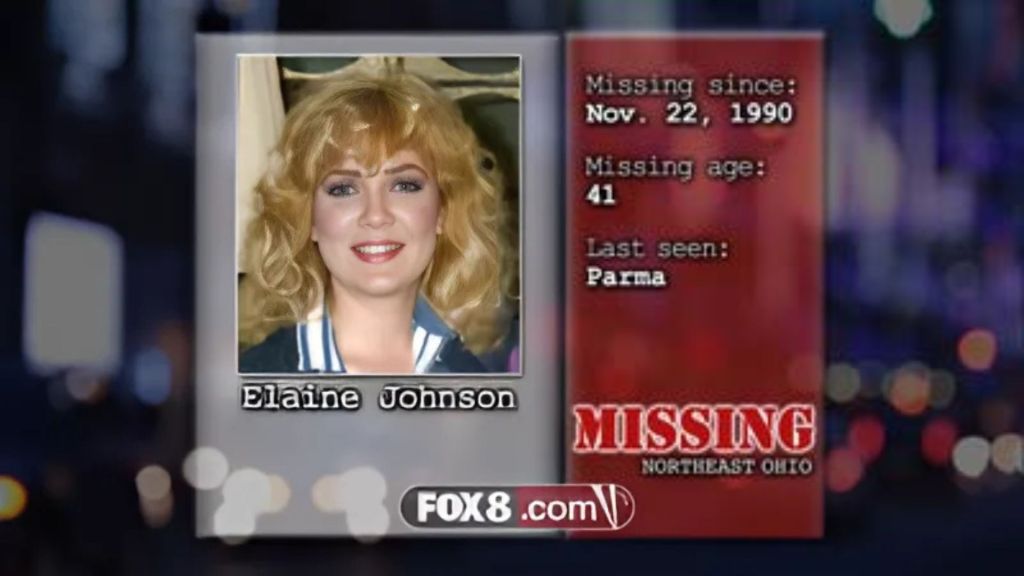
Twelve days later, on the afternoon of December 3, 1990, Jodi got a call from one of Elaine’s coworkers. Elaine hadn’t shown up to work in days, and no one could reach her. The call came on Jodi’s twenty-first birthday, a day she’d hoped would be full of celebration. Instead, dread pooled in her stomach. Something wasn’t right. She rushed to Elaine’s apartment, praying she’d find her mother there, ready to apologize for worrying everyone.
The scene that greeted her only amplified her fears. Elaine’s place maintained its usual meticulous order, yet small, unsettling details seemed to tell a story—though the story made no sense.
The lights blazed, unusual for her mother, who was cautious about conserving electricity. A dishtowel lay on the counter, hastily abandoned, as if Elaine had been interrupted mid-task. Her glasses rested there too, alongside her purse, coat, shoes, identification, and credit cards. Everything she’d need to go anywhere, especially in the chill of an Ohio December, remained behind. Only her set of keys was missing.
Jodi searched the apartment, hoping to find any clue to her mother’s whereabouts. She checked the bathroom, the bedroom, every corner of the place. Then she saw something that froze her in her tracks—a series of handwritten notes. They were scribbled on various pieces of paper in Elaine’s handwriting, but the words were erratic, cryptic, as though written in a kind of daze or trance.
The notes contained disjointed thoughts, odd phrasing, mentions of people and things both familiar and strange. They referenced Brian, but also someone named Bob—a man Jodi knew had died the previous year. Words ran together, half-completed thoughts trailing off, questions without answers. One line stood out: “I have much to say in private to the one who ordained this miasma.”
In the building’s laundry room, Jodi discovered her mother’s clothes sitting in the washer and dryer, untouched and rumpled from days of neglect. The scene suggested Elaine had been in the middle of folding laundry, only to vanish suddenly. Jodi carefully folded the clothes herself, carrying them back to her mother’s apartment in a daze, haunted by this snapshot of her mother’s interrupted life.
She left a note, clinging to hope that her mother would return and explain everything. That night, after hours without any sign of Elaine, she called the police and officially reported her missing.

The Questions Left Behind
Investigators finally entered Elaine’s apartment, methodically piecing together the scant details of her disappearance. Initially, they theorized that Elaine had left voluntarily, perhaps seeking to start anew or escape her burdens. Yet this theory weakened as more details emerged. Elaine had paid her rent just days before, suggesting she intended to stay. Moreover, there was her coworker’s haunting recollection of Elaine’s statement that if no one heard from her, it would be because she was dead.
Security camera footage captured Elaine in the elevator on November 30, three days before she was reported missing. She appeared dressed for the outside, wearing a jacket and shoes, yet no footage ever showed her leaving the building. It was as though she’d vanished into thin air. Jodi couldn’t shake the feeling that Brian’s response to her mother’s disappearance seemed wrong. When she called him, desperate for information, his answers were cold and indifferent, as though he couldn’t be bothered with concern. Her instincts told her there was more to the story than he revealed, but she had no proof—only intuition.
Over the years, the case grew colder. The cryptic notes became a haunting mystery, each line posing questions no one could answer. Her mentions of “Brian” and “Bob,” her pleas to “never drink,” and her apparent struggle between love and self-blame hinted at an inner turmoil that remained locked within those scrawled words. Later, Jodi developed a theory with detectives—perhaps her mother had met with harm in the building’s laundry room. She couldn’t forget the unemptied washer and dryer, the strange stillness of that space. One detective even suggested the possibility that Elaine had been put down the garbage chute, a grim theory that could never be confirmed or disproven.
Three decades have passed since Elaine disappeared, yet Jodi maintains hope. In 2017, authorities released an age-progressed photo showing how Elaine might look in her sixties. News outlets and true crime websites have tried to raise awareness, but no new leads have surfaced. Brian Sachs died without ever answering Jodi’s lingering questions about him. As the years pass, the silence surrounding Elaine’s case only deepens.
Today, Elaine Johnson would be seventy-four. She’d have grandchildren, might be enjoying retirement, might still have her own meticulous little apartment. Instead, she remains a name on a missing persons list, her life frozen in that December of 1990. For Jodi, the questions persist: Did her mother simply walk away, or was she taken? And if she was, then who took her?
For Jodi, life continues with a quiet grief—a haunting not of what happened, but of what might never be known.


 Deep Lore