

It was a Thursday afternoon, March 16, 1989, and the streets of Chattanooga, Tennessee, were calm. The school day had just ended, and 15-year-old Tonetta Carlisle was on her way home. She walked this route every day—a quick five-minute stroll from City High School to her house on Ruth Avenue. She wasn’t in a rush, just taking her usual path, looking forward to an afternoon at home. For her mother, Nonie Sturdivant, it was a routine she never had reason to fear—until that day.
At approximately 3:00 PM, just half a block from home, something unthinkable happened. A tan and yellow car pulled up next to Tonetta. Within moments, several people leaped out of the vehicle and grabbed her. The few witnesses who saw the abduction couldn’t react fast enough. The attackers forced Tonetta into the car and sped away, leaving the neighborhood in an unsettling quiet that felt fundamentally different. Something awful had happened in broad daylight.
Hours later, as the afternoon turned into evening, Tonetta’s mother began to worry. Tonetta was always reliable, always home on time. But today, she was nowhere to be found. Nonie called friends and neighbors, hoping someone had seen her daughter. With each phone call, the unease deepened. When the clock ticked past 11:00 PM and Tonetta still hadn’t returned, Nonie filed a missing person’s report with the Chattanooga Police Department. In that moment, she entered the first hours of what would become a lifetime of unanswered questions.
What Nonie didn’t know was that the police had already received a report earlier that day—one from a witness who had seen her daughter’s abduction. But somehow, despite the witness’s frantic call and Nonie’s desperate plea, the pieces of Tonetta’s disappearance didn’t fall into place right away. The police were slow to connect the abduction to Tonetta’s missing person report, and valuable time slipped away as the investigation failed to gain immediate traction. It would be hours before the magnitude of what had happened became clear.
For now, all her mother knew was that her daughter hadn’t come home.

The Long Road to Nowhere
The search for Tonetta Carlisle began almost immediately, but the investigation faced a series of challenges from the start. The first critical mistake was the delay in linking the eyewitness account of Tonetta’s abduction to her missing person’s report. A full eight hours passed before police began treating her disappearance as a kidnapping. In those early hours, when time was most crucial, the investigation already lagged behind.
When the witnesses who had seen the abduction came forward with a description of the car—a tan and yellow vehicle with Tennessee plates—it felt like a lead investigators could work with. A car matching that description was eventually traced to Jeffrey Jones, a convicted rapist living in the area. For detectives, Jones became the focus of their investigation almost immediately. He had a violent criminal history, and the circumstances surrounding his connection to the vehicle raised all the red flags.
But just as the investigation seemed to be gaining momentum, it hit an unexpected roadblock. Only two days after Tonetta disappeared, Jones was found dead, having taken his own life. His suicide sent shockwaves through the case. The timing was suspicious—too close to Tonetta’s abduction to be a coincidence. But with Jones gone, investigators were left scrambling for evidence, and any hopes of getting answers directly from him were extinguished.
Despite the best efforts of law enforcement, the case began to stall. The physical evidence was scarce. There were no confirmed sightings of Tonetta after the abduction, no belongings left behind, and no sign of a struggle beyond the initial kidnapping. Investigators searched Jones’s home and property but found nothing that pointed directly to Tonetta’s fate. It was as if she had vanished without a trace.
Rumors and theories began circulating in the community, complicating the investigation. One prevalent theory suggested that Tonetta had been trafficked, possibly taken as far as California. Without any solid evidence to support it, however, the theory remained speculative at best. Another theory, one that lingered closer to home, was that Jones had killed her in a panic shortly after the abduction and buried her body somewhere, but no remains were ever found.
As the weeks turned into months, hope started to fade. Tonetta’s family was consumed by a painful cycle of waiting and wondering. Her mother, Nonie, clung to the possibility that her daughter might still be alive, while her brother Darrell Stewart faced the agonizing reality that the longer Tonetta was missing, the less likely she would be found alive. “You hear about this happening to other people, but you never think it will happen to you,” Darrell said. The family’s pain was compounded by the helplessness of not knowing what had happened or where to turn next.
The Chattanooga community rallied around the family, holding vigils and distributing missing person flyers, but as time passed, even the public attention waned. For law enforcement, the case remained open, but without new evidence or leads, there was little they could do. Tonetta had become another missing person in a growing stack of unsolved cases.
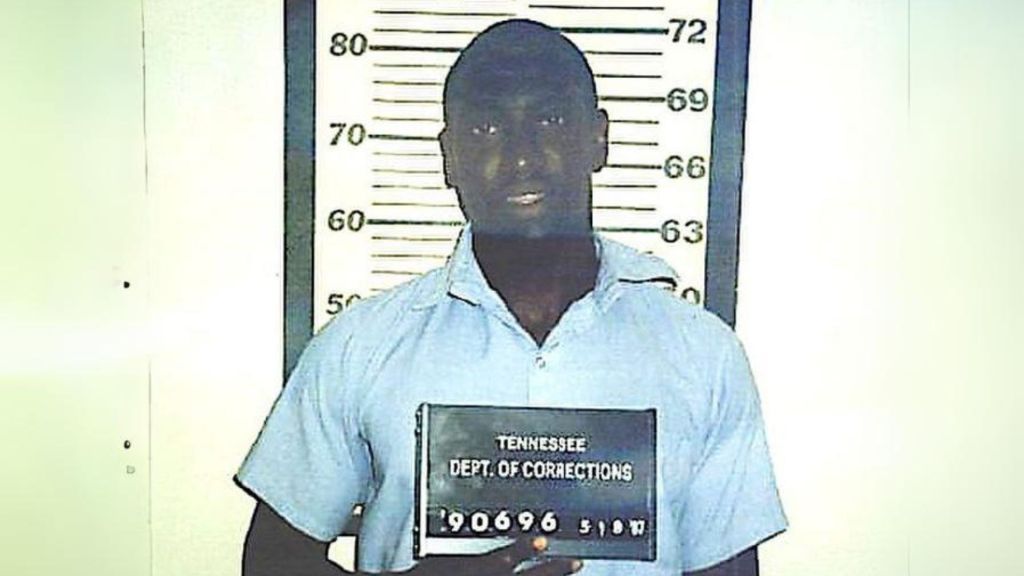
In 2019, a full thirty years after Tonetta’s disappearance, District Attorney Neil Pinkston announced that the case had been reopened. For the Carlisle family, this brought a renewed sense of hope. Investigators collected new DNA samples from her mother and brother, hoping that advances in forensic technology might finally provide the breakthrough they had been waiting for. The focus of the investigation once again turned to Jeffrey Jones, the man whose death had always loomed over the case. But with Jones dead and no physical evidence to connect him directly to Tonetta’s fate, the case continued to stagnate.
Still Waiting for Answers
The reopening of Tonetta’s case in 2019 offered a brief glimmer of hope, but for her family, the silence that followed was painfully familiar. No new evidence surfaced, and the search for answers remained just as elusive as it had been for the past three decades. Nonie Sturdivant, now much older, continued to hold onto the fragile hope that her daughter might still be alive, despite the passage of time and the weight of the unanswered questions that lingered.
Darrell Stewart kept his sister’s memory alive by warning others, turning his family’s tragedy into a lesson for parents and children alike. “Try not to have your child walking by herself,” he said, urging vigilance and community connection. He knew firsthand how quickly a life could be stolen, how an ordinary day could turn into a lifelong nightmare.
Tonetta Carlisle would be 49 years old in 2024. Her family continues to hold vigils, to speak her name, to release balloons in her honor as a symbol of their enduring love and their refusal to forget. Each year, they gather in the place where she was last seen, a street that has changed over the years but still holds the haunting memory of that day.
Some believe that Tonetta fought back against Jeffrey Jones, resulting in a violent altercation that led to her death. But with no physical evidence and no body ever recovered, the truth remains maddeningly out of reach.
The true weight of Tonetta Carlisle’s disappearance lies not just in the mystery of what happened that March afternoon, but in the endless void it left behind—a mother’s daily prayer for answers, a brother’s tireless advocacy, and a community forever changed by the loss of a young girl who simply tried to walk home from school.


 Deep Lore