In Tokyo, in the autumn of 1962, danger began arriving in ordinary objects.
An envelope at a singer’s fan club office. A cylinder left on a theater sofa. A poetry book forgotten in a telephone booth. A mystery novel placed near one of the city’s most famous temples. Each object looked harmless enough to touch. That was the trap.
The person behind them seemed to understand something simple and cruel about public life: people open mail, pick up lost books, move strange packages, and try to return things that do not belong to them. By the end of the following year, the name attached to those objects would become one of Japan’s most unsettling unsolved mysteries: Soka Jiro, or perhaps Kusaka Jiro.
Even the name refused to stay still. The kanji could be read more than one way, and the person using it never stepped forward to clarify anything. He attached his name to bombs, bullets, threats, and injuries. He gave investigators enough physical evidence to suggest he should have been caught.
But he was not.
The first known explosive arrived on November 4, 1962, at the fan club office of singer Chiyoko Shimakura. It came as a double-layered envelope with no return address. A 23-year-old office worker opened it and found a narrow tube inside. When he pulled out a piece of paper, the mechanism ignited, releasing flame and white smoke. His right hand was burned badly enough that it took about two weeks to heal.
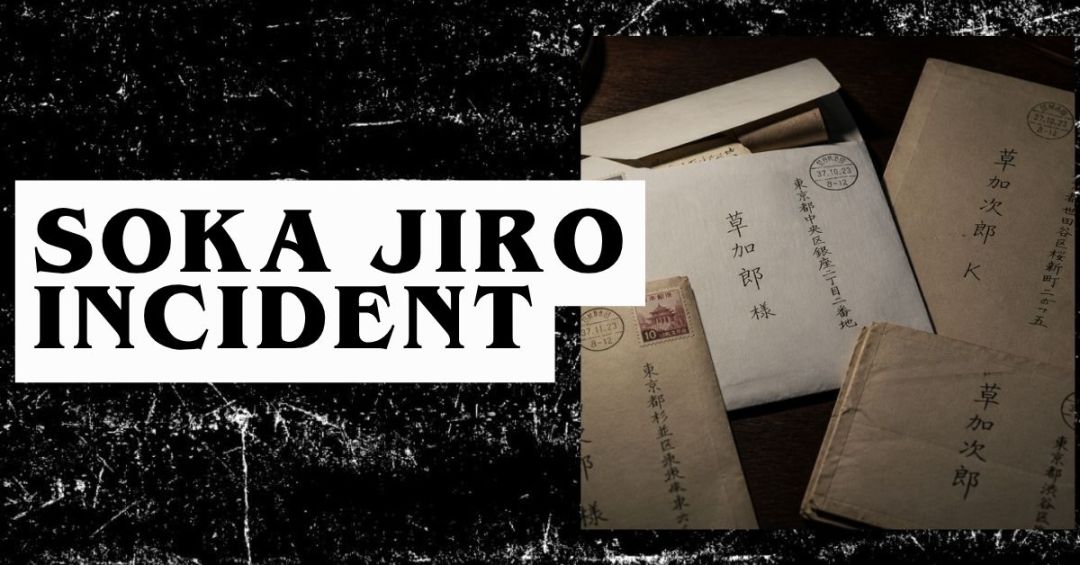
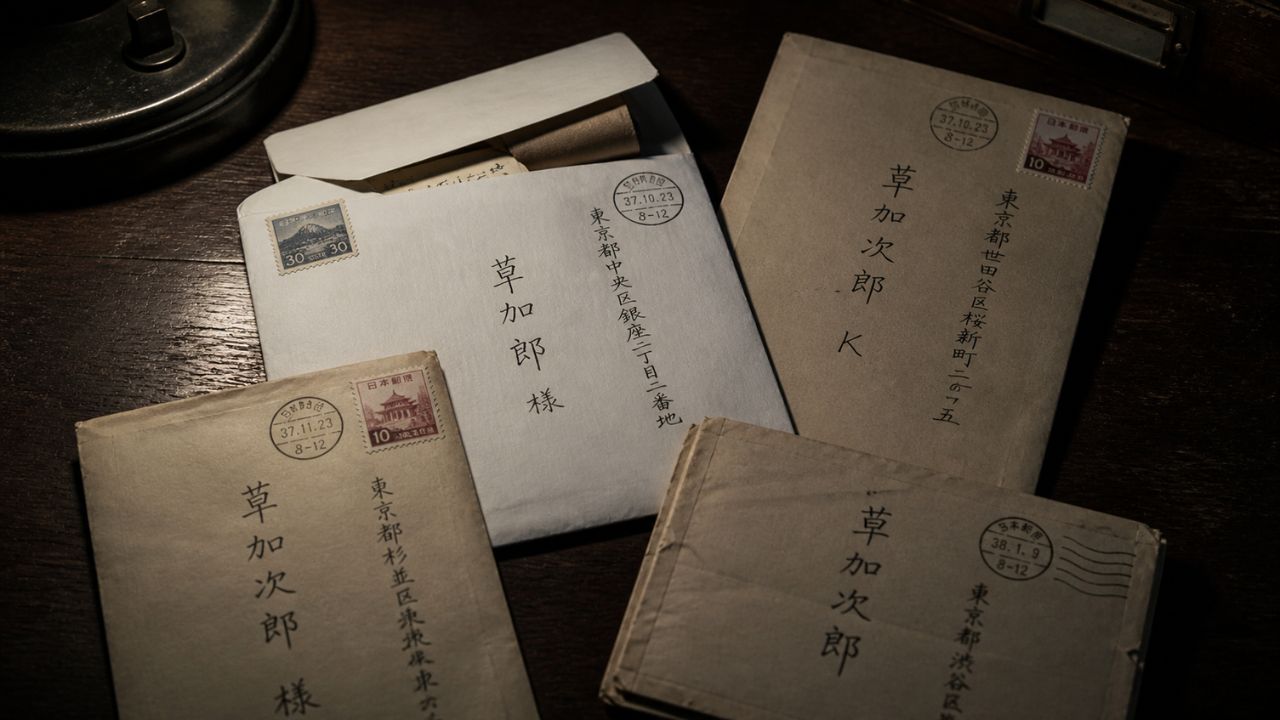
The construction was crude, but deliberate. Pulling the paper triggered a match inside the tube, igniting gunpowder. On the back was the name 草加次郎, along with the letter “K.” Investigators leaned toward reading the name as Kusaka Jiro, though Soka Jiro would also be used in later coverage.
At first, police and some media suspected a disturbed fan. Shimakura was a public figure, and Japan had already seen frightening attacks connected to obsessive celebrity fixation. But within weeks, that explanation began to fall apart.
On November 13, a similar explosive arrived at an address in Minato Ward but failed to function. On November 20, a 19-year-old woman leaving a movie in Chiyoda Ward touched a cylinder left on a theater sofa. It burst apart and burned her hand. On November 26, another blast occurred in a theater restroom after a cleaner opened the door and the airflow caused the object to fall.
Then, on November 29, the offender turned a book into a bomb. A 25-year-old office worker found a copy of Ishikawa Takuboku’s A Handful of Sand in a telephone booth. When he pulled out a bookmark-like paper, the book exploded, burning his left hand.
The first wave ended on December 12, when a security guard at Senso-ji Temple discovered an Ellery Queen mystery novel packed with gunpowder and batteries. It did not explode.
By then, the pattern was clear enough to frighten Tokyo, but not clear enough to explain. The victims had little in common. The locations kept changing. The objects were ordinary until someone touched them.
For a time, after the Senso-ji book bomb, the name seemed to disappear.
But it had not gone away.
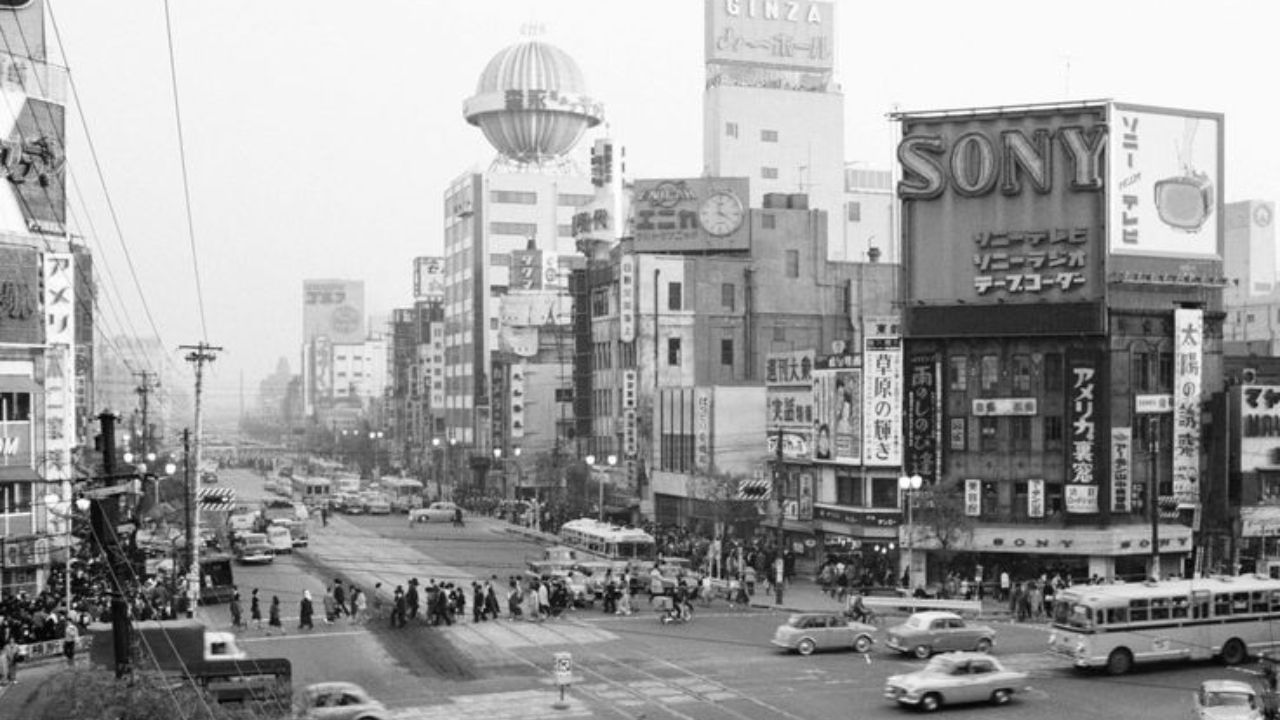
After the attempted bombing at the temple, police deployed a mobile investigation team. Still, the attacks stopped. Tokyo had other fears, other crimes, other stories competing for attention. For several months, the strange little bombs of late 1962 began to feel like a closed chapter.
Then the name returned inside fan mail.
In August 1963, the family of actress Sayuri Yoshinaga, then eighteen years old, discovered a thick white envelope while sorting through letters from fans. Inside was a bullet and a threat written in black marker. The demand was direct: Yoshinaga’s father was to bring one million yen in cash to a coffee shop near Ueno Station.
The letter had not just arrived. It had been postmarked months earlier, in May, and had gone unnoticed in the pile of ordinary fan correspondence. When investigators examined the rest of the mail, they found more letters under the same name. Some had different dates. Some repeated instructions. The danger had been inside the family’s home for months, tucked quietly into the ordinary machinery of celebrity attention.
A later letter gave stranger instructions. Yoshinaga’s father was told to board the express Towada from Ueno toward Aomori and throw the money from the train near a blinking light. The setup reportedly echoed Akira Kurosawa’s High and Low, a film built around kidnapping, ransom, and the moral pressure of a public crime.
That detail did not prove motive, but it suggested staging. Whoever was behind the letters understood drama. He was not only threatening violence. He was constructing scenes.
But while those letters sat unnoticed, the case had already taken another turn.
On July 15, near Ueno Park, a 27-year-old food stall operator was closing up during rainy weather when he was shot from behind. He survived, but the injury was serious. At first, the shooting did not clearly belong to the Soka Jiro case. It could have been a street crime, a gang dispute, or something unrelated.
Ten days later, an envelope arrived at Ueno Police Station. Inside was a single bullet. No explanation. No demand. Just the object itself. Forensic analysis reportedly showed that it matched the projectile recovered from the wounded man’s body. On the back of the envelope was the Soka Jiro name, and handwriting analysis connected it to the earlier bombings.
By then, the pattern had changed. The first wave had relied on people touching things they thought were harmless. Now the name was attached to celebrity threats, bullets, and a shooting in the street.
Around the same period, Toyoko Department Store in Shibuya was hit by extortion threats and explosions. The timing and methods were close enough to invite suspicion, but investigators reportedly doubted a direct connection. The handwriting did not match, and the department store threats appeared more plainly motivated by money.
That uncertainty only made the atmosphere worse. Tokyo was no longer dealing with a simple series of homemade bombs. It was dealing with a name that could attach itself to almost anything: a book, a bullet, a train-ransom fantasy, a wounded stranger in the rain.
Soka Jiro had returned.
And this time, the next attack would not wait for one person to pick something up.
On September 5, 1963, the danger moved underground.
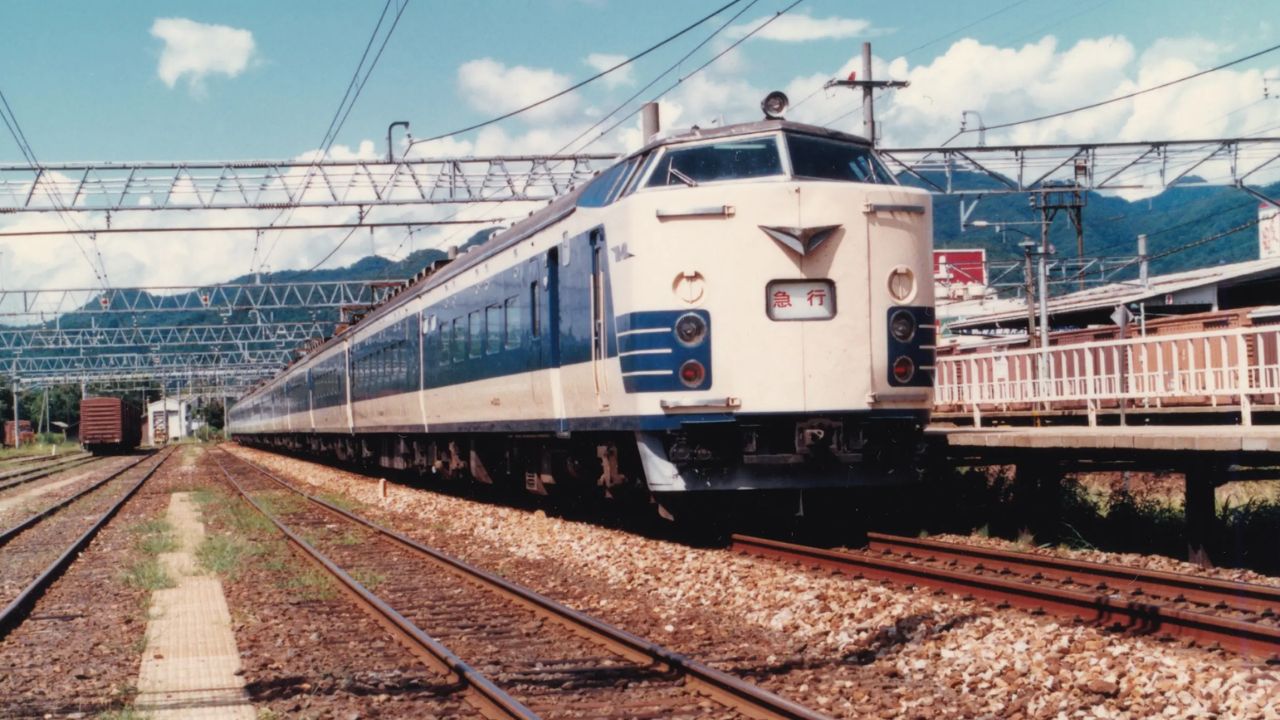
At around 8:14 that night, a Ginza Line train from Asakusa to Shibuya stopped at Kyobashi Station. When the doors opened, a homemade time bomb exploded near the driver’s cab. The blast tore through the ordinary rhythm of a subway ride. Ten passengers were seriously injured.
The bomb was more advanced than the early traps. It used black gunpowder, a glass bottle, dry cell batteries, wiring, and a watch-based timer designed to detonate at a set time. Two of the batteries were marked with the characters “次” and “郎,” part of the name Jiro. The signature had become smaller, but the message was still there.
This was the moment the case changed shape. The earlier attacks had been intimate, almost quiet in their cruelty. The Ginza Line bombing was different. It turned a crowded train car into the target.
Afterward, fear spread faster than facts. The name had transformed from a signature into a mask. In the three weeks around the bombing, nearly 200 copycat threats and warnings surfaced, along with hundreds more calls from people impersonating Jiro.
Police had reasons to believe the real offender could be found. He had provided handwriting, physical evidence, and reportedly fingerprints. Over the course of the investigation, authorities deployed more than 19,000 personnel, examined thousands of explosives enthusiasts, searched millions of fingerprints, and conducted handwriting analysis.
Still, no one was identified.
The case did not end cleanly. It faded into influence. In 1968, the man responsible for the Yokosuka Line train bombing reportedly said he respected Jiro for not being caught, and claimed that if Jiro had not appeared, he would not have bombed the train.
That may be the most disturbing legacy of the Soka Jiro Incident. The offender disappeared, but the idea of him did not. He became proof, to the wrong kind of person, that a name could frighten a city and survive without a face.
On September 5, 1978, exactly fifteen years after the Ginza Line bombing, the statute of limitations expired.
The bombs were history. The injuries had healed or scarred over. The investigation had run out of legal time.
All that remained was the name.
Soka Jiro.
Kusaka Jiro.
A signature without a person behind it.


 Deep Lore