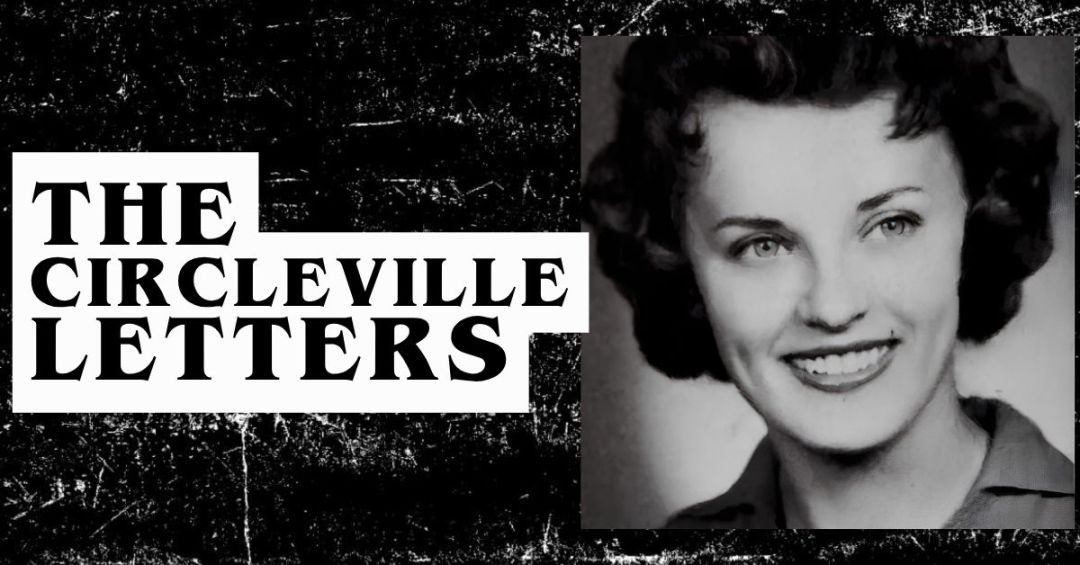
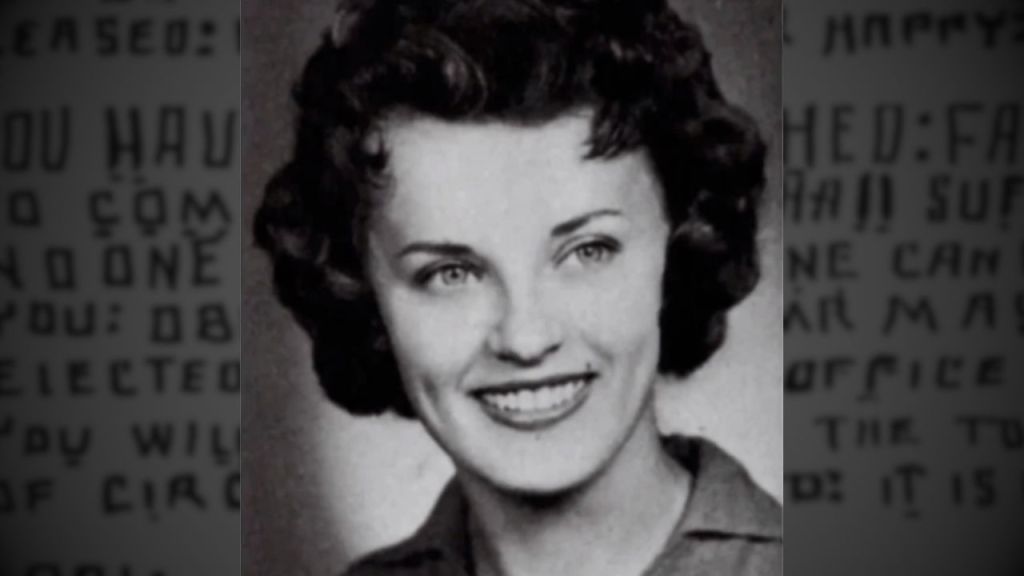
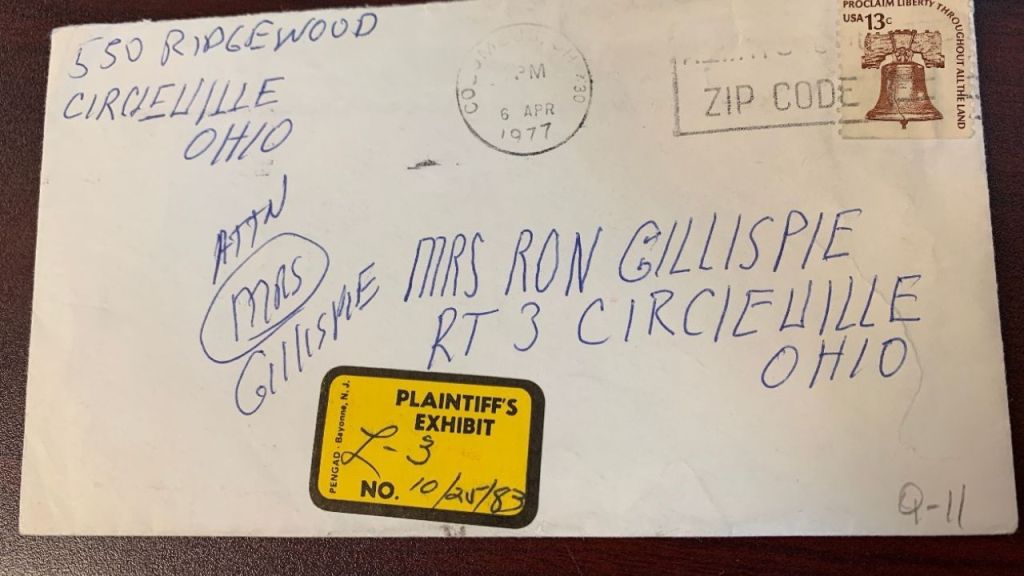
In Circleville, Ohio, the mail once carried more than news or bills. It carried warnings. Beginning in 1976, residents started receiving anonymous letters written in heavy block capitals — accusations, threats, and promises of exposure. The first envelopes landed in the mailbox of Mary Gillispie, a local school bus driver, and inside was a message that would upend her life. Some accounts date her first letter to early 1977, but by then, the fear was already spreading.
The letters accused Mary of having an affair with the school superintendent, Gordon Massie. They said she was being watched, that her secret would be revealed unless she ended the relationship. The words were plain and unadorned, the tone cold and certain. There was no signature, no return address, only a Columbus postmark and the implication that someone close — a neighbor, a coworker, perhaps even a friend — knew everything about her.
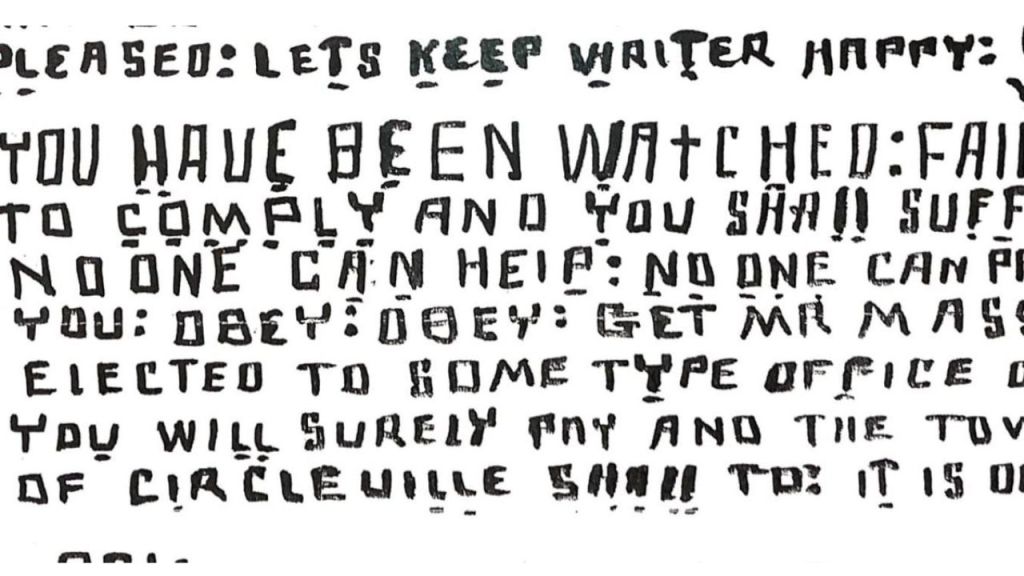
At first, Mary stayed silent. But the letters kept coming, each one more menacing than the last. Then her husband, Ron, began receiving them too. His letters were different. They demanded that he confront his wife, that he punish her and the superintendent. “You have had two weeks and done nothing,” one read. “If not, I will broadcast it on CBs, posters, and billboards until the truth comes out.” Whoever wrote them wasn’t just gossiping. They wanted action — and they wanted control.
On the night of August 19, 1977, Ron answered a phone call that left him shaken. He told his children he knew who the letter writer was and was going to deal with it himself. He took his revolver and drove off into the dark. Minutes later, his truck crashed into a tree less than a mile from his home. A single shot had been fired from his gun, according to the incident report, and his blood-alcohol level was twice the legal limit. Authorities ruled the death an accident. His family never believed it.
For a while, the letters stopped. Then they started again.
By the early 1980s, several hundred letters had circulated throughout Circleville. The accusations widened beyond Mary’s private life to claims of corruption, infidelity, and secret crimes. Some letters were obscene, others oddly methodical. They arrived at schools, businesses, and private homes. Each one suggested intimate knowledge of its recipient’s habits and history. No one knew who to trust.
In 1983, the campaign took a darker turn. As Mary drove her school bus one morning, she noticed a crude sign along her route accusing her of sordid behavior. When she stopped to take it down, she spotted a thin wire leading from the sign to a small box behind it. Inside the box was a loaded .38-caliber revolver, rigged to fire when the sign was pulled. The trap would have killed her.
Police traced the gun’s serial number to Paul Freshour, Mary’s brother-in-law and Karen Freshour’s ex-husband. Paul was cooperative at first, even helping investigators test handwriting samples. But when analysts claimed his writing matched the letters, the cooperation ended. He was arrested, charged not with sending letters but with setting the booby trap. A jury convicted him, and he was sentenced to seven to twenty-five years in prison.
For the sheriff’s office, the case was closed. The mysterious writer was behind bars.
Except the letters didn’t stop.
Even as Paul Freshour sat in solitary confinement, where prison staff said it was “humanly impossible” for him to send mail, new letters continued to arrive across Ohio. They were postmarked from distant counties and written in the same distinctive style. Some even reached Paul himself, mocking him from the outside. “When are you going to believe you aren’t getting out of there?” one read. “The joke is on you.”
To the public, this was either proof that Paul had help or that the wrong man was in prison. Investigators could not prove either theory. Handwriting experts disagreed on whether all the letters came from one person. Prison officials maintained that Freshour had no access to materials that could have produced them.
By the time he was paroled in 1994, the letters had finally stopped. Paul maintained his innocence until his death in 2012, writing long accounts of his case and urging new investigations. He believed the real writer — or writers — had framed him.
In 1993, a convicted Ohio murderer named Thomas Lee Dillon briefly claimed responsibility for the Circleville letters, but investigators found no credible evidence linking him to the campaign. More than a decade later, journalist James Renner identified former school superintendent Dwight L. Bowman as a possible suspect; Bowman died in 2009 before he could be interviewed.
Other theories pointed closer to home. Some suspected Paul’s ex-wife, Karen Freshour, who had lost custody of their children and property in a bitter divorce. She had access to Paul’s gun, knowledge of Mary’s routine, and motive for revenge. Others turned their attention to David Longberry, another bus driver who had pursued Mary and later took his own life in 1999 after being charged in an unrelated crime. Variations in handwriting and tone — some letters using “we” instead of “I” — led analysts to wonder if more than one person had been involved.
Whatever the truth, the letters themselves suggested a strange omniscience. They contained details about people’s work schedules, marriages, and personal histories that would have required either remarkable surveillance or an extensive network of informants. The possibility that several writers operated together — perhaps unknowingly copying one another’s style — remains one of the few explanations that fit both the scale and longevity of the campaign.
What makes the case endure isn’t only the mystery of authorship but what the letters did to the town itself. They fractured a community built on familiarity. Friends stopped confiding in one another. Neighbors crossed the street rather than exchange greetings. Families kept blinds drawn and secrets closer than ever. The letters didn’t just expose fear — they created it.
Years later, Mary Gillispie confirmed that a relationship with Gordon Massie had indeed developed, lending the earliest accusation an unsettling measure of truth.
And beneath the mystery lies a smaller, more human story: a husband’s death that may never be fully explained, a woman whose private life was made public, and a man who may have gone to prison for a crime he didn’t commit.
The Circleville letters ended in 1994, nearly twenty years after the first envelope appeared. No one has been charged with writing them. The sheriff who led the investigation retired, the principal suspects died, and the town settled back into its quiet routines. But for those who remember, the fear never entirely left.
Somewhere, tucked in an attic or a storage box, the letters still exist — hundreds of them, yellowed with age, the ink fading but the words still sharp. They are fragments of a voice that once knew everything about everyone and used that knowledge to hold an entire town in its grip.
Whoever wrote them is almost certainly gone now. The secret they carried went with them. But in Circleville, the memory lingers: the sound of the mail truck, the thud of an envelope on the doorstep, and the knowledge that sometimes the most frightening thing in a small town isn’t a stranger — it’s a letter that knows too much.


 Deep Lore