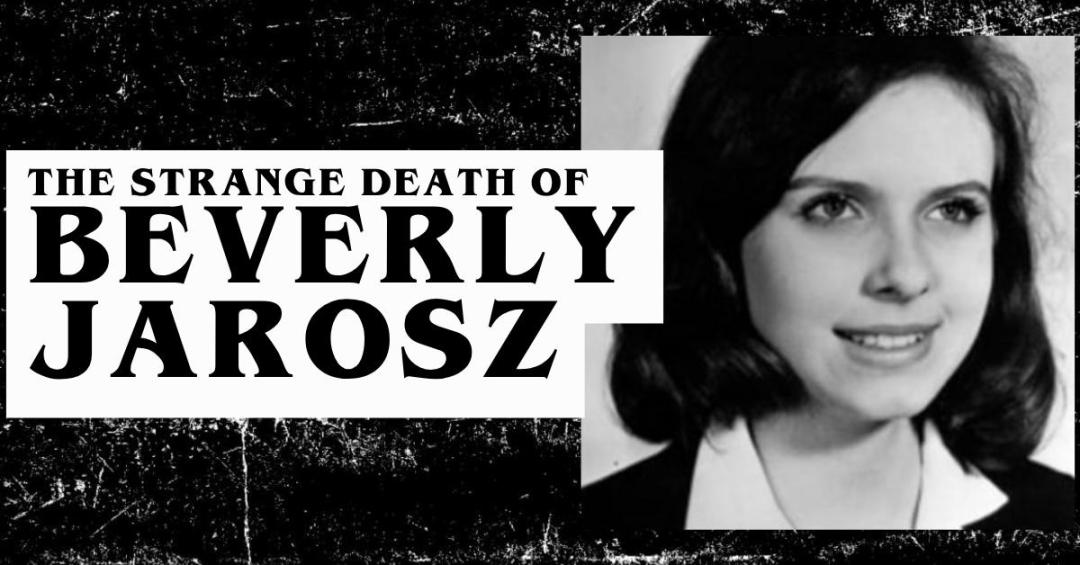
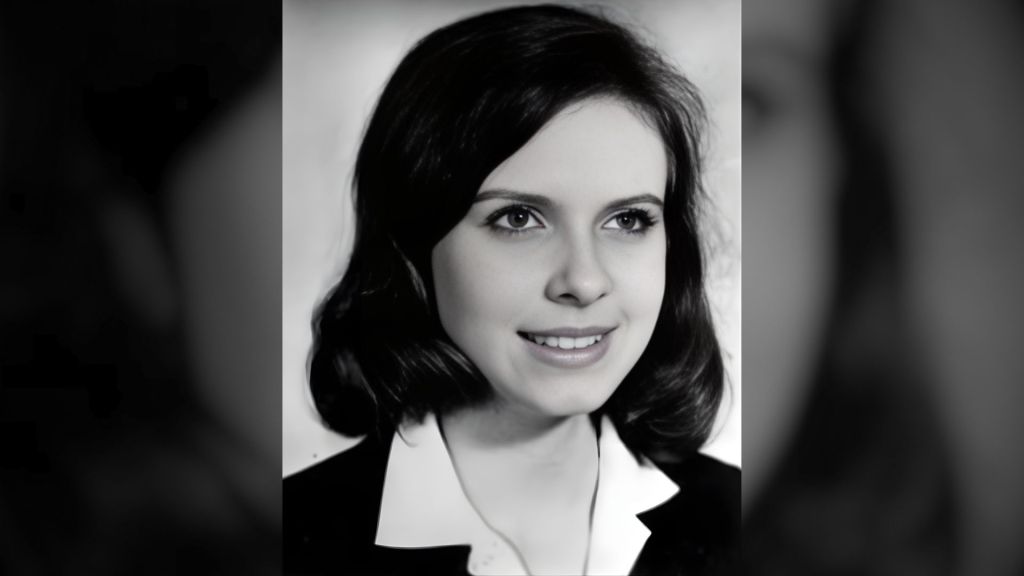
Snow had not yet come to Garfield Heights, though December held its breath over the bare trees and quiet porches. Sixteen-year-old Beverly Jarosz spent the late morning at her grandmother’s house with her sister, the kind of family errand that made a short day feel ordinary. It was Monday, December 28, 1964. Their parents had gone to work; the girls ate, chatted, and planned the afternoon. Beverly was due to meet friends at the mall. Around 12:30 p.m., a neighbor’s son drove her home. She went inside the house on Thornton Avenue to change.
She was a bright, careful girl—serious about school, drawn to poetry and Latin, steady in her habits. That steadiness had been troubled by small alarms in the months before: phone calls that ended in silence, an unsigned gift left in the yard, a prowler at her bedroom window who bolted when her father gave chase. None of it had broken the routine, but it left a film of worry over the house.
In the hour after she arrived home, the phone rang three times. One caller, a man who gave the name “Steve Stackowicz,” asked about Beverly’s father. The last call came from her grandmother around 1:15. Beverly said she was fine, then told her she had to go and ended the call. Later, the grandmother—Marie Vanek—would amend her statement to say Beverly had added that Barbara was at the door. The change echoes across retellings; what is certain is that the call ended abruptly, and Beverly expected a friend.
Ten minutes later, Barbara Klonowski appeared on the stoop. The front door was locked. From inside, a swell of classical music—louder than Beverly ever played it—poured through the wood and glass. A single heavy crash followed, as if furniture had tipped. Barbara waited, unsure, then left. The house fell back into its quiet. Sometime after four, Beverly’s father returned from work, stepped through the front door, and climbed the stairs. In his daughter’s small, ordered bedroom, he found her body.
The hours between the telephone and that discovery have remained dark. Beverly had been strangled and stabbed many times, her wrists bound with a rope that did not belong to the household. The killer had come prepared. Investigators noted patterns in the wounds—clusters of three—and suspected the attack might have been interrupted by the doorbell. A police dog tracked scent through the back door and into the yard. In a bush, strands of Beverly’s hair clung to the twigs. Footprints pressed into a patch of sand along the curb offered no direction.
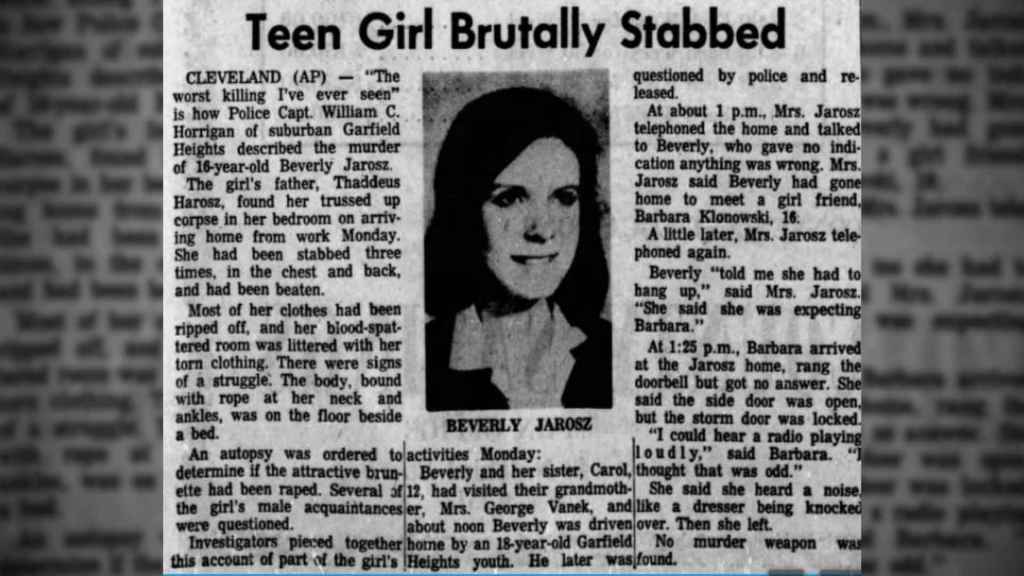
The crime drew Cleveland detectives to assist the small suburban force. Reporters gathered on the narrow street; neighbors spoke in hushed voices and kept their curtains drawn. Over the weeks that followed, police interviewed hundreds of people—classmates, neighbors, boys who admired her, men who should not have. They took fingerprints and ran polygraphs, then took them again. Nothing held. The prints from the scene matched no one. The weapon was never found.
Two young men occupied opposing corners of Beverly’s brief romantic history. Daniel Schulte, older, slick-haired, with a reputation for trouble, had been her steady boyfriend before they broke up. Roger McNamara, studious and devout, was her boyfriend at the time. Each had an alibi. Each passed a polygraph. Detectives distrusted them anyway—then cleared them, doubted again, and cleared them once more. Time eroded the certainty in every direction.
Other names floated through the files. A neighbor with a vantage from his window who admitted watching her sunbathe in summer. A college student who lived behind the house, whose attentions made her uneasy. A teenage salesman new to town, later arrested for stabbing a pregnant woman, who confessed to Beverly’s murder and then recanted, his account collapsing under basic details of the house. Seven years after the murder, when Beverly’s parents still lived on Thornton Avenue, someone broke in while they attended a funeral. Only a gold watch was taken. The backings of two framed prints—Beverly’s favorites—were ripped off, as if someone were searching for something hidden and thin.
Through it all, Beverly’s sister, Carol, kept the case alive in the quiet ways that matter: phone calls, letters, anniversaries marked with a candle in the window. She told the story again and again so it would not collapse into myth or get lost to the next generation. Decades passed, and the language of investigation changed; evidence boxes gathered barcodes, and DNA became a word that promised answers. Tests were run. Leads rose and fell. The promise held, but no result came.
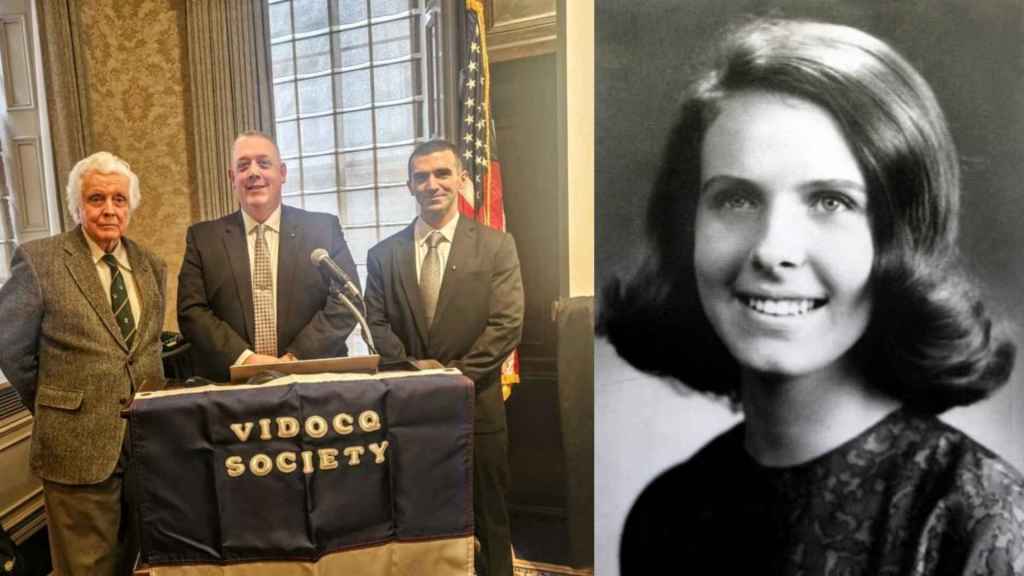
In 2015, detectives carried the file to the Vidocq Society, a private group of retired agents and forensic specialists who meet to examine cold cases. They studied the timeline, weighed the suspects, and pointed to a different kind of name: a family friend with access to the house, someone Beverly would have let inside without hesitation. He declined to cooperate—no interview, no fingerprints, no DNA. The suggestion landed like a ripple and, like all the others, widened into uncertainty.
What remains are the objects and the ordinary spaces that hold a life. A bedroom mirror with the memory of a face. A desk with a pen in a cup. A typewriter waiting for the next page. Beverly’s poems, written in a neat hand, spoke of love and futures that were still abstractions. There was a winter formal in her calendar. Latin conjugations on a sheet of paper. The kind of plans that fit neatly between holidays.
It is hard now to picture the house without picturing the scene that ended it. Yet the house still stands. Families have moved in and out. Children walk past on their way to school without knowing why the street feels watchful in winter. The name survives in clippings and on a headstone, in the careful way her sister still says my sister after all these years. The case is active, the evidence preserved, the questions as precise and stubborn as they were in the week after Christmas.
The small corrections matter because they are what is left to control. A word in a phone call. Whether a friend stood on a stoop or stepped inside. Whether the music was loud by habit or made loud for a reason. The difference between I have to go and Barbara’s here seems thin, but in that thinness lives motive, timing, trust. There is a doorbell, a locked door, and a silence that follows. There is a father walking up the stairs as the light outside fades.
More than sixty years have passed. The quiet of that afternoon has not lifted. Somewhere between the last ring of the phone and the music falling still, a life stopped. The room remains, and the echo of a girl saying she has to go lingers in the air, unfinished.
Snow had not yet come to Garfield Heights, though December held its breath over the bare trees and quiet porches. Sixteen-year-old Beverly Jarosz spent the late morning at her grandmother’s house with her sister, the kind of family errand that made a short day feel ordinary. It was Monday, December 28, 1964. Their parents had gone to work; the girls ate, chatted, and planned the afternoon. Beverly was due to meet friends at the mall. Around 12:30 p.m., a neighbor’s son drove her home. She went inside the house on Thornton Avenue to change.
She was a bright, careful girl—serious about school, drawn to poetry and Latin, steady in her habits. That steadiness had been troubled by small alarms in the months before: phone calls that ended in silence, an unsigned gift left in the yard, a prowler at her bedroom window who bolted when her father gave chase. None of it had broken the routine, but it left a film of worry over the house.
More than sixty years have passed. The quiet of that afternoon has not lifted. Somewhere between the last ring of the phone and the music falling still, a life stopped. The room remains, and the echo of a girl saying she has to go lingers in the air, unfinished.
More Deep Lore: Unsolved Murders & Cold Cases
- Three Minutes to Midnight: The Unsolved Murder of Brian Foguth — Another Ohio cold case where a young person was killed in a seemingly safe, everyday setting with no clear motive or perpetrator.
- The Parma Mystery: Who Murdered the Beloved Schoolteachers in 1921? — A brutal double murder in a Cleveland suburb that remains unsolved after more than a century.
- The Assassination of Thomas Piazza — A shocking public execution-style killing in a fast-food restaurant that is still a cold case.
- The Perplexing Murder of Christopher Thomas — A deeply strange and still-unsolved killing that continues to baffle investigators decades later.
- Mystery in Belle Haven: The Unsolved Case of Martha Moxley — The infamous 1975 murder of a 15-year-old girl in her affluent neighborhood (later linked to a high-profile suspect but long a symbol of unresolved justice).
Like Beverly Jarosz’s story, these cases highlight how violence can shatter ordinary lives and leave communities haunted for decades.


 Deep Lore