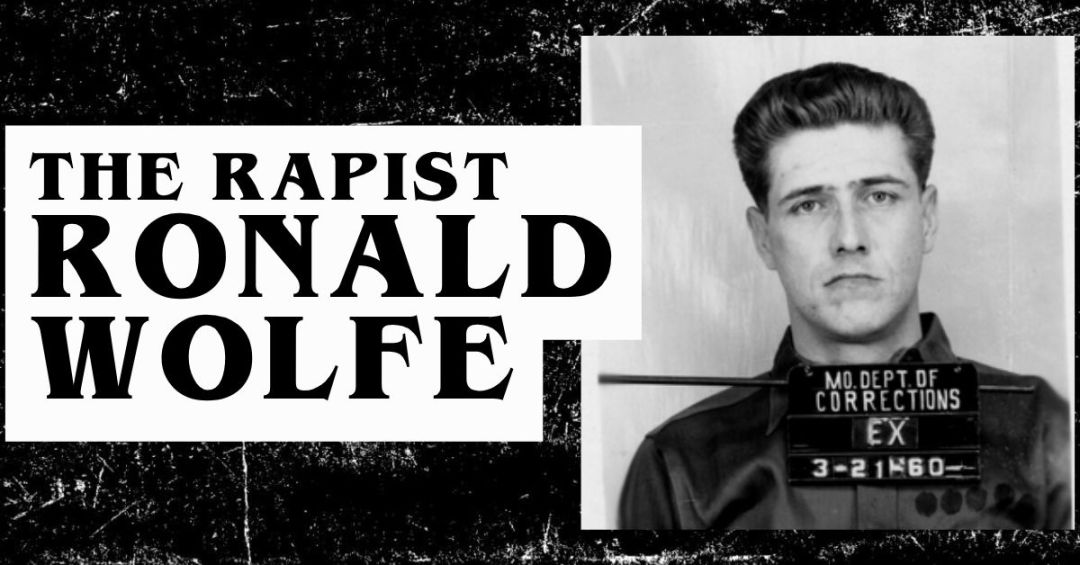
The evening air around Troy, Missouri, was thick with the smell of popcorn and diesel, the carnival lights flickering against the pale autumn sky. Families moved between game booths and food stands, and children clutched paper bags of candy as the organ music swelled and faded. It was October 18, 1959, and for one little girl, it was supposed to be another small-town Sunday—bright, noisy, and safe. Somewhere among the crowd was a man who did not belong.
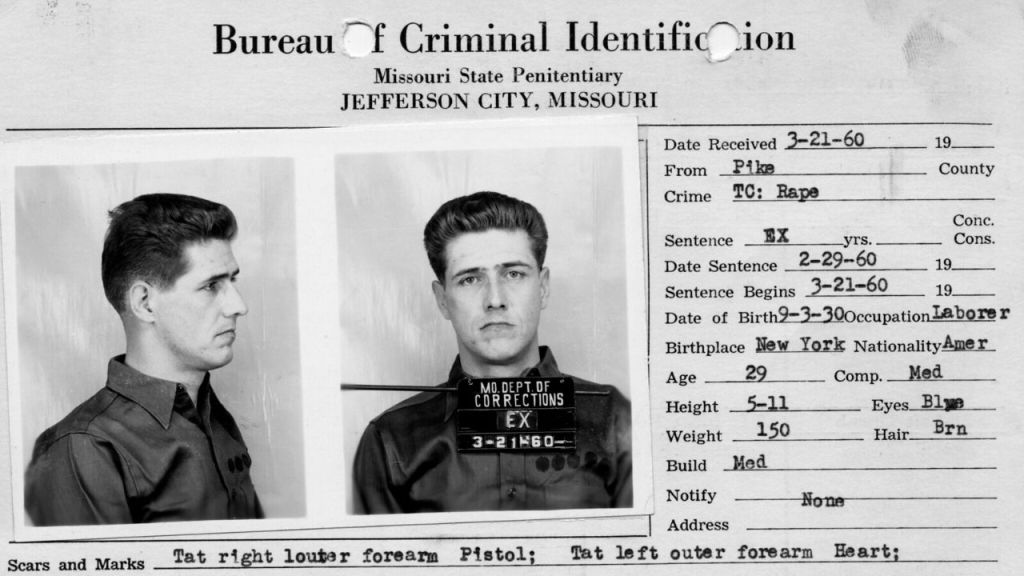
Ronald Lee Wolfe had been out of federal prison for only three days. Thirty years old, lean from confinement, his eyes restless, Wolfe had spent most of his life behind bars. His first arrest came before his fifteenth birthday, and the years since had been a blur of auto thefts, break-ins, and escape attempts across three states. He had no family to speak of. His mother vanished when he was an infant; his father disappeared before he was six. He grew up with grandparents in upstate New York, then drifted south, collecting false names and short prison terms. His most recent sentence had ended at the federal penitentiary in Atlanta. Now he was back on the road, moving through Missouri with a stolen car and a restless, directionless rage.
That night, he saw the girl near the Sacred Heart Church’s fall festival. She was eight years old. Witnesses later said he offered her a candy bar, coaxing her toward the parking lot, away from the bright midway and into the dark. He drove her several miles into the countryside, the lights of town shrinking behind them, and parked near a farmhouse. What happened in that car was brutal and wordless—violence that left the child bleeding and dazed, wandering toward the porch light of a stranger’s home. She was taken in by the family there, trembling, barely able to speak. By the time doctors examined her, the injuries erased all doubt about what had been done.
Wolfe did not get far. Police found the stolen car abandoned nearby, and within days he was under arrest. He confessed, but the story that unfolded over the next four years became larger than any single act. Missouri prosecutors filed charges under a state law that permitted death for certain rapes, particularly those involving children. To them, this was the “most hideous form” of the crime—a deliberate act, by a man already hardened by years of predation, against a defenseless child.
The trial was held in Pike County after a change of venue from Troy, where anger was too fierce for impartiality. Wolfe’s defense lawyers had little to work with. They argued mental illness, narcotics use, the lack of premeditation. The prosecution painted a picture of habitual depravity—a man beyond redemption. When Wolfe pleaded guilty, hoping perhaps to spare himself, the judge refused to soften the penalty. His remarks from the bench were cold and clinical: Missouri’s law, he said, reflected the will of its people. The crime was cowardly and brutal; the defendant a confirmed criminal. To impose anything less than death would be a dereliction of duty.
Appeals followed, each one narrowing the possibility of survival. His attorneys asked the lieutenant governor to appoint a board to examine Wolfe’s mental state, claiming he suffered from a psychopathic compulsion beyond his control. The request was denied. The governor himself refused clemency, stating simply that Wolfe had “had his day in court.”
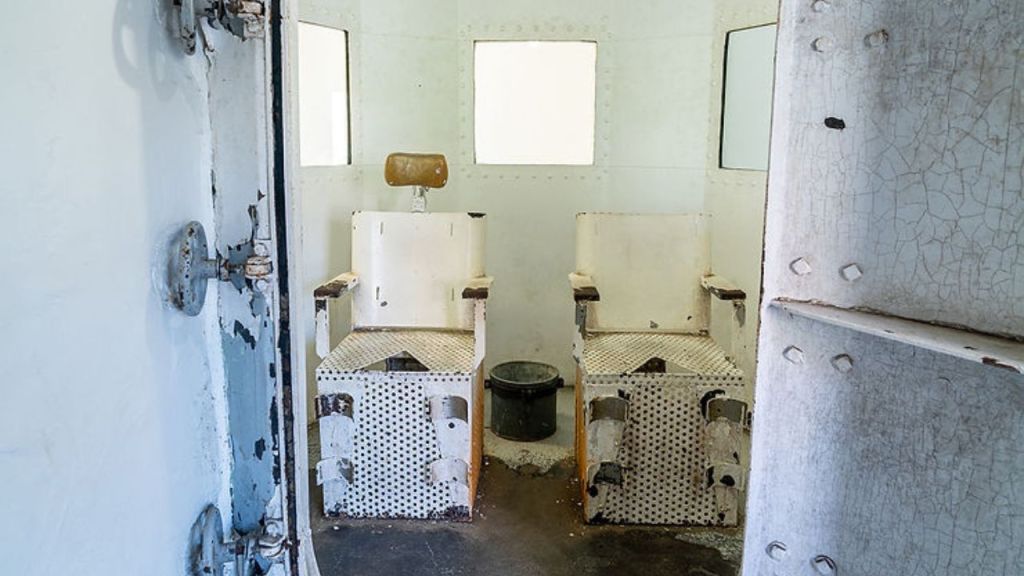
In the Missouri State Penitentiary at Jefferson City, the gas chamber stood in a squat limestone building at the edge of the yard. It had been used often through the 1940s and 1950s, a grim symbol of law’s final authority. By the spring of 1964, only a handful of executions remained before the nation would quietly step back from the practice. Wolfe was among them.
Shortly after midnight on May 8, guards led him from his cell. He wore prison khakis and walked without resistance, his face pale under the fluorescent light. There were no relatives waiting, no spiritual adviser. Witnesses said he was calm. The chamber’s two steel chairs sat side by side, though only one would be occupied. The doors clanged shut, bolts sliding into place. When the cyanide pellets dropped into the acid below, a faint hiss filled the small room, followed by a sharp odor—almonds and bleach. Within minutes, Wolfe’s body went still. At 12:12 a.m., he was pronounced dead.
Outside the prison walls, few noticed. The newspapers carried short wire reports: “Habitual Criminal Executed in Gas Chamber.” For Missouri, it marked the end of an era. The state would not execute another person for more than a decade. For the nation, Wolfe’s death represented a line quietly crossed.
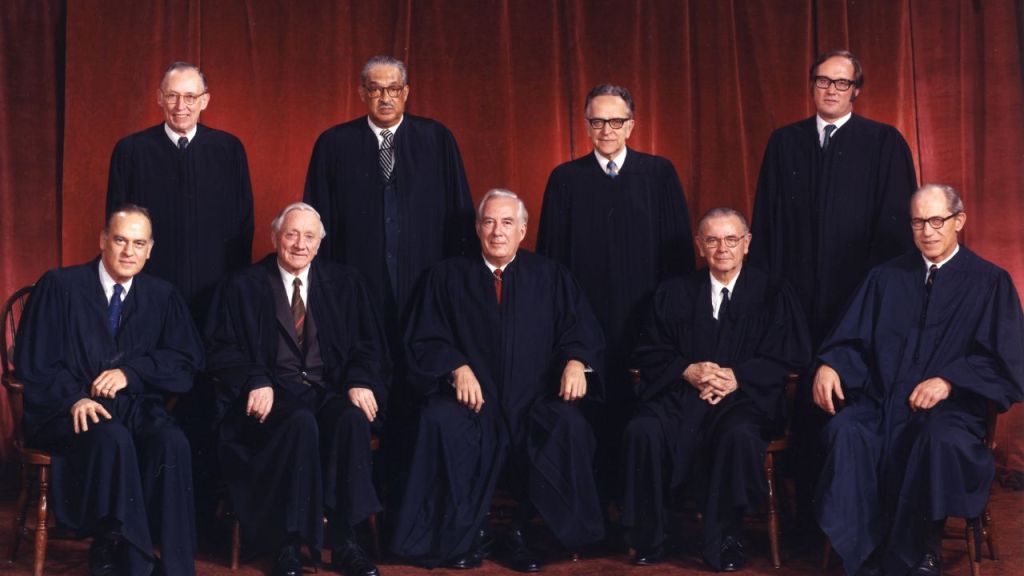
Over the next years, the country’s view of capital punishment shifted. By the 1970s, the Supreme Court imposed a moratorium, forcing states to rewrite their laws. When executions resumed, they were limited to murder cases, reflecting a new legal philosophy—that death should be reserved only for crimes that resulted in death. Yet Wolfe’s case lingered in the legal archives, a grim precedent for what justice once permitted.
Decades later, in 2008, his name returned to the courtroom in Kennedy v. Louisiana, when the U.S. Supreme Court ruled that the death penalty for child rape violated the Constitution’s ban on cruel and unusual punishment. The justices cited Wolfe as the last American executed for a non-homicidal rape, a reminder of how far the system had evolved. In their written opinion, the Court observed that society’s standards of decency had changed. What once seemed an act of moral clarity now appeared as retribution untempered by mercy.
By then, Wolfe had lain in an unmarked grave for forty-four years, buried in a potter’s field behind the old penitentiary. No family claimed his body; no one attended his burial. His victim grew up and built a quiet life, protected by anonymity. The carnival grounds in Troy still host community events each fall, the air still filled with laughter and the hum of generators. Few who pass through would recognize the name Ronald Wolfe or recall that, on a different night long ago, the lights dimmed over a small Missouri town as a nation reached the end of one kind of justice and prepared, slowly, to learn another.
More Deep Lore: Crimes Against Children, Sexual Violence & Capital Punishment
- The Girl Who Never Made It to the Mall: The Murder of Beverly Jarosz — The brutal 1964 rape and murder of a 16-year-old girl in her own home, another case involving a young victim in a seemingly safe setting.
- The Murder of Holly Bobo — The abduction, rape, and murder of a young woman in a small community, highlighting horrific sexual violence against a vulnerable victim.
- Mystery in Belle Haven: The Unsolved Case of Martha Moxley — The 1975 murder of a 15-year-old girl in her affluent neighborhood, another tragic case involving a young female victim.
- Bundy’s Youngest Victim: The Vanishing of Susan Curtis — The abduction and murder of a 15-year-old girl by one of America’s most notorious serial killers.
- The Lawson Family Murders — A shocking familicide that devastated a rural community, showing the extremes of violence in mid-20th-century America.
Like Ronald Wolfe’s case, these stories examine horrific crimes against children and young victims, the legal system’s response, and how society has grappled with punishment, justice, and protection of the vulnerable.

A Dead Battery, a Cryptic Message, and a Broken Furniture Crash: Three Dark True Crime Cases – Deep Lore
- A Dead Battery, a Cryptic Message, and a Broken Furniture Crash: Three Dark True Crime Cases
- A Chick-fil-A Hit, a Farmhouse Massacre, and Mr. Hands: Three Dark True Crime Cases
- Letters, Bombs, and a Broken Cross: Three Unsolved Mysteries
- The Untold Story of Bumfights
- Oceangate: The Rise and Fall of the Ill-Fated Titan

 Deep Lore